You see a shocking headline, your group chat is buzzing, and your teacher wants you to use news stories for a project. How do you know what is actually true?
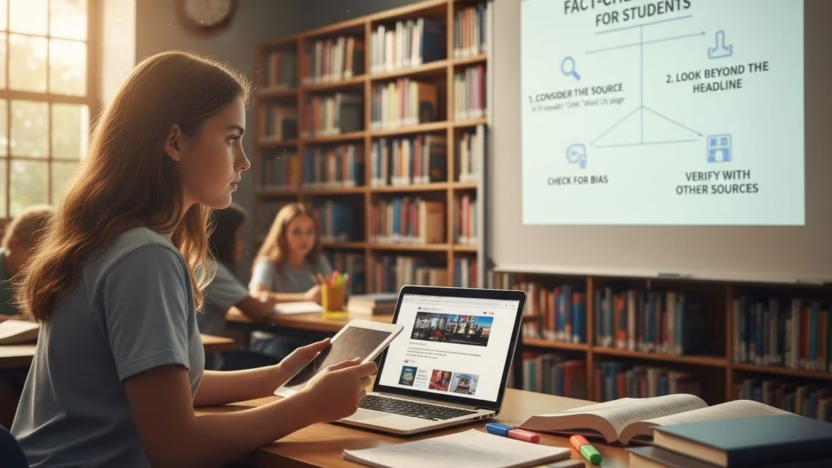
Learning how to fact check news articles is one of the most useful skills you can build at school. It helps with homework, essays, class debates, and also protects you from rumours and fake stories online.
This guide walks you through a clear, student friendly process to test whether a news article deserves your trust.
Key Takeaways
- Slow down before you share anything, and read the full article, not just the headline.
- Check who published the article, who wrote it, and what their goal might be.
- Look for solid evidence such as data, expert quotes, and links to original sources.
- Compare the story with trusted outlets and independent fact checking sites.
- Always check the date, images, and tone for signs of low quality or misleading content.
- Keep short notes on how you checked a source so you can use it in school work.
Table of Contents
- Key Takeaways
- Why Fact Checking Matters For Students
- Step 1: Pause And Read The Whole Article
- Step 2: Check The Source And Author
- Step 3: Look For Evidence, Not Just Opinions
- Step 4: Cross Check With Reliable Fact Checking Sites
- Step 5: Check The Date, Images And Tone
- Step 6: Keep Notes For Your School Work
- Building A Fact Checking Habit
- Conclusion: Become Your Own Fact Checker
- Frequently Asked Questions About Fact Checking News Articles For School
Why Fact Checking Matters For Students
School asks you to use information all the time, from history essays to science projects. If that information is wrong, your arguments fall apart.
On social media, false stories spread faster than careful reporting. A catchy meme or angry tweet can feel more convincing than a quiet, balanced article. Guides like Help Students Fact-Check the Web Like the Pros show how easily people can be misled if they skip checks.
When you learn to fact check news articles, you protect your grades, your reputation, and your ability to think for yourself.
Step 1: Pause And Read The Whole Article
Before you react, pause. That small gap is your secret weapon.
Do not rely on the headline. Headlines are designed to grab attention and sometimes oversimplify or exaggerate. Read the full article, including the last paragraphs, where corrections or key context often appear.
Ask yourself as you read:
- What claim is this article really making?
- Does it sound balanced or very one sided?
- Does it match what you already know from other reliable sources?
If the article makes you feel extreme anger or fear straight away, treat that as a warning sign and move to the next steps.
Step 2: Check The Source And Author
Next, look at who created the article.
Check the website:
- Is it a well known news outlet, a personal blog, or a random site?
- Does it have an “About” page that explains who runs it?
- Is it known to be strongly biased or linked to a political group?
Lists like this collection of fact checking sites for students can help you spot outlets that follow basic journalistic standards.
Check the author:
- Is there a real name?
- Can you find their other work?
- Do they usually write on this topic, or is it way outside their normal area?
If the site hides its owners, or the author has no trace anywhere, treat the article with extra care.
Step 3: Look For Evidence, Not Just Opinions
A solid news article shows you where its information comes from.
Look out for:
- Quotes from experts with relevant knowledge
- Data from official reports or research
- Links to original documents, studies, or public records
Be suspicious if an article makes big claims but gives you no way to check them.
A quick way to judge the quality of evidence is to use a simple comparison.
| Red flag | Better sign |
|---|---|
| “Experts say” with no names | Named experts and their job titles |
| “Studies show” with no links | Links to studies or reports you can read yourself |
| Screenshots with no source given | Direct links to original posts, videos, or documents |
| Only anonymous sources quoted | Mix of named sources, data, and official statements |
If you want a deeper guide to evidence checks, the short guide on how to fact check misinformation is a useful extra resource.
Step 4: Cross Check With Reliable Fact Checking Sites
Even strong students get stuck on tricky stories. That is when professional fact checkers can help.
Independent fact checking sites look at claims made by politicians, viral posts, and news outlets, then rate how accurate they are. You can use them to double check stories you are unsure about.
A good approach is:
- Pick out the main claim from the article.
Example: “The government has cut school funding by 50% this year.” - Search that exact claim in Google along with “fact check”.
- See if any trusted fact checking sites have looked at it.
You can find a helpful list of fact checking websites and tools that includes well known names such as PolitiFact and FactCheck.org.
If several of these sites say a claim is false or misleading, treat the original article as unreliable, even if it supports your opinion.
Step 5: Check The Date, Images And Tone
Sometimes the problem is not that a story is fake, but that it is out of date or missing context.
Check the date
- Is the article from this week, this year, or five years ago?
- Has the situation changed since then?
- Is an old article being shared again as if it were new?
Look at images carefully
Photos and videos are powerful, but they can be reused from older events or edited in misleading ways. If a picture seems suspicious, search it on Google Images or TinEye to see where it appeared before.
Notice the tone
Ask yourself:
- Is the language full of insults and name calling?
- Does the article try to shame or mock a group of people?
- Does it use lots of capital letters, exclamation marks, or dramatic phrases?
Serious reporting can be strong but stays calm. If the tone feels like a rant, be careful.
Step 6: Keep Notes For Your School Work
For school projects, teachers do not just want “correct” information, they want to see how you found it.
When you fact check news articles, keep a short record. You could write:
- The original article link and date
- What claim you checked
- Which other sources or fact checking sites you used
- What you concluded and why
This makes it easier to build a proper bibliography for essays and presentations. It also shows teachers that you use critical thinking, not just copy and paste.
The University of Maryland’s guide on how to be your own fact checker is a strong example of how note taking and source checking can work together.
Building A Fact Checking Habit
Fact checking feels slow at first, but it speeds up once it becomes routine.
You could:
- Pick two or three favourite, reliable outlets and start your research there.
- Set a rule for yourself: never share a news story until you have checked at least one extra source.
- Talk about fact checking in class or with friends so you can compare methods and sites.
Over time, your brain learns to spot red flags quickly. You will start to question wild claims on autopilot, which is exactly what strong learners do.
Conclusion: Become Your Own Fact Checker
Every time you fact check news articles instead of just believing them, you train your mind. You move from being a passive reader to an active investigator.
For school, this means stronger essays, better arguments, and fewer embarrassing mistakes. For your life outside school, it means you are harder to trick and more confident in your own judgement.
Start small with the next article you see today, apply one or two steps, and build from there. Your future self will thank you for building this critical thinking habit now.
Frequently Asked Questions About Fact Checking News Articles For School
How do I know which news sites I can trust?
No outlet is perfect, but trustworthy sites are open about their staff, correct their mistakes, and separate news from opinion. Look for outlets with clear contact details and editorial standards, and compare how they report the same story.
What are some good fact checking sites for students?
Useful fact checking sites include organisations like PolitiFact, Snopes, and FactCheck.org. For a wider list aimed at young people, use collections such as university library guides or pages that group fact checking tools for students.
Can I use social media posts as sources in my homework?
Most teachers do not accept social media posts as main sources unless you are studying social media itself. You can quote them as examples, but you should back up any claims with more reliable sources, such as established news outlets or official reports.
How long should fact checking take for a school assignment?
It depends on how complex the topic is. For a short homework task, even five to ten minutes of checks can help you spot clear problems. For essays or projects, expect to spend more time comparing reports and reading original documents.
What if I cannot tell whether an article is biased?
All writing has some bias, but heavy bias is easier to spot. Look for loaded language, missing viewpoints, and a lack of evidence. If you are unsure, compare the article with other outlets that cover the same story and talk to your teacher about what you find.