You are halfway through a study break, thumb on autopilot, when a TikTok pops up claiming a politician said something wild. The comments are raging, the sound is catchy, your friend has already shared it to Stories.
Now you have a choice: hit repost, or hit pause.
Learning how to fact check political tiktoks is one of the simplest ways to protect yourself and your friends from getting pulled around by lies, edits, and half-truths. It takes a bit of practice, but once you know the steps, you can check most videos in under a minute.
This guide walks you through a clear, student-friendly process to spot dodgy clips, check claims, and decide what to do next.
Key Takeaways
- Emotional or shocking TikToks should always trigger a pause, not a share.
- Check who posted it, where their info comes from, and when it was made.
- Turn each video into a clear claim you can search and verify.
- Use trusted sites like FactCheck.org and Snopes to confirm or debunk stories.
- If you are still unsure, do not share it as fact.
Why Viral Political TikToks Feel So Convincing
Political TikToks rarely look like news. They come as memes, edits, stories, and reaction videos. That makes them easier to trust, because they feel like content from a mate, not a press conference.
The algorithm pushes what keeps people watching, so emotional and polarising clips spread fast. Research has shown that political influencers and short videos can blur the line between opinion and fact, especially when they are entertaining.
AI has made this even trickier. Fake accounts and realistic audio or video can make made-up scenes look real. A recent Psychology Today article on fake AI political accounts explains how they tap into identity and emotion to fool people.
Once you see how carefully some of these clips are designed, it makes sense to slow down.
Step 1: Pause And Check Your Own Reaction
Before you even start to fact check political tiktoks, notice how the video makes you feel.
Ask yourself:
- Am I angry, scared, or smug right now?
- Do I really want this to be true because it fits my views?
- Would I react differently if this was about the “other side”?
Strong feelings are not proof. In fact, they are often a red flag that someone is trying to push you into sharing without thinking.
A short pause helps you switch from “react” mode to “think” mode.
Step 2: Look For Source Clues In The Video
Next, scan the video and caption like a detective.
Things to check:
- Creator profile: Is this a random account, a meme page, a fan account, or a real journalist or expert?
- Bio and other posts: Do they always post in favour of one side? Do they ever correct themselves?
- Visual clues: Is there a news logo, a watermark, or a username on screen you can search?
- Date and place: Does the caption say when or where this happened, or is it vague?
If you cannot tell where the information came from, treat the video as opinion, not fact.
Step 3: Turn The Video Into A Searchable Claim
Most people skip this step, which is why so much nonsense spreads.
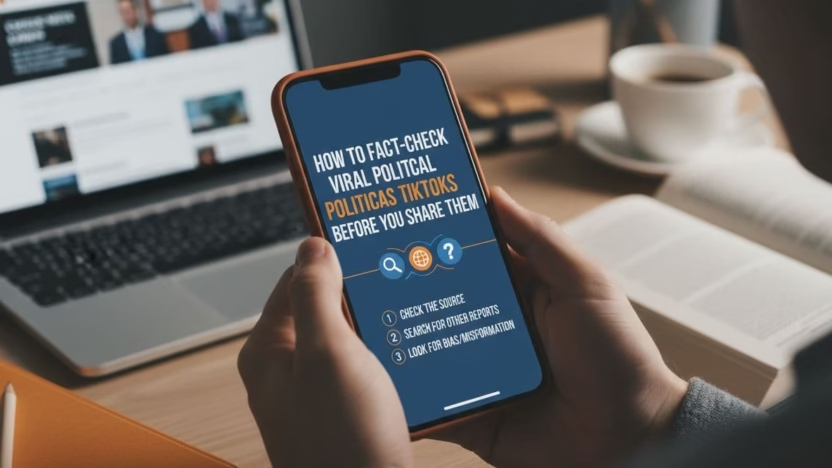
- Pick the exact claim. For example: “This TikTok says a minister banned student protests in October 2025.”
- Put key parts of that claim into a search engine in quote marks.
- Add words like “news”, “speech”, or “policy” to find reliable coverage.
Now bring in outside checks:
- Start with general fact-checking sites. FactCheck.org and the Snopes list of trending fact checks often cover big viral claims.
- Look for TikTok-specific checks. The PolitiFact page that tracks TikTok posts shows how they rated different viral videos.
Read more than the headline. Check if the details in your TikTok match the details in the article. Often you will spot something off, like a wrong date or quote.
If you do not find the exact claim, that does not make it true. It just means you need to look closer at the context.
Step 4: Check The Context, Not Just The Soundbite
Many misleading clips are technically based on something real, but show it in a twisted way.
Common tricks:
- Cutting a long answer down to one shocking sentence.
- Showing old footage as if it is happening right now.
- Pairing real images with a fake caption or voiceover.
Search for the full version of the video, speech, or interview. Often, a longer clip will appear on a news site or official channel.
Compare what you see there with the TikTok:
- Does the person actually say what the caption claims?
- Is the policy or event described in the same way?
- Are key bits left out that change the meaning?
You can also search if any debunks exist. For political rumours that spread widely, the FactCheck.org viral claims archive often publishes detailed breakdowns.
Step 5: Decide What To Do With The Video
Once you have checked the basics, you have three simple options.
- It looks accurate and in context. You can share it, but add a short note like “Source in comments” and link the article you used, so friends can check too.
- It is false or misleading. Do not share it. If you already did, consider deleting it or adding a correction in the comments.
- You are still unsure. Leave it. Curiosity is fine. Spreading doubt as fact is not.
TikTok has tools as well. TikTok’s safety partners page explains how they work with fact-checkers and how you can report misleading content, especially around elections.
Quick Checklist To Fact Check Political TikToks In Under 60 Seconds
Use this when you are about to hit “share”.
- Notice your emotion. Am I being pushed to react fast?
- Check the creator. Do they look reliable or heavily biased?
- Identify the claim. What exact thing is this video saying happened?
- Search the claim. Can I find it on a trusted news or fact-checking site?
- Check context. Is this clip edited or pulled from an older event?
- Decide. Share with sources, ignore, or report.
Even doing steps 1 to 4 is enough to stop most bad clips in their tracks.
Conclusion: Be The Friend Who Slows The Scroll
Politics on TikTok is not going away. If anything, it is getting sharper, faster, and more emotional. That is exactly why your ability to slow the scroll matters.
When you fact check political tiktoks, you protect your own thinking, but you also raise the standard in your group chats and timelines. You do not have to be an expert to do this, just someone who pauses, checks, and shares more carefully.
If you want to build those skills even further, projects like MediaWise offer training and resources on spotting misinformation designed for young people.
Frequently Asked Questions About Fact-Checking Viral Political TikToks
Do TikTok’s own fact-check labels mean a video is definitely true or false?
No. If TikTok or its partners label something as false, that is a strong sign you should not trust or share it. But the absence of a label does not mean a video is accurate. Many clips never get reviewed, especially smaller ones.
What if I do not have time to fact-check every political TikTok I see?
You do not need to check everything you watch, only what you are tempted to share or use in debate. Make a simple rule for yourself: “No share without a quick search.” Even 30 seconds on a site like Snopes or FactCheck.org is better than nothing.
How can I tell if AI has been used in a political TikTok?
Look out for strange lip sync, odd lighting, or hands and faces that glitch slightly. Unrealistic quotes or perfect one-liners from politicians are also suspicious. When something looks too smooth or too wild to be true, search for news about that quote or event. If no reliable site mentions it, be very careful.
Should I argue with people in the comments who share misinformation?
Arguing in long threads rarely changes minds. A calmer option is to reply once with a short line and a source, for example, “This has been checked, see this explanation from PolitiFact on TikTok posts.” After that, step away. You have added better information without getting dragged into a fight.
Is it still harmful to share a political TikTok if I say ‘I am not sure if this is true’?
Yes, it can be. Sharing boosts reach, even with a doubtful caption. Other people might miss your warning and take the video at face value. If you are unsure, it is better to share a reliable article about the topic instead of the original TikTok, or keep it private while you research.