You finish a long day of lessons, open your phone for a “quick scroll”, and suddenly you are buried in wars, scandals, and arguments in the comments. By the time you put your phone down, your brain feels heavy and your motivation has vanished.
You do not need to ignore the world to protect your mood. You just need a short, smart news check routine that keeps you informed without dragging you into doomscrolling.
This guide shows you how to build a 10-minute after-school news habit that fits student life, protects your focus, and still keeps you aware of what is going on.
Key Takeaways
- A 10-minute news check is enough to stay informed if you keep clear rules.
- The source you choose matters as much as the time limit.
- Ending each news check with a short mood reset stops negativity from sticking.
Why A Short After-School News Check Helps Your Brain
Your brain is not a bottomless bin for bad news. After school, it is already full of homework, grades, and social stuff. Throw in a flood of shocking headlines and your stress level goes up fast.
Most news feeds are built to grab attention, not protect your mood. That is why videos auto-play, headlines use strong language, and you feel pulled to keep scrolling. Without a plan, a “quick check” can stretch into 40 minutes and leave you tense and distracted.
A short, planned news check routine flips the script. You decide when, where, and how you look at the news. That control helps your brain feel safer, which makes it easier to concentrate on homework, sleep well, and still feel connected to the wider world.
Step 1: Set Clear Rules For Your 10-Minute News Check Routine
A routine works best when it has simple rules. Think of it like a pre-match warm-up, just for your brain.
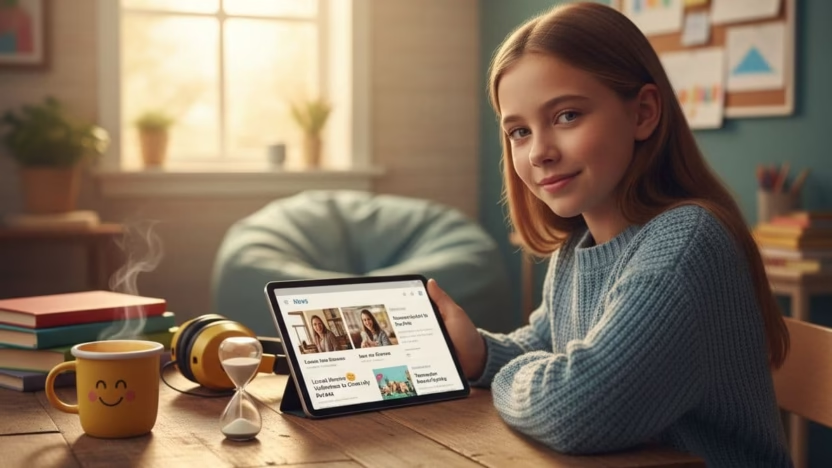
Start by choosing a fixed time. For many students, this is right after you get home and grab a snack, or just after finishing your first study block. Avoid doing it right before bed, because your brain will keep replaying what you saw.
Set these basic rules and stick them somewhere visible:
- Time limit: 10 minutes, no extensions.
- Place: the same seat or desk each day, not in bed.
- Device: one device only, preferably a laptop or tablet rather than your main social media phone.
- Cut-off rule: when the timer ends, you stop, even mid-article.
These rules sound simple, but they protect you from “just one more video”. You are training your brain to expect a clear start and a clear end.
Step 2: Choose Calm, Reliable Sources Over Drama
Even with a time limit, the wrong sources can wreck your mood. Some sites and accounts use shocking images and angry language to hook you, which makes your news check feel like an emotional rollercoaster.
Look for sources that:
- Explain events in clear, neutral language.
- Put numbers and claims in context.
- Avoid over-dramatic thumbnails and titles.
Public broadcasters, quality newspapers, and student-friendly explainer sites are usually safer options than random viral accounts. You might try one main homepage or app for headlines, then one trusted explainer source for deeper understanding.
If you notice a source always leaves you anxious or angry, drop it. Your attention is limited, so treat it like a budget.
Step 3: Use A Simple 3-Part Structure For Every News Check
A 10-minute news check routine works best when you give each minute a job. Use this simple three-part structure each day.
Minutes 1–3: Scan The Headlines
Set your timer, then spend the first couple of minutes only scanning headlines and short summaries. Your goal here is just to answer, “What are the main things happening today?”
Ignore opinion pieces and comment sections. Skip videos for now. If something looks important, open it in a new tab for later in the same session, then keep moving.
This quick scan stops you from falling into a single dramatic story before you know the wider picture.
Minutes 4–7: Take A Closer Look At One Story
Next, pick one story that feels important or relevant to you. Maybe it links to your A-level subjects, your future degree, or something that affects people your age.
Read one good article or watch one short explainer about that story. While you read, ask yourself:
- What actually happened?
- Who is affected and how?
- What facts are clear and what is still uncertain?
This step helps you think like a student, not a sponge. You are not just absorbing emotion, you are practising critical thinking.
Minutes 8–10: Reset Your Mood And Close The Loop
For the last few minutes, step out of “input” mode and into “output” or “reset” mode. You might:
- Jot down two or three bullet points about what you learned.
- Write one question you still have and want to look up later.
- Rate your mood out of 10 before and after the news check.
Then do a tiny mood reset: a few deep breaths, a short stretch, a glass of water, or looking away from screens. This tells your brain, “News time is over, now we can move on.”
By ending with reflection and a reset, you stop the news from echoing around your head all evening.
Make The Routine Fit Your Life And Energy
Student life is messy. You will not hit a perfect 10-minute news check every single day, and that is fine. The aim is consistency over time, not strict perfection.
On heavy homework days, you can shorten the routine to 5 minutes. Do a 2-minute headline scan, a 2-minute read of one short article, then a 1-minute reset. On calmer days, you can stay with the full 10-minute version.
During exam season or stressful weeks, protect your brain even more. You might limit yourself to one or two news checks per week, or avoid topics you know hit you hard. It is not selfish to do this, it is self-respect.
You can also link your news habit to your study habits. For example, “Once I finish my first 45-minute study block, I earn my 10-minute news check.” This keeps the news in its place, as a small, managed part of your day rather than constant background noise.
Conclusion: Stay Informed Without Feeling Overwhelmed
The world will always feel loud, but your mind does not have to. A short, planned news check routine lets you keep up with events without sacrificing your mood, focus, or sleep.
Set your rules, choose calmer sources, follow the three-part structure, and finish with a reset. With practice, those 10 minutes will start to feel like a solid habit rather than a slippery scroll.
You cannot control the headlines, but you can control how and when they reach you.
Frequently Asked Questions About A 10-Minute After-School News Check Routine
Is 10 minutes of news really enough for students?
For most days, yes. The goal is not to know every detail, but to track the main events and understand a few key stories. If something big happens, you will see it in your headline scan, then you can choose one good source to learn more.
If you want deeper knowledge for a subject or project, you can plan a separate, longer research session that is not mixed in with your daily news habit.
What if I always lose track of time and ignore my timer?
That is normal at first. Treat it like training a muscle. Put your phone out of reach and use a simple timer on your desk or computer. When it rings, stop straight away, even if it feels uncomfortable.
Over time, your brain will learn that the end of the timer means “news time is finished”. You can reward yourself with a snack or short break after stopping to reinforce the habit.
How do I handle upsetting stories without feeling numb?
You do not have to read every graphic detail to care about an issue. If a story is upsetting, you can:
- Focus on summary coverage instead of raw footage.
- Limit yourself to one article about it in that session.
- Take a longer mood reset after reading.
If something really sticks in your mind, talk about it with a friend, family member, or teacher. Sharing your thoughts is healthier than bottling them up or repeatedly re-reading the same news.
Should I mix social media and news in the same check?
It is better to keep them separate. Social feeds blur news, memes, adverts, and personal drama, which makes it harder to notice how stories affect you.
Use your 10-minute after-school news check routine for trusted news sources only. Save social media for a different time, with its own limits. This small separation makes it easier to stay calm and clear-headed.