
You have probably seen a “student movement” pop up overnight on your feed, complete with glossy graphics, slick slogans and free pizza. It feels exciting, but something about it seems off.
Very often, these are fake grassroots campaigns, also known as astroturf. They look like they come from ordinary people, but they are quietly run or funded by groups with their own agenda.
This guide will show you how to spot astroturf, both on campus and online, so you can save your energy for causes that are real.
Key Takeaways
- Real grassroots groups grow slowly, look a bit messy, and have open leadership.
- Fake grassroots campaigns often appear overnight, with money, branding and talking points already in place.
- Repeated phrases, identical signs, and unclear funding are major warning signs.
- A few quick checks, like reading the “About” page or searching who funds the group, can reveal a lot.
- You do not have to be cynical, just curious and willing to pause before you share or join.
Table of Contents
- Key Takeaways
- What Are Fake Grassroots Campaigns And Why Students Are Targeted
- Red Flags On Campus: When A “Student Movement” Looks Off
- Spotting Astroturf Online: Social Media, Petitions And Email Blasts
- How To Check Who Is Really Behind A Campaign
- Protecting Your Time, Reputation And Well‑Being
- Conclusion: Stay Curious, Not Cynical
- Frequently Asked Questions About Fake Grassroots Campaigns
What Are Fake Grassroots Campaigns And Why Students Are Targeted
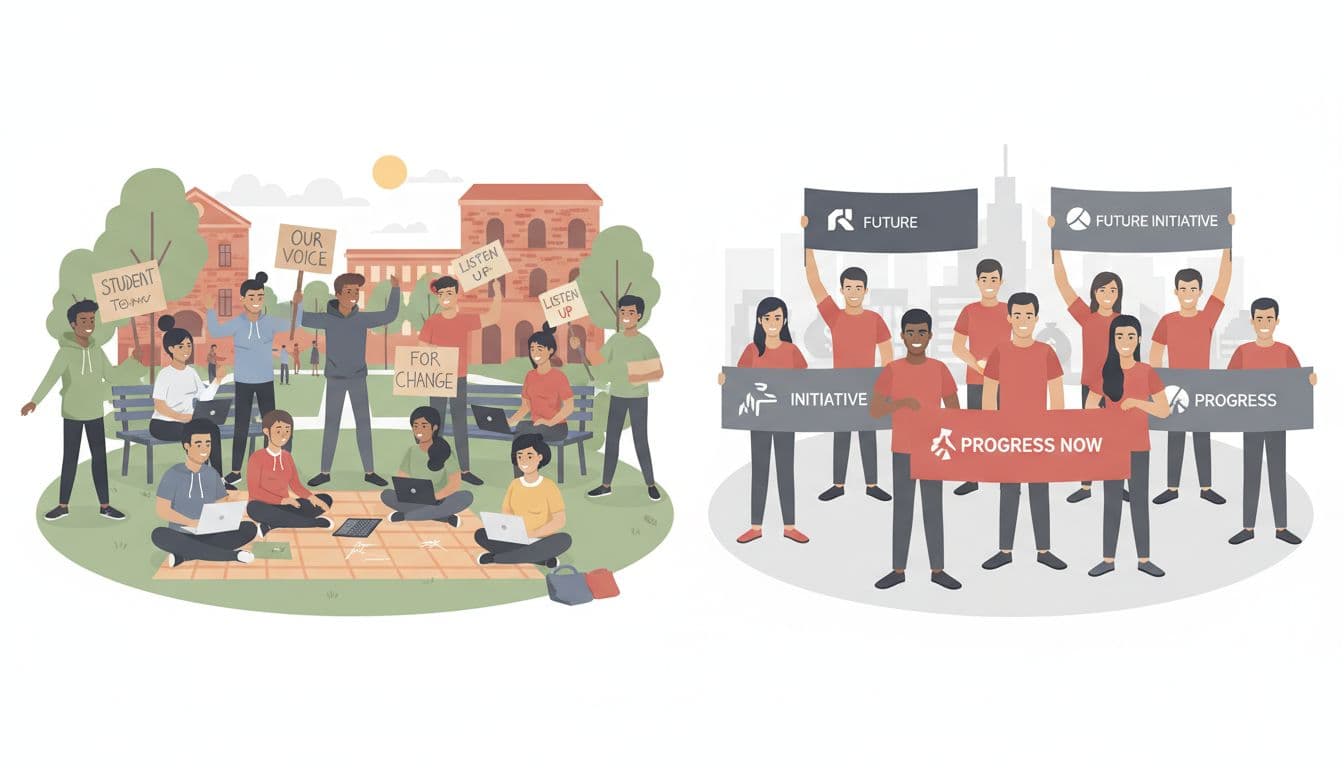
Image generated by AI: comparison of organic student activism and a polished astroturf campaign.
Astroturfing is when an organisation pretends to be a spontaneous public movement. Instead of real roots in a community, the “grass” is plastic.
Groups might pay people to post, design fake student societies, or set up “citizen coalitions” that are actually run from a PR office. A clear overview is given in this explainer on what astroturfing is and how it works.
Students are a favourite target. You are active online, you talk to each other a lot, and you care about social issues. If a company or political group can make something look like a student wave, it can influence media coverage, voters, and even university policies.
The same critical thinking you use for effective exam study strategies will help you question whether a campaign is real or staged.
Red Flags On Campus: When A “Student Movement” Looks Off
On campus, fake grassroots campaigns often try to look hyper-organised from day one. Real groups usually start small and then grow.
Watch for these signs:
- It appears from nowhere but already has money. New group, branded gazebo, printed banners, free merch and slick leaflets on day one. Who paid?
- No clear student leaders. People at the stall cannot say who started the group, or they dodge questions about organisers.
- Outside speakers dominate. Events are fronted by think tanks, lobbying groups or “concerned citizens”, while students stand at the edge.
- Vague or one-sided information. The flyer has dramatic claims, but no sources, footnotes or links to neutral info.
You can picture real grassroots activism like a slightly messy shared Google Doc, full of edits and comments. Astroturf looks like a finished corporate brochure dropped into your inbox.
For a deeper political breakdown suitable for older students, this guide on astroturfing in politics shows how parties and consultants create these fake fronts.
Spotting Astroturf Online: Social Media, Petitions And Email Blasts

Image generated by AI: students checking posts together before trusting a campaign.
Online, astroturf looks like any other viral post, which is why it spreads so fast. A few patterns are common.
Copy‑paste posting
Do you see the same paragraph shared by lots of accounts, word for word, with no personal comment? That often signals a script, not genuine support.
Overly polished “student” graphics
Real student campaigns use Canva templates too, but usually you notice some variety. If every image follows one strict brand style, it may come from a central design team.
Suspicious accounts
Check profiles that push the campaign hard. New accounts, no personal photos, random usernames, and only political content are all warning signs.
Petitions and email tools
Some sites collect your name for “student action” but are actually built by lobbying groups. Before signing, open the site’s “About” or “Privacy” page and see who owns it.
If you like video explanations, this short piece on how to spot a fake movement walks through real examples of online astroturf.
To help these checks stick, treat them like facts for an exam. Using a simple spaced repetition learning method can help you remember the main red flags whenever a new campaign appears in your feed.
How To Check Who Is Really Behind A Campaign
Once your “something feels off” alarm goes off, you can do a quick background check. It does not need to be technical.
1. Read the small print
Look for:
- “Funded by”, “hosted by” or “supported by” lines
- Charity or company numbers
- Postal addresses or office locations
If the website hides all of this, treat that as a sign in itself.
2. Search the group’s name with extra keywords
Try “[group name] funding”, “[group name] lobbying”, or “[group name] controversy”. You may find articles or databases linking them to companies, parties or PR firms.
3. Follow the web of partners
Many astroturf groups list “partner organisations”. Open those in new tabs and repeat the checks. Patterns appear quickly.
4. Check how balanced the information is
Real issue-based groups link to research, journalists, and sometimes even critics. Pure propaganda links only to its own pages or to very friendly outlets. A useful case study on bias and humour is this piece about John Oliver explaining astroturfing, which also warns against becoming totally cynical.
If you enjoy research, this academic survey on astroturfing detection techniques shows how computer scientists try to spot fake campaigns at scale.
Protecting Your Time, Reputation And Well‑Being
Getting drawn into fake grassroots campaigns costs more than a few hours. Your name can end up on mailing lists, photos, and even news stories linked to causes you do not really support.
A few habits help protect you:
- Pause before you share. Ask yourself: “Who wrote this, and how do they benefit if I repost it?”
- Say you need time. If someone pressures you to sign or attend “right now”, reply that you will read more first. Healthy groups accept that.
- Balance activism with rest. Constant outrage wrecks focus and mood. These ideas on improving student life satisfaction can help you set limits that keep you effective and sane.
You are not less caring if you wait 24 hours before backing a campaign. You are being a thoughtful adult.
Conclusion: Stay Curious, Not Cynical
Fake grassroots campaigns feed on speed, emotion and the feeling that “everyone is already on board”. When you slow down, ask a few pointed questions and follow the money, their plastic roots start to show.
Real student activism is rarely perfect, but it is honest. It allows disagreement, messy meetings and learning as you go.
If you hold on to a curious, questioning mindset, you can avoid astroturf without losing your passion for real change on campus and beyond.
Frequently Asked Questions About Fake Grassroots Campaigns
How are fake grassroots campaigns different from real ones?
Real grassroots campaigns start with people who are directly affected and grow over time. They have visible organisers, open meetings and a mix of voices. Fake grassroots campaigns are usually designed from the top down, with messages, funding and visuals set before any “supporters” appear.
Is it bad if a campaign has funding or professional design?
Not always. Many real groups get grants or help from charities. The key question is transparency. Are they open about who funds them, and do students still make real decisions, or does everything come from outside advisers?
What should I do if I shared astroturf content by mistake?
It happens to everyone. You can delete or edit the post, add a short note saying you have new information, and share a more balanced source. Treat it as practice in media literacy, not a reason to stop engaging with issues altogether.