You’ve seen it: a bold quote on a neat background, a politician’s name at the bottom, thousands of likes, and a caption telling you to “share before it’s deleted”. It feels like revision flashcards for politics, quick, punchy, and memorable.
But quote graphics are also one of the easiest ways to spread misinformation. If you want to verify political quotes without turning your evening into a research project, you need a simple routine you can do on your phone in minutes.
Key Takeaways
- A quote graphic isn’t evidence, it’s a claim with nice design.
- The safest route is to find the original source (speech, interview, official transcript).
- Use reverse image search to spot recycled or edited graphics.
- Check date and context because real words can be made misleading.
- If it matters for coursework, confirm via multiple reputable outlets and save your sources.
Table of Contents
- Key Takeaways
- Why political quote graphics fool smart people
- The student checklist to check if a political quote graphic is real
- 1) Identify who made the graphic (not who it’s about)
- 2) Look for a source line, then treat it like homework
- 3) Search the exact wording in quotation marks
- 4) Check date and context (the “what was happening?” test)
- 5) Find the “boring” version: transcript, full clip, or official record
- 6) Reverse image search the graphic
- 7) Check for cropping, edits, and “too-perfect” framing
- 8) Cross-check with two reputable outlets, not just one
- 9) Use fact-check sites when the quote is going viral
- 10) Decide what you’re doing with it (share, discuss, or cite)
- Quick table: what to look for at a glance
- A 2-minute “phone-only” routine that actually works
- How to use verified quotes in essays and debates (without losing marks)
- Conclusion
- Frequently Asked Questions About Verifying Political Quote Graphics on Instagram
Why political quote graphics fool smart people
Quote graphics work like a stage set. Clean fonts and a confident name at the bottom give the message authority, even when the quote has no source behind it.
They also hit fast emotions. Anger and pride make people share quickly, and speed is the enemy of accuracy. Add a cropped screenshot and you’ve got a post that looks “captured” from somewhere official, even if it was made in five minutes.
One more problem: even real quotes can be used dishonestly. A line from a 2012 interview can be reposted in 2025 as if it was said yesterday, and the meaning changes instantly.
The student checklist to check if a political quote graphic is real
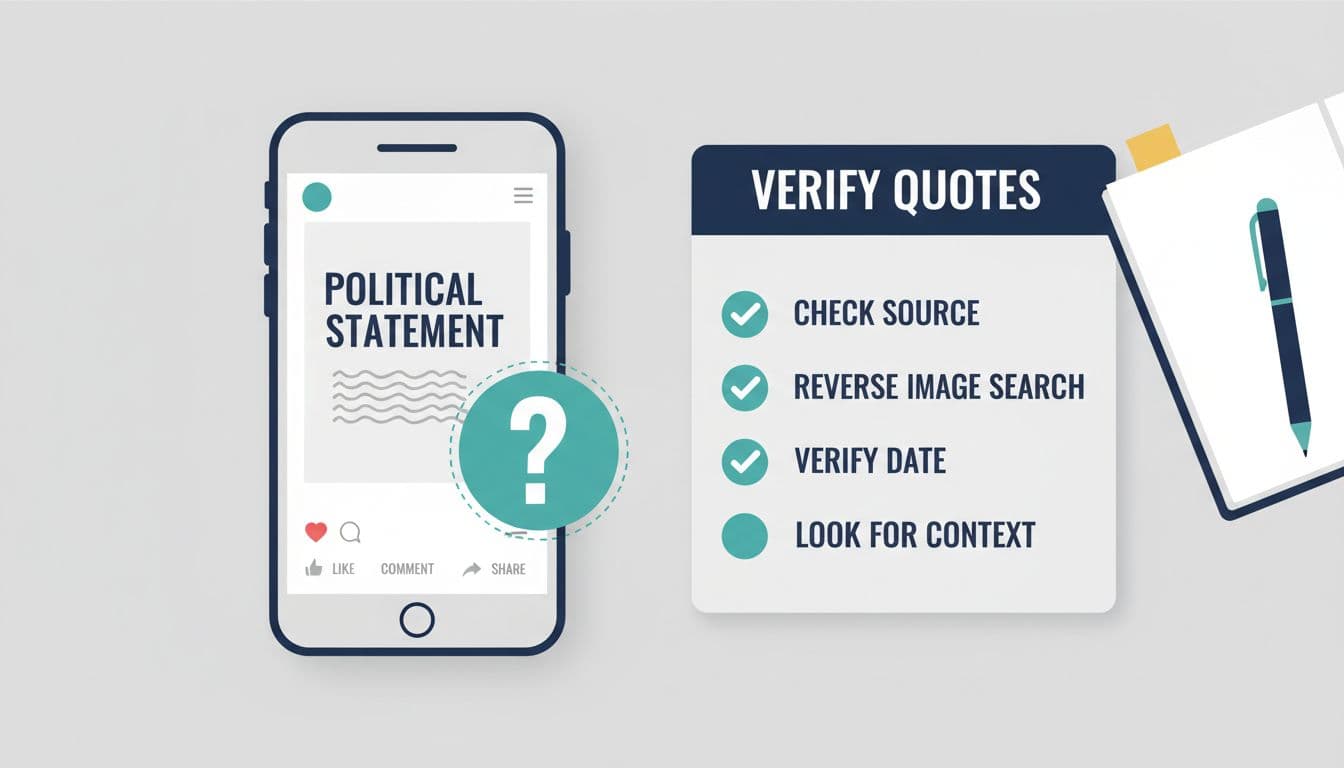
1) Identify who made the graphic (not who it’s about)
Check the account that posted it. Is it an official account, a news outlet, a campaign page, or a meme page? An anonymous page can post anything with no consequences.
Quick check: tap the profile, scan older posts, and see if they ever cite sources.
2) Look for a source line, then treat it like homework
A trustworthy quote graphic often includes a source (speech date, interview name, publication). If there’s no source, treat it like a random sentence on a bathroom wall.
If there is a source, verify it actually exists. “BBC interview” isn’t enough, which programme and when?
3) Search the exact wording in quotation marks
Copy the quote text (or type the key phrase) into a search engine with quotation marks. If it’s real, you should find:
- reputable coverage,
- a transcript,
- a video clip from a reliable uploader,
- or an official publication.
If the only results are social posts and quote sites, be cautious.
4) Check date and context (the “what was happening?” test)
A sentence can be technically real and still used to mislead. Ask:
- When was it said?
- What question was asked?
- Was it sarcasm, a debate line, or a partial sentence?
Context is the difference between a fair citation and a stitched-together story.
5) Find the “boring” version: transcript, full clip, or official record
The most shareable version is rarely the most accurate. Look for the full speech, interview, or official statement. If the quote is supposed to be from Parliament, check whether there’s a record or reporting that includes direct wording.
6) Reverse image search the graphic
This is how you find whether the same image has been circulating for years, or whether it was posted with a different name attached.
TinEye is simple for this: use TinEye reverse image search and upload the image or paste the image URL.
7) Check for cropping, edits, and “too-perfect” framing
Political quote graphics often hide the messy bits: the headline above, the timestamp, the outlet name, or the next line that changes the meaning.

Red flag: a screenshot that mysteriously cuts off the account name, date, or platform elements.
8) Cross-check with two reputable outlets, not just one
A single blog post can be wrong. Look for confirmation from at least two sources with editorial standards (major newspapers, broadcasters, reputable wire services).
If it’s a UK politics claim, checking Full Fact’s politics coverage can be a sensible next step.
9) Use fact-check sites when the quote is going viral
If a quote is genuinely everywhere, there’s a decent chance someone has already checked it.
Examples:
- Full Fact has debunked recirculating quote graphics, like this piece on an unevidenced Diane Abbott quote.
- Another example is this fake Boris Johnson quote that kept spreading despite a lack of evidence.
- For broader international claims, Reuters Fact Check is useful.
- In Scotland-focused reporting, the Ferret Fact Service is worth knowing about.
10) Decide what you’re doing with it (share, discuss, or cite)
Sharing is the highest risk. Discussing can be fine if you label it clearly (“I’ve not verified this yet”). Citing in an essay or debate needs proper sourcing.
A good rule: if you can’t trace it to an original source, don’t treat it like a quote.
Quick table: what to look for at a glance
| Looks trustworthy | Likely a problem |
|---|---|
| Source given with date and setting | No source, just a name at the bottom |
| Multiple reputable matches online | Only appears on social posts |
| Full clip or transcript available | Cropped screenshot, no context |
| Posted by a credible organisation | Anonymous meme page with heavy hashtags |
A 2-minute “phone-only” routine that actually works
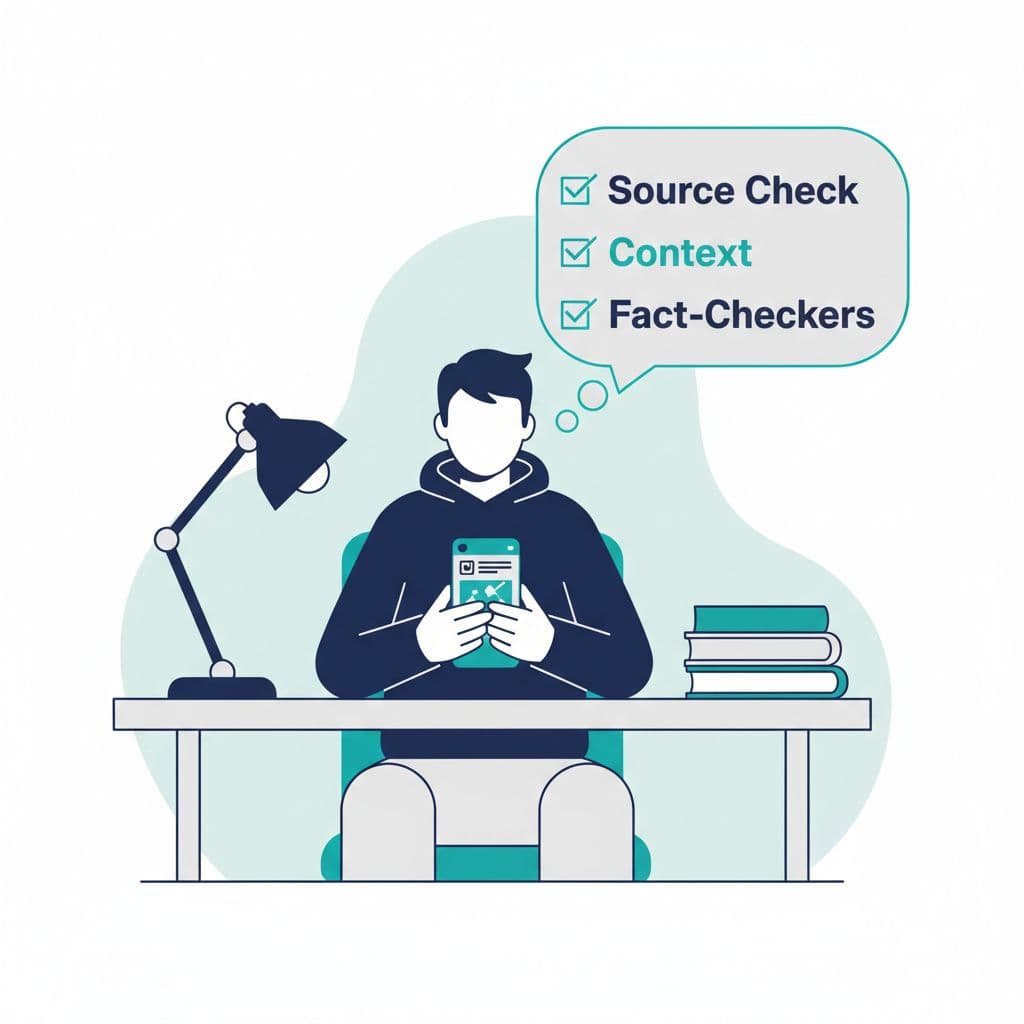
If you’re short on time, do this:
- Screenshot it.
- Reverse image search it.
- Search the exact quote in quotation marks.
- Open one fact-check site or a reputable outlet result.
- If you still can’t find a primary source, stop there and don’t share.
It’s like checking a reference in an essay. You’re not proving a theory, you’re confirming the basics.
How to use verified quotes in essays and debates (without losing marks)
If you’re using a quote for coursework, treat Instagram like a signpost, not a source. Use it to find the topic, then cite the original material.
Save your evidence as you go. Keep the link to the transcript, save the article, and take a screenshot of key lines in case pages change.
If you want the checklist to stick in your head, borrow a revision trick: short, spaced review. You can turn these checks into a mini flashcard set, using the approach in this guide on boosting retention through spaced learning.
Conclusion
Political quote graphics are persuasive because they’re simple, and politics isn’t. The fix isn’t being cynical, it’s being methodical. Use the checklist, find the original source, and keep your standards higher than the comments section. Your future self (and your grades) will thank you for verify political quotes properly before you pass them on.
Frequently Asked Questions About Verifying Political Quote Graphics on Instagram
Can a quote be real but still misleading?
Yes. A real sentence can be reposted with the wrong date, missing question, or missing next line. Context changes meaning.
What if I can’t find the quote anywhere except Instagram?
Treat it as unverified. Don’t share it as fact, and don’t cite it in coursework.
Are screenshots of tweets reliable proof?
Not on their own. Screenshots can be edited, and even real tweets can be deleted or reposted out of context. Look for an archived record, reporting from reputable outlets, or an official statement.
What’s the fastest tool to check a quote graphic?
Reverse image search plus an exact-phrase search usually gives the quickest answer. If it’s viral, a fact-check site like PolitiFact may also have it covered, especially for US-focused claims.