You hand back your keys, then discover your landlord wants to keep £180 for cleaning you thought you had done. Student tenancy deposit disputes often start this way: with a deduction you don’t understand and no clear evidence to support it.
You don’t have to accept a proposed charge simply because it appears in an email. Check your agreement, gather your records and find out which deposit scheme applies. The first step is to establish what sort of accommodation agreement you signed.
Key Takeaways
- Check whether you paid a tenancy deposit or a holding deposit, and whether your accommodation agreement is a tenancy or a licence.
- Ask for an itemised explanation of every deduction, with evidence of the property’s condition and the amount claimed.
- Compare check-in and check-out records. Ordinary wear, existing damage and a landlord’s repair responsibilities matter.
- If you cannot agree, use your deposit scheme’s dispute process promptly. Rules differ across the four UK nations.
How Student Tenancy Deposit Disputes Work
A tenancy deposit is money held against obligations under your agreement, such as damage or unpaid rent. A holding deposit is different: it reserves accommodation before you sign, so disputes about keeping it follow different rules.
First, read the signed agreement. A room in a private shared house may be let under a tenancy, while university halls may use a licence. Purpose-built student accommodation can have its own arrangements. The label on an advert won’t settle which rules apply.
Check your student housing contract and deposit terms alongside your payment receipt. Look for the deposit amount, the named landlord or provider, and any information about a protection scheme. If you paid money to a letting agent, record the payment date and ask which scheme holds it.
Check the Protection Rules Where You Rent
Deposit protection is required for qualifying private tenancies across the UK, but the deadlines and routes differ. Don’t assume a housemate’s experience in another nation applies to you.
England and Wales
For qualifying arrangements, the landlord or agent must protect the deposit and provide the required information within 30 days of receiving it. In England, many private tenancies are now assured periodic tenancies; Wales has its own occupation-contract rules. GOV.UK’s tenancy deposit guidance{rel=”nofollow” target=”_blank”} explains protection and repayment.
The approved schemes in England and Wales are the Deposit Protection Service (DPS), MyDeposits and Tenancy Deposit Scheme (TDS). Ask your landlord which one holds your money, then check directly with that scheme using your tenancy details.
Scotland
Scottish tenancy deposits also have a protection scheme and a dispute route. Ask the landlord for the scheme details rather than assuming an English or Welsh provider holds your deposit. If you live in halls or hold a licence, check what your agreement says and seek housing advice before relying on private-tenancy rules.
Northern Ireland
A private landlord must protect a deposit within 28 days of receiving it and provide written scheme information within 35 days. The nidirect guide for tenants{rel=”nofollow” target=”_blank”} also explains when to contact your local council’s Environmental Health Office if the landlord misses those requirements.
Decide Whether a Deduction Is Fair
A landlord can propose a deduction, but should be able to explain what you owe and why. Ask for a breakdown rather than arguing over a single total.
Cleaning, Damage and Wear
Compare the claimed problem with the check-in inventory and photographs. A charge for a stained mattress needs evidence of its earlier condition. Similarly, a landlord shouldn’t charge you to replace an ageing item with a new one without allowing for its age and condition.
Fair wear and tear is different from damage. Light scuffs from normal use aren’t the same as a broken door. If a claim concerns damp or mould, gather your repair reports and photos. Responsibility depends on the cause, including whether a leak or unresolved repair contributed to it.
Rent, Bills and Shared Houses
Check the agreement before disputing unpaid rent or bills. A bill cannot simply be assumed to be yours; ask which period it covers, who had to pay it and how the amount was calculated.
Joint tenancies need particular care. If everyone signed one agreement, a housemate’s unpaid rent or damage may affect the group under the contract. An individual room agreement can work differently. Don’t assume the share you agreed privately with friends limits what the landlord can claim.
Build a Clear Evidence File
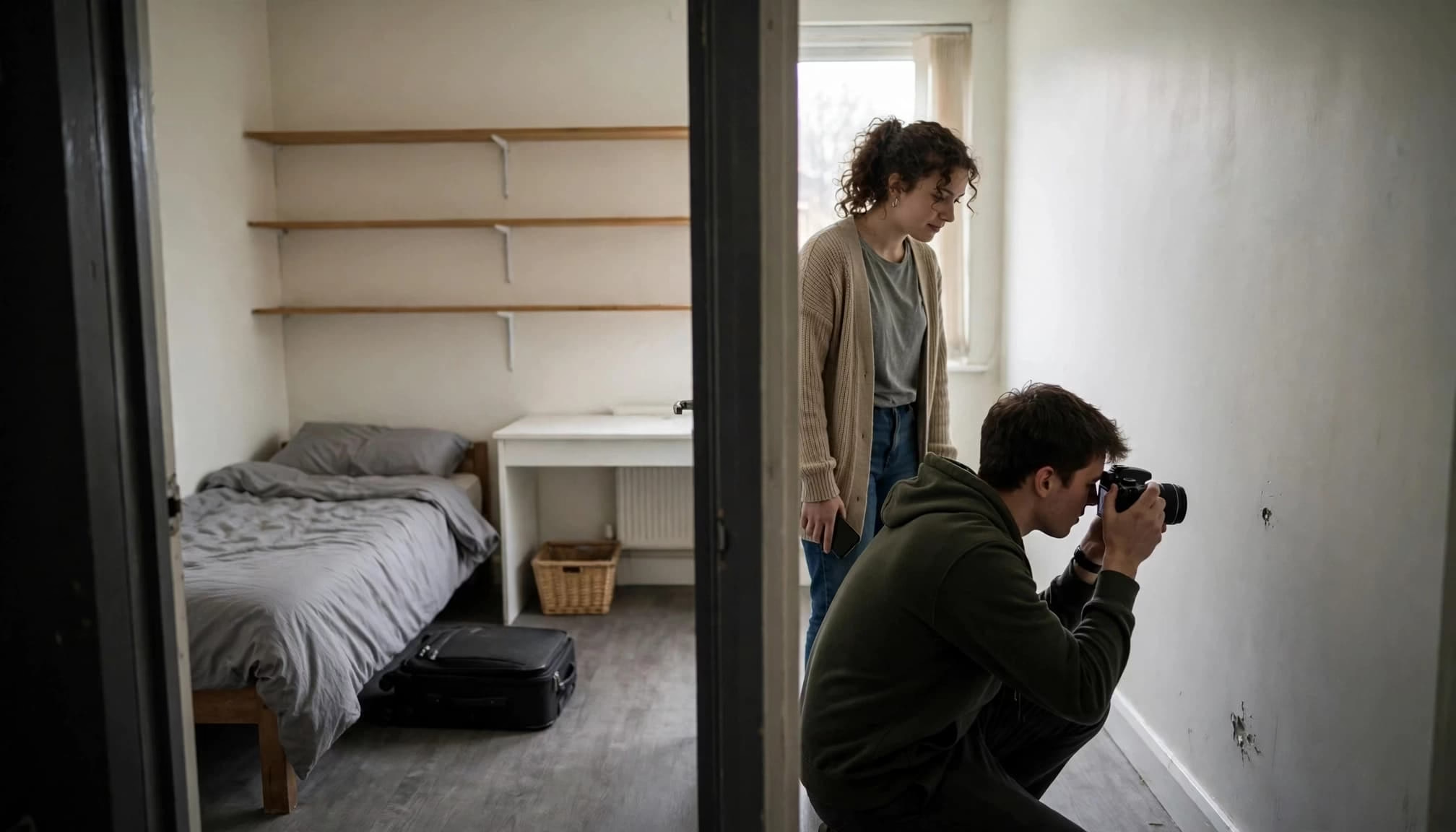
A useful dispute file shows the property’s condition at both ends of the tenancy. Keep original photos and messages where possible, rather than relying on a recollection after everyone has moved out.
Start With the Check-In Record
Find the inventory, move-in photos and emails reporting faults. Look closely at dates: a picture of a mark taken when you arrived can answer a later damage claim.
If there was no inventory, use whatever contemporaneous evidence you have, including messages to the agent or photographs shared with housemates. A student accommodation viewing checklist can help you spot what to record before your next tenancy begins.
Add the Check-Out Record
Collect departure photos, cleaning receipts, meter readings, key-return confirmation and any check-out report. Keep messages about repairs or agreed changes, such as permission to replace furniture.
Set the documents beside each proposed deduction. For example, if an agent claims the oven was dirty, compare the check-in description, your departure photo and any dated inspection photo they provide.
Challenge a Deduction Through the Scheme
Begin in writing. State which charges you accept, which you dispute and why. Ask the landlord or agent for an itemised claim and supporting evidence. Keep the exchange calm and factual, especially when several housemates are involved.
Try to Agree the Undisputed Amount
You can agree one deduction without accepting the rest. In England and Wales, once both sides agree the amount to repay, the landlord should return it within 10 days. If part remains disputed, the protected deposit stays with the scheme while the disagreement is resolved.
Check how your scheme handles repayments for a joint tenancy. It may communicate through a nominated tenant, so agree with housemates who will respond and share copies of every message.
Submit a Focused Dispute
If discussion fails, follow the scheme’s instructions and deadlines. Deposit schemes offer a dispute-resolution process that reviews both sides’ evidence. SafeDeposits Scotland’s deposit dispute guide{rel=”nofollow” target=”_blank”} explains how its alternative dispute resolution works.
Upload a short timeline and the records relevant to each charge. For a cleaning claim, that might mean the inventory entry, check-out photograph and landlord’s proposed cost. Read the scheme’s messages promptly; missing its evidence deadline can weaken your case.
If Your Deposit Wasn’t Protected
Start by checking the scheme details, not relying solely on an agent’s reassurance. In England and Wales, search the approved schemes and ask for the protection reference and required information. Citizens Advice’s deposit protection advice{rel=”nofollow” target=”_blank”} can help you work out whether protection was required.
If you still cannot find the deposit, ask your landlord or agent for a written explanation. Keep your bank record and agreement. An unprotected deposit may require a different route from an ordinary deduction dispute, so get advice from your students’ union, university accommodation team or a housing adviser before taking further action.
In Northern Ireland, you can contact the council’s Environmental Health Office about missed protection requirements. Wherever you rent, don’t withhold rent to recover a deposit without specialist advice; arrears can create another problem.
Reduce the Risk Before You Move Out
Give notice as your agreement requires, arrange key return and ask how the check-out inspection works. Photograph your room and shared spaces after cleaning, while the property is empty enough to show their condition. Record meter readings if you pay utilities.
Report any unresolved repair in writing before leaving. If your plans change because you leave university, remember that your accommodation agreement may continue; check your options for leaving a student tenancy early rather than assuming moving out ends what you owe.
Finally, give the landlord a forwarding address and request the deposit back in writing. Keep your evidence until the money has arrived and any shared-house balance has been divided.
Frequently Asked Questions About Student Tenancy Deposit Disputes
Can My Landlord Charge for Professional Cleaning?
It depends on the property’s condition and your agreement. The landlord should show that cleaning was needed because of how you left it, not simply insist on a particular cleaning company. Compare the check-in and check-out evidence, then challenge a charge that goes beyond putting the property back into its earlier condition.
What If My Housemate Caused the Damage?
Tell the landlord what happened and provide any evidence, but read the agreement before assuming only one person’s deposit can be affected. A joint tenancy may make the group responsible under the contract. You and your housemates can discuss reimbursement separately.
Can I Dispute a Charge After Accepting Part of It?
Yes, you can make clear in writing which deduction you accept and which you challenge. Follow your scheme’s process for the remaining amount. Don’t describe a disputed charge as agreed when confirming the figures.
Do Deposit Schemes Cover University Halls?
Don’t assume they do. Some halls use licence agreements rather than the private tenancies covered by statutory deposit protection. Check your contract, ask the accommodation provider how deposits are handled and contact your students’ union or accommodation service if its proposed deductions seem unfair.
Conclusion
A deduction in an email is a proposed claim, not the final word on your deposit. Your agreement, the protection scheme and dated evidence determine how you can respond.
Ask for the reason behind each charge, compare it with your records and use the appropriate dispute route if you cannot agree. That gives you a stronger position than accepting an unexplained bill after handing back the keys.


