
 Paul Scott

To recruit dissertation participants with less bias, define eligibility before advertising, use complementary channels and apply consistent screening rules. Dissertation participant recruitment cannot guarantee a bias-free sample, but it can make selection more defensible.
In a research study, choices about who you reach and who volunteers can create recruitment bias. Your easiest contacts may differ from the people your question concerns, so accessibility alone is a weak selection criterion. Start by deciding whose evidence you need and which recruitment choices could exclude them.
Key Takeaways
- Define eligibility and selection rules before approaching anyone.
- Combine recruitment channels, because each reaches different people and misses others.
- Use neutral screening, proportionate incentives and consistent follow-up procedures.
- Record invitations, exclusions and recruitment sources, then limit conclusions to what your sample supports.
1. Define Who Your Research Needs

Separate Your Population From Your Sample
Your population is everyone your research question concerns, or its target audience. Your sampling frame is the practical list available for selection, whilst your sample is the research participants who take part.
An open social-media invitation doesn’t provide a complete list of eligible people. Similarly, recruiting at one university doesn’t establish patterns across UK higher education. Our guide to dissertation sampling methods explains how these distinctions affect your selection strategy.
Keep Eligibility Relevant
Separate essential criteria from desirable characteristics. Every exclusion should have a reason connected to your research question.
Avoid using personas to define an idealised participant profile that excludes relevant experiences. For qualitative research, contrasting perspectives may matter more than a tightly matched profile.
Also distinguish selection from recruitment. Randomly selected people can decline, whilst voluntary consent doesn’t automatically make a study convenience sampling. Set sample-size requirements through your analysis or qualitative approach, rather than copying another dissertation’s participant count.
2. Write a Neutral Screener
A screener is a short set of screening questions that establishes eligibility before someone joins your study. Its wording affects who enters and what they believe you want to hear.
Avoid Revealing the Preferred Answer
Ask clear questions about relevant experiences without describing the answer that qualifies someone. Keep the language neutral and avoid praise, assumptions or emotionally loaded terms.
Where appropriate, include genuine options for uncertainty or non-applicability. Participants still need enough information to make an informed decision about joining.
Apply the same eligibility rules consistently. Changing criteria whenever recruitment slows can produce a sample shaped by convenience rather than your original research question.
Assess Consistency Without Setting Traps
Angelfish recommends red-herring questions to help identify participants who misrepresent their eligibility. Used carefully, these can reveal implausible claims or inconsistent answers.
Repeated research participation doesn’t itself establish dishonesty. Confusing questions can also exclude genuine participants, particularly those facing language or accessibility barriers.
Use proportionate checks to protect data quality, rather than trick questions. When answers raise concerns, vetting participants means reviewing them before deciding whether to exclude someone. Collect only the screening information you need.
3. Diversify Dissertation Participant Recruitment
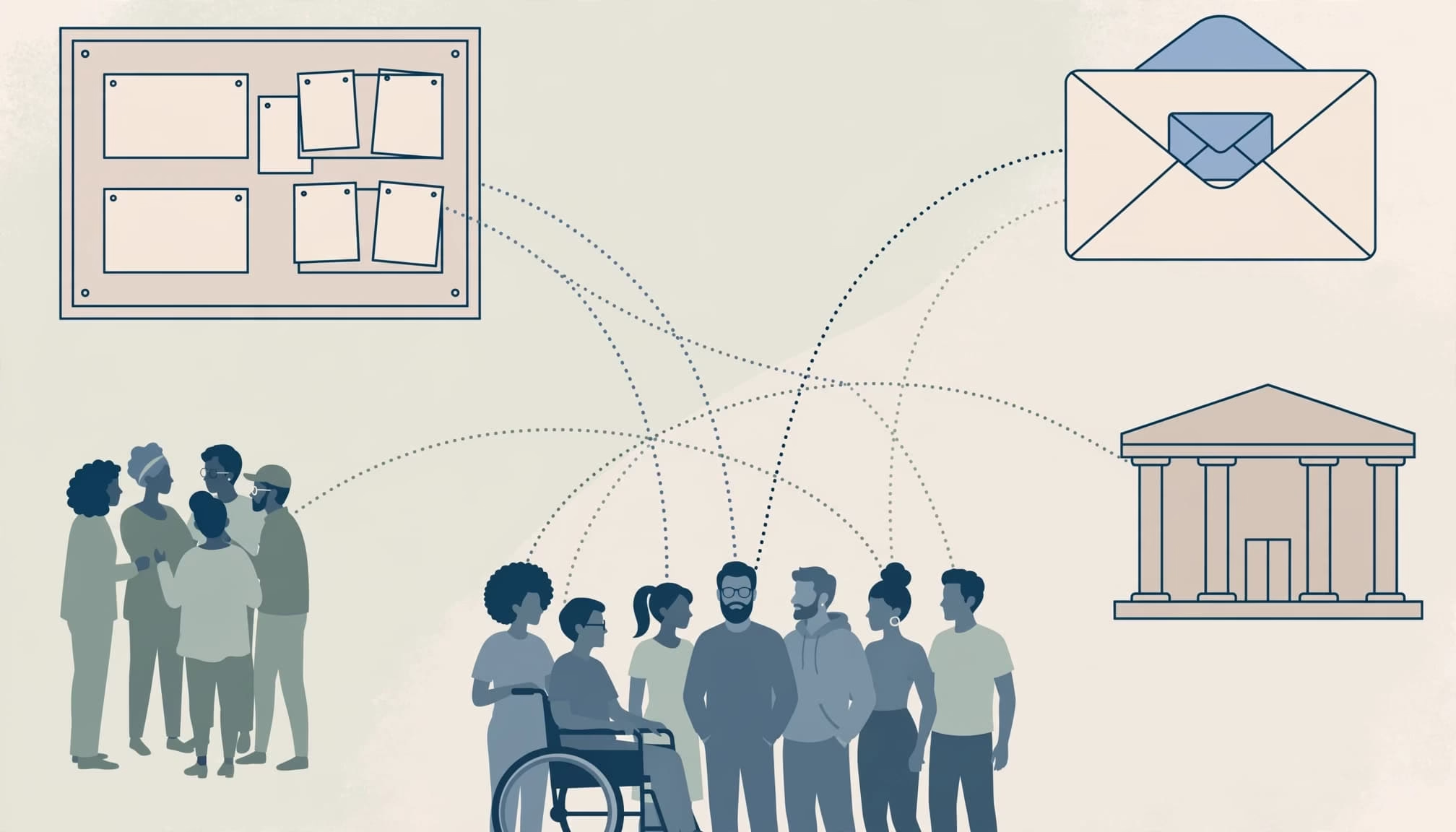
Angelfish identifies eight recruitment methods: online communities, organic social media, paid social media, word of mouth, referrals, telephone outreach, email outreach and contact lists assembled through desk research.
Choose complementary recruitment channels rather than repeating the same invitation across similar networks. Professional associations and relevant community organisations can reach specialist audiences beyond your personal contacts. Use accessible invitation formats to include people with different needs.
An existing user base can be cost-effective to contact, but it may omit former users and people who never joined.
Volunteers may differ from non-volunteers because of self-selection. Gatekeepers, such as group moderators and organisation staff, can also affect who sees an invitation.
Social media platforms shape who sees an invitation through membership, targeting and delivery algorithms. A review of social-media recruitment examines this method and its practical considerations.
Track recruitment source alongside relevant participant characteristics. If one channel dominates, direct further outreach towards missing groups without changing eligibility. Email lists can help reach people beyond your immediate networks.
Referrals can help reach hard-to-reach groups, but social networks often connect similar people. Use separate starting points and let potential participants contact you themselves, rather than collecting their details without permission.
4. Make Invitations Neutral and Participation Voluntary
Recruitment wording can attract people with unusually strong opinions. Describe the topic fairly without implying that you expect dissatisfaction, success or a particular behaviour.
Explain what participation involves, how long it takes and whether you’ll make recordings. Include relevant privacy information and incentive terms. Keep the message consistent across channels so different groups receive comparable information.
Existing relationships can create pressure. Classmates, colleagues or people who depend on you may feel uncomfortable refusing. Give them a genuine choice, and don’t make repeated personal requests after they decline.
For online communities, obtain moderator permission where required and provide a private way to respond. People shouldn’t have to share sensitive eligibility information publicly. Research on ethical social-media recruitment discusses the privacy issues involved.
Consent materials should support informed consent by stating what participants agree to and whether they can withdraw submitted data. In a genuinely anonymous survey, identifying and removing one person’s answers after submission may be impossible.
5. Pilot Materials and Set Proportionate Incentives
Test the Whole Participant Experience
Before launching your research study, pilot your screener and recruitment message alongside the interview script, questionnaire, survey or usability-test scenario. Identify confusing wording, technical problems and unnecessary burden before the main study.
For user research, involve people who resemble your intended participants rather than relying entirely on friends who know your project. Ask how they interpreted questions and where instructions became unclear.
Also assess accessibility, scheduling and completion time. A technically functional survey can still lose participants because it’s difficult to use.
Match Incentives to Participation
The Market Research Society publishes guidance on using incentives. Base your approach on participants’ time, inconvenience and expenses, not payment for particular answers.
An overly generous incentive may attract people mainly interested in the reward, including some who misstate their eligibility. Financial motivation alone doesn’t invalidate someone’s contribution.
A study of financial incentives and volunteering examines how incentives relate to clinical-trial participation. Its context also shows why payment decisions shouldn’t rest on a universal amount.
6. Validate Suitability and Prepare for No-Shows
Telephone validation can help establish whether someone genuinely fits the recruitment brief. Use a short, consistent conversation rather than coaching people towards eligibility.
Offer an accessible alternative where a telephone call creates a barrier. Otherwise, validation itself could exclude suitable participants.
Over-recruit modestly where your design and resources allow it. A waiting list can provide flexibility without asking unnecessary participants to travel or reserve time.
Reconfirm availability one or two days before an interview or focus group. Include the location or joining instructions, expected duration and an easy cancellation route.
Replacement participants should meet the same criteria and follow the agreed selection procedure. Don’t simply substitute whoever is nearby.
For longitudinal research, repeated contact can cause participant fatigue and reduce feedback quality. Keep follow-ups proportionate and record who drops out, because attrition may affect some groups more than others.
7. Monitor Recruitment and Report Its Limits
Keep a recruitment log covering sources, invitations where known, responses, screening exclusions and completed participation. Record departures from your planned procedure and the reasons for them.
Compare participant characteristics with available population information when possible. This can reveal under-represented groups, although matching visible characteristics doesn’t prove that all relevant differences have disappeared.
A recruitment target isn’t a response-rate denominator. If you don’t know how many eligible people received an open invitation, report that limitation rather than calculating a misleading percentage.
Keep sample size and selection bias separate. More responses can improve precision without correcting systematic exclusion.
Internal validity concerns the credibility of findings within the research context, including whether a causal interpretation is justified. External validity concerns how far findings generalise beyond it. Recruitment matters particularly to the latter.
Our dissertation methodology examples show how to connect procedures with their justification. When writing dissertation limitations, explain which conclusions recruitment restrictions prevent, rather than dismissing the entire study.
Frequently Asked Questions About Dissertation Participant Recruitment
What Is the Most Effective Recruitment Method?
There is no universally strongest method. Choose channels that reach your defined population, then add complementary routes where coverage is weak. Speed and low cost don’t establish sample quality.
How Long Does Recruitment Usually Take?
Angelfish gives five to ten working days as a typical timeframe for standard consumer focus-group or depth-interview recruitment, depending on sample size. Specialist dissertation populations may require longer, so this isn’t a guaranteed dissertation timetable.
Should I Recruit Participants Myself or Use an Agency?
Self-recruitment gives you direct control over screening and communication. A recruitment agency can handle outreach and scheduling, but you still need to understand its sources, eligibility checks and exclusions. Outsourcing recruitment doesn’t remove your responsibility for sampling decisions.
How Many Extra Participants Should I Recruit?
There is no universal percentage. Plan around the session format, recruitment experience and consequences of empty places. A waiting list may suit interviews better than confirming more people than you can accommodate.
Can Social-Media Recruitment Produce an Unbiased Sample?
A broad-looking group of volunteers isn’t necessarily representative. Platform coverage, algorithmic delivery and self-selection can all affect participation. Combine sources, record targeting choices and describe missing groups. Multiple channels reduce dependence on one source but don’t create random selection.
Build a Defensible Sample
Good recruitment makes selection decisions visible and consistent. Define eligibility first, reach beyond your easiest contacts and preserve a clear record of who entered the study.
Your strongest safeguard is alignment between evidence and claims. A carefully described sample can support a useful dissertation without supporting conclusions about everyone.