
Politics can feel like a live wire at home. One wrong word, and suddenly you are not just talking about policies, you are questioning values, upbringing, even love. No wonder so many students avoid it or end up in explosive rows.
But it does not have to be like that. You can talk politics with parents in a way that is honest, direct, and still kind. This guide will help you argue your case without setting fire to the relationship underneath it.
Key Takeaways
- Political arguments with parents feel personal because they touch identity, values, and history.
- Going in with a clear goal and boundaries makes clashes less intense.
- Simple tools like active listening, “I” statements, and good timing reduce drama.
- It is fine to step back, pause, or stop the chat to protect your mental health.
- You can strongly disagree and still keep a warm, respectful relationship.
Table of Contents
- Key Takeaways
- Why Political Arguments With Parents Feel So Intense
- Prepare Yourself Before You Talk Politics With Parents
- Ground Rules For Respectful Political Debates At Home
- Practical Communication Techniques That Keep Things Calm
- When To Step Back And Protect Your Mental Health
- Turning Disagreements Into Learning, Not War
- Conclusion
- Frequently Asked Questions About Arguing With Parents About Politics
Why Political Arguments With Parents Feel So Intense

When you argue about politics at home, you are rarely just arguing about tax or voting systems. You are bumping into:
- Identity: Parents can feel that criticism of their views is criticism of the kind of person they are.
- History: They may hear, “You raised me wrong”, even if you never say it.
- Fear: Big topics like climate, racism, or the economy trigger fears about the future.
On your side, it can feel like they are dismissing your generation, your friends, or your rights. That mix of love, power, and history makes even small disagreements feel loaded.
Understanding this does not magically fix things, but it helps you react to emotion with a bit more patience instead of only anger.
Prepare Yourself Before You Talk Politics With Parents
If you go in unprepared, it is easy to end up shouting or storming off. A little planning helps a lot.
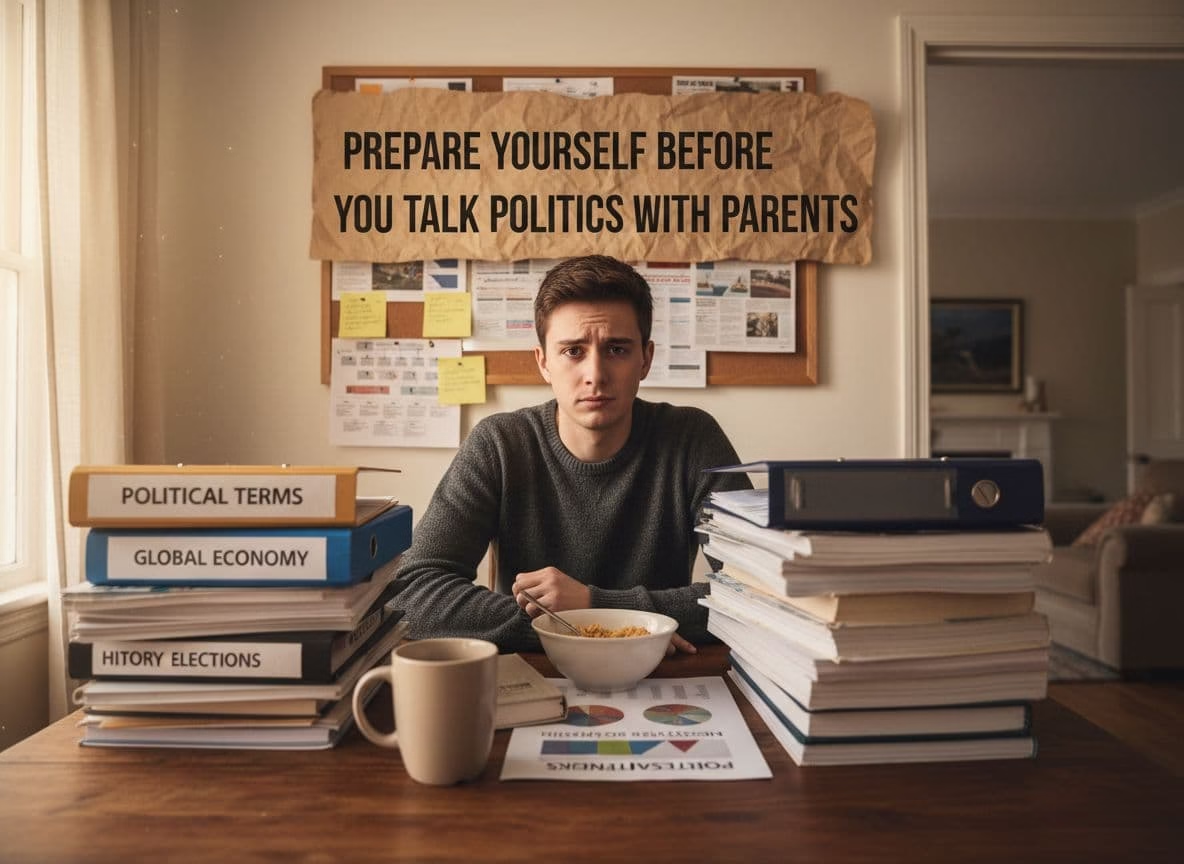
Know your goal
Ask yourself: what do I actually want?
- To understand why they think the way they do?
- To share how a policy affects you personally?
- To persuade them on one specific issue?
If your real goal is “win at all costs”, the conversation will probably hurt. If your goal is “keep the relationship and still speak my mind”, you will talk differently.
Choose the right moment
Trying to talk politics with parents when everyone is stressed, hungry, or running late is a bad bet. Better options include:
- A calm evening, when no one is rushing.
- A walk, car ride, or washing up together, when eye contact pressure is lower.
If the mood feels off, you can say, “I’d like to chat about something political later, but I don’t think now is the best time.”
Check your emotional state
If you already feel exhausted, anxious, or close to tears, it may not be the day for a big clash. Simple grounding habits, like breathing exercises and short meditation, can help you calm down before you start.
If you need practical ideas, this guide on the benefits of mindfulness for students shows how meditation supports focus and emotional balance, which really helps during heated family talks.
Ground Rules For Respectful Political Debates At Home
You do not have to announce a formal rulebook, but having a few shared boundaries makes arguments less brutal.
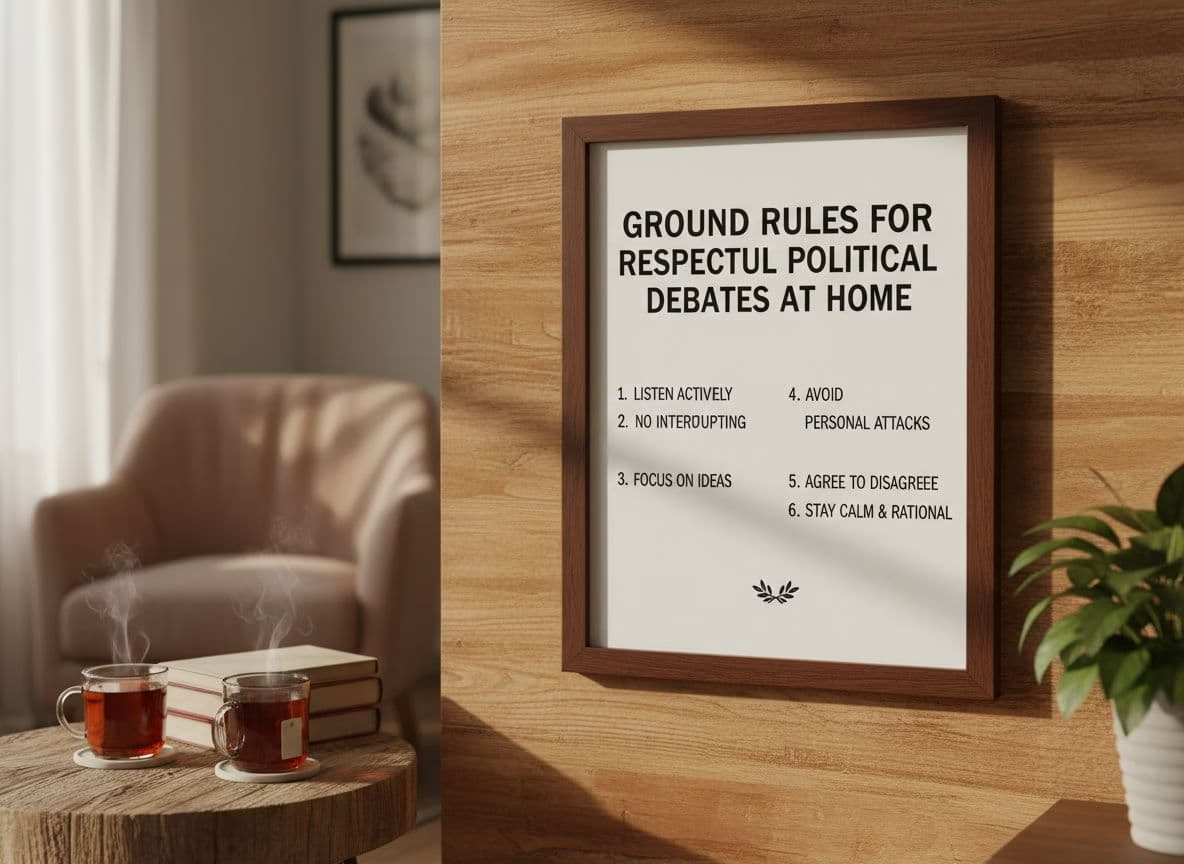
You might say something like, “I want to talk about this, but I also want us to stay respectful. Can we agree on a few ground rules?”
Helpful rules include:
- No insults: Attack ideas, not each other. No “You are stupid”, no jokes about being “brainwashed”.
- No shouting over each other: If voices rise, anyone can ask for a pause.
- No phone “gotcha”: Constantly waving tweets or half-read headlines at each other rarely helps.
- Use “I” statements: “I feel worried when…” instead of “You are wrong because…”.
Many of these ideas match the principles for talking politics with family that communication experts suggest, like asking questions instead of trying to trap the other person.
You can also agree in advance that some topics are off-limits at certain times, like during birthdays or holidays. The Guardian has shared helpful rules of engagement for family rows over politics, which you can adapt to fit your home.
Practical Communication Techniques That Keep Things Calm
Good intentions help, but you also need tools for when the chat starts to heat up.
Listen in order to understand, not just respond
Try this simple pattern:
- Let them finish their point.
- Summarise it: “So you are saying you worry about X because Y, right?”
- Only then share your view.
This shows respect even when you disagree strongly. It also stops you arguing against something they never actually said.
Ask curious questions
Instead of “How can you believe that?”, try:
- “What experiences made you feel so strongly about this?”
- “Where did you first hear about that idea?”
- “What would you like to see happen in the next few years?”
Questions push the chat into story and values, which are easier to connect over than slogans.
Share personal stories, not just facts
Facts matter, but people relate to stories. Explaining how a policy affects your friends at uni, or people in your town, often lands better than quoting statistics.
A useful guide on how to talk to your family about politics without losing your cool suggests linking your views to real experiences, because that keeps the tone more human and less like a debate club.
Say how you feel
“I feel scared about my future when I hear X” hits very differently from “You are ruining my future”. Feelings invite empathy, accusations invite defence.
When To Step Back And Protect Your Mental Health
Not every argument can be saved by good listening. Sometimes the healthiest move is to stop.
Signs it is time to pause:
- You feel shaky, panicky, or about to cry from anger.
- The chat has turned into repeating the same lines.
- They start using insults or bring up old unrelated issues.
You might say:
- “I care about this and about you, but I am getting too upset. Can we stop for now?”
- “I have said what I think, you have too. Let’s leave it there for today.”
Then actually step away. Go to your room, put on music, message a friend, or do something physical like a short walk. Your mental health matters more than winning an argument.
If your home is very tense around politics, you may choose not to raise certain topics at all. That is not weakness, it is a boundary.
Turning Disagreements Into Learning, Not War
You are not responsible for changing your parents’ minds, and they are not responsible for changing yours. What you can both do is learn more about why you each think the way you do.
You could:
- Ask about their memories of earlier elections or protests.
- Share how social media or university conversations shape your views.
- Look for one small point you agree on, even if it is just “We both care about fairness.”
Think of it like learning a new subject. You and your parents might be using different textbooks, but you can still compare notes without ripping up each other’s pages.
Conclusion
Talking politics at home can be messy, emotional, and tiring. It can also be a chance to practise respect, courage, and clear thinking with the people who know you best.
If you prepare, set gentle rules, listen well, and step back when needed, you can talk politics with parents without tearing the relationship apart. You will not fix every disagreement, but you can protect the love beneath the argument, which is what really lasts.
Frequently Asked Questions About Arguing With Parents About Politics
What if my parents refuse to listen at all?
You cannot force someone to listen. Focus on staying calm and clear, say what matters to you once, then stop. You might choose to share more by message or letter, which gives them time to think without reacting in the moment.
How do I respond if they say my generation knows nothing?
First, breathe. Then try: “I get that things were different when you were younger. I am not saying I know everything, I am sharing how things look from my side today.” You can also ask them what they felt at your age and link that to how you feel now.
Is it disrespectful to disagree with my parents about politics?
Disagreement is not the same as disrespect. The key is how you do it. Avoid insults, stay away from mocking tones, and show you understand that they care about these issues too, even if you reach different conclusions.
What if the conversation brings up offensive or hateful views?
You do not have to accept speech that attacks your identity or safety, or that of others. You can say, “That language really hurts me” or “I am not ok with talking about people that way”, then leave the conversation. Protecting yourself is more important than staying polite.
How can I keep the peace during holidays or family events?
Plan ahead. You could agree as a family that certain topics are off-limits for the day, or that if politics comes up, you keep it brief and light. Have backup topics ready, like films, travel, or uni stories, so you can gently steer the chat away from a fight before it starts.