

Image: Diverse students calmly discussing school dress code rules with a teacher. Image created with AI.
You pull on an outfit that feels like you, walk into school, and before you even reach your seat, someone points at the school dress code. Instant mood killer.
Challenging dress code rules does not have to mean constant arguments, detentions, or being sent out of lessons. With a bit of planning, you can stand up for yourself, keep your education on track, and still push for fairer rules.
This guide walks you through how to understand the policy, know your rights, and challenge things properly, step by step, without turning every lesson into a battle.
Key Takeaways
- Read the exact dress code so you know the rules better than anyone else.
- Check if rules are fair and legal, especially around religion, gender, and culture.
- Challenge calmly and in writing so staff take you seriously.
- Keep learning first, even while you push for change in the background.
- Get support from friends, parents, and trusted teachers if you want long‑term change.
Table of Contents
- Key Takeaways
- Start With The Rulebook: Know What Your Dress Code Really Says
- Understand Your Rights And Where Dress Codes Cross The Line
- Challenge The School Dress Code Without Losing Your Place In Class
- Protect Your Learning While You Speak Up
- When To Push Harder, And When To Let It Go
- Conclusion: Challenging Dress Codes Can Be Smart, Not Stressful
- Frequently Asked Questions About Challenging Your School’s Dress Code Rules
Start With The Rulebook: Know What Your Dress Code Really Says

Image: Student reading the dress code section of the school handbook in the library. Image created with AI.
Before you argue about a rule, you need to know it word for word. Think of it like revising before an exam. You would not argue with a teacher about a mark without reading the question first.
Look for:
- The full uniform or dress code policy on your school website or in your planner.
- Any sections on hairstyles, jewellery, religious items, makeup, or sports kit.
- What it says about “sanctions” like being sent home, isolation, or detentions.
Highlight anything that affects you. For example, rules about skirts, headscarves, haircuts, or piercings.
It also helps to know what government advice says. The Department for Education has official guidance on school uniform policy, including points on cost, religion, and equality. Reading this can help you spot when your school might not be following best practice.
Once you know the exact wording, you can say, “In section 3.2 it says…” instead of “I just think this is unfair”. That change in tone makes adults listen.
Understand Your Rights And Where Dress Codes Cross The Line
Dress codes are allowed, but they must still follow the law. In the UK, schools have to think about the Equality Act 2010 and discrimination.
A rule can be a problem if it:
- Treats one group worse than another (for example, stricter rules for girls than boys).
- Makes things harder for a certain religion or culture.
- Punishes hairstyles linked to a race or background, like braids or afros.
Lawyers describe this as “indirect discrimination”. A rule looks the same for everyone, but it hits some groups harder. The Monckton Chambers guide on school uniform and indirect discrimination explains how this can happen with things like religious dress and hair.
Here is a quick comparison:
| Type of rule | More reasonable example | More unfair example |
|---|---|---|
| Hair length | “Hair must be clean and tidy for safety in labs.” | “Boys must have short hair, girls may have long hair.” |
| Religious or cultural dress | “Religious items allowed in school colours.” | “No head coverings of any kind, no exceptions.” |
| Gender expectations | “All students may wear trousers or skirts.” | “Only girls may wear skirts, only boys may wear trousers.” |
If a rule seems harsh but you are not sure if it is legal, you can read this summary of the law on school uniforms for a clearer overview.
Knowing this does not mean you have to shout “Illegal!” at your headteacher. It means you can say, “I am worried this rule might be unfair under the Equality Act. Can we talk about it?” which is a very different conversation.
Challenge The School Dress Code Without Losing Your Place In Class
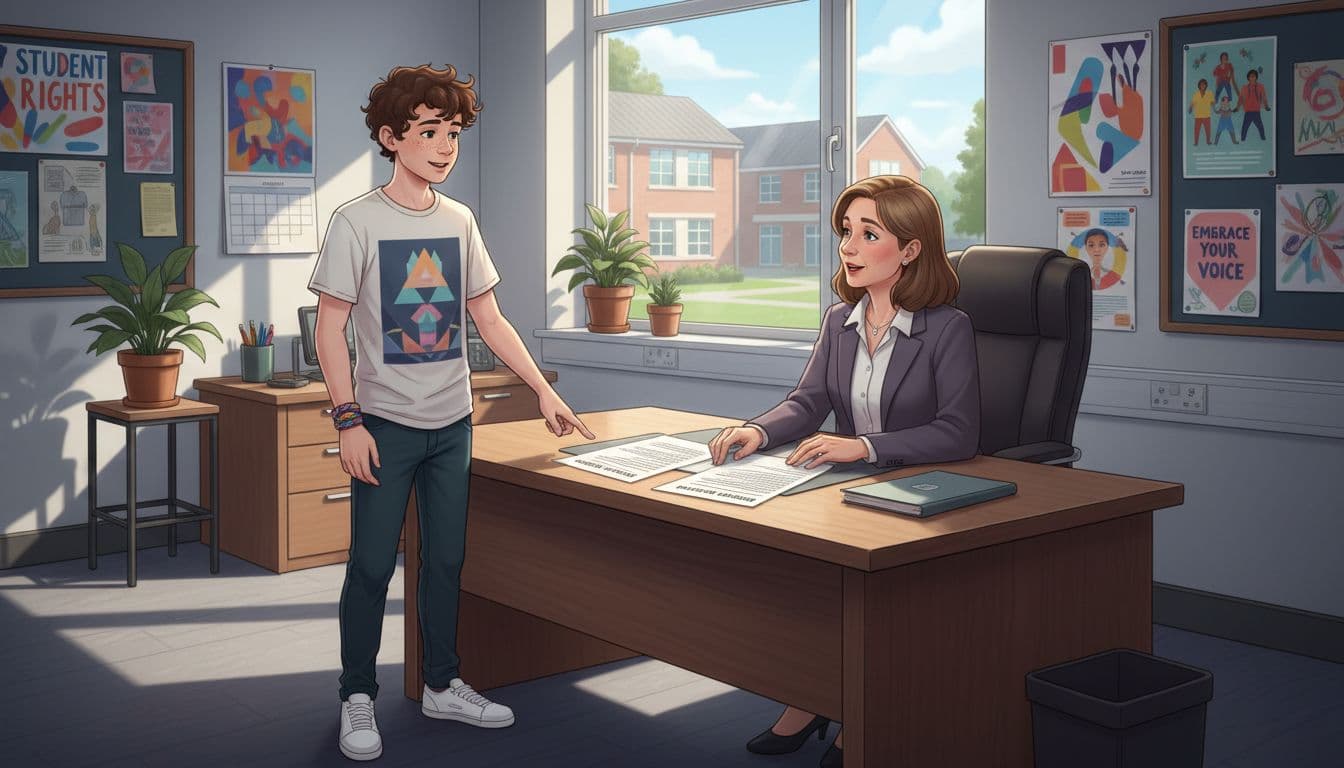
Image: Student discussing dress code rules calmly with a school leader. Image created with AI.
The aim is simple: make your point, but stay in the classroom. Think of it like playing chess. You are not flipping the board, you are planning your moves.
1. Pick Your Outfit Tactically
If you want to test a rule, keep everything else very neat and within the policy.
For example, if you are challenging a rule on hair:
- Make sure your uniform, shoes, and jewellery fully follow the rules.
- Keep your behaviour calm and polite.
- Be ready to explain why that one part of your look matters to you.
Staff are more likely to listen if you are not breaking five other rules at the same time.
2. Talk To A Teacher First, Not In The Corridor
Instead of arguing in front of everyone, ask for a short chat with:
- Your form tutor,
- Head of year, or
- A trusted teacher.
You might say:
“Sir/Miss, I have some concerns about the dress code, especially the part on skirts/afros/religious items. Could we talk about it at break, please?”
In the meeting:
- Explain calmly how the rule affects you day to day.
- Mention any guidance or law you have read.
- Ask what the process is for raising a formal concern.
You are not trying to win a fight in one go. You are opening a door.
3. Put Your Concerns In Writing
Schools take written complaints more seriously than corridor chats. You could write an email with a parent or carer, or ask a teacher to help you structure it.
Keep it:
- Short and clear.
- Focused on the impact on learning and wellbeing.
- Respectful, no insults or threats.
Parents often have an important role here. The ARAG legal perspective on uniform rules and parental rights explains how adults can question policies on your behalf. Sharing that with your parents might help them feel more confident speaking up.
End your message with something like, “I want to follow school rules and keep learning, but I hope we can review this part of the policy.” That line shows you care about both your rights and your education.
Protect Your Learning While You Speak Up
You have a right to express yourself, but you also have a right to an education. Losing lesson time every day over your trainers may not be worth it.
Some ideas that keep you in class:
- If staff tell you to remove an item, you can say, “I will do that now so I can stay in the lesson, but can we still talk about reviewing this rule later?”
- Keep a record of incidents in a notebook or notes app. Write the date, what happened, and who spoke to you.
- If you get a detention, use that time to stay calm and maybe read more about the policy.
Think of it as playing the long game. You want lasting change, not a single dramatic moment in the corridor.
When To Push Harder, And When To Let It Go
Sometimes schools listen and adjust the school dress code. Other times they dig their heels in. So what then?
You might push harder if:
- The rule clearly targets a group, such as a faith or race.
- You are being removed from lessons often for very minor issues.
- You have raised concerns politely and nothing has changed.
In serious cases, your family might speak to your local council, a school governor, or even get legal advice, especially if discrimination is involved. Articles like the Monckton Chambers piece on uniform and discrimination show how some families have taken things further.
However, sometimes a rule is annoying but not the hill you want to die on. You might decide, “I will follow this for now, focus on my grades, and use my voice in other ways.” That is also a valid choice.
Conclusion: Challenging Dress Codes Can Be Smart, Not Stressful
School should be a place where you learn, feel safe, and still show some of who you are. A school dress code that feels unfair can make that hard, but you are not powerless.
If you understand the rules, know your rights, stay calm, and keep your focus on learning, you can challenge policies without living in detention. The aim is not to win every argument. The aim is to be heard, to protect your education, and to help shift school culture, bit by bit, for the students who come after you.
Frequently Asked Questions About Challenging Your School’s Dress Code Rules
Can my school really send me home because of my clothes or hair?
They can use sanctions if you break the dress code, but they must still act reasonably and think about the impact on your education. Government guidance on school uniform asks schools to think carefully before removing pupils from lessons over minor issues. If you are being sent home often, your parents can raise this with the school.
What if the dress code feels sexist or unfair to girls or boys?
If rules are stricter for one gender, that can raise questions under equality law. For example, if girls are punished for skirt length while boys are ignored for similar issues, that is a problem. Collect clear examples, talk to a trusted teacher, and ask how the policy is checked for fairness for all genders.
Can schools ban religious clothing like hijabs or turbans?
They can set rules about colours or safety, but a total ban on religious dress is very hard to justify. The Equality Act protects religion and belief, so schools must think carefully about how their policies affect different faiths. If you feel your religious practice is being restricted, speak to your family and ask the school to review the policy formally.
How can I challenge the dress code if I am shy or anxious?
You do not have to do it alone. You could:
- Write a letter instead of speaking in person.
- Ask a friend, sibling, or parent to come to a meeting with you.
- Talk first to a teacher you trust and ask them to help you raise it.
Even a short, polite email saying, “This rule makes me uncomfortable, could we talk about it?” is a strong start. You deserve to feel heard, even if you prefer quieter ways of speaking up.