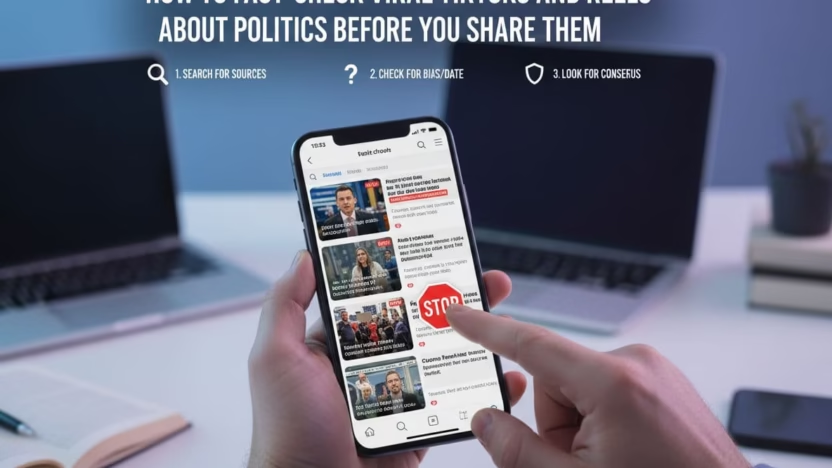
You scroll for “just five minutes”, and suddenly a dramatic political TikTok pops up. Explosive headlines, scary music, bold captions. Your first instinct is to hit share.
That is exactly how false political content spreads.
If you want to stay smart, protect your friends, and keep your feed trustworthy, you need a simple way to fact check political TikToks and Reels before you pass them on. This guide breaks that process into quick, realistic steps you can actually use between lectures or on the bus.
Key Takeaways
- Slow down for 30 seconds before sharing any political TikTok or Reel.
- Check who posted it, what sources they use, and whether anyone reliable backs the claim.
- Search for the claim on trusted fact-checking sites and news outlets.
- Look for signs of editing, AI, or old footage being shared as new.
- Build a repeatable routine so fact checking becomes as normal as liking a post.
Table of Contents
- Key Takeaways
- Why viral political TikToks and Reels are so easy to believe
- Quick checklist: how to fact check political TikToks before you share
- Use reliable sources and fact-checking websites
- Spot AI, edits, and out-of-context clips
- Build a fact-checking habit in your student life
- Conclusion
- Frequently Asked Questions About Fact-Checking Viral TikToks And Reels About Politics
Why viral political TikToks and Reels are so easy to believe
Short videos are powerful. They hit your emotions before your brain has time to question them. A five second clip of “missile strikes” or a confident “news anchor” can feel more real than a long article.
Recent examples show how risky this is. One viral clip claimed to show Israeli missiles hitting Iran, but fact-checkers found several scenes were AI generated and stitched together from unrelated footage. Another TikTok used an AI-generated presenter to push a conspiracy theory about a government “cover up” at a Florida incinerator.
Both looked slick and convincing. Both were false.
For students, this matters. These clips can shape how you vote, what you say in class, and even how you feel about whole groups of people. Treat political TikToks and Reels like rumours in the corridor: interesting, but unproven until you check.
Quick checklist: how to fact check political TikToks before you share
Use this fast checklist whenever a political video makes you feel shocked, angry, or smug.
- Pause
If your heart rate jumps, stop. Strong emotion is often a sign the creator wants you to react, not think. - Read the text properly
Look at the caption, on-screen text, and hashtags. Are there clear sources or just vague claims like “they don’t want you to know this”? - Search the claim in your browser
Type a short version of the claim plus “fact check” or “news”. For example:UK TV licence free over 60 fact check. - Check the date
Old clips are often reposted as if they are new. Make sure the event matches the date on the post and in any linked articles. - Decide if you would repeat it in an essay
If you would not risk using it in coursework, do not share it as “fact” online.
Use reliable sources and fact-checking websites
You do not have to verify every claim alone. Professional fact-checkers exist for a reason.
For UK politics, start with Full Fact. They investigate speeches, viral posts, and headlines about everything from elections to TV licences, then explain what is true, false, or misleading in plain language.
For US-focused content, PolitiFact rates political claims on a clear truth scale, which is handy when American clips cross into your feed. For general rumours and urban myths, Snopes is a long-running fact-checking site that often covers videos that go viral on TikTok and Instagram.
When the clip shows war, protests, or breaking news, check Reuters Fact Check. They often debunk fake war footage and AI-generated “news” before most people realise it is fake.
If you want to go deeper into media literacy, this media literacy guide from Princeton University walks through different ways to evaluate sources, including lateral reading and triangulation.
A good rule: if none of these sources, or any major news outlet, mention a dramatic political claim, be very wary of accepting it from a 15 second clip.
Spot AI, edits, and out-of-context clips
Not all false videos are completely fake. Some are real clips used in the wrong way, others mix truth with AI.
Watch for:
- AI-generated presenters
Faces that barely blink, slightly robotic voices, or weird mouth movements are warning signs. The “AI news anchor” pushing the Florida incinerator conspiracy looked like a real presenter at first, but closer watching showed a flat expression and odd lip sync. - Visual glitches
Look for flickering edges, warped hands, strange shadows, or text that blends into the background. These can show that parts of the video were generated or edited. - Reused footage
The “Israeli missile strike” clip used unrelated explosion footage from other places. If you suspect this, pause the video and take a screenshot, then run a reverse image search using tools in your browser. If the image shows up in old news stories from different countries, the TikTok is misleading you. - Dramatic audio over boring visuals
Sometimes the pictures are real, but the audio is added later. If the voiceover makes huge claims that the clip does not actually prove, treat it as opinion, not evidence.
If any of these show up, you have good reason to doubt the political message in the video.
Build a fact-checking habit in your student life
Fact-checking gets easier once it becomes routine, like referencing your sources in an essay.
Here are small habits that help:
- Create a “check before share” rule in group chats
Agree as a friendship group or study group that political clips get checked before they are posted as facts. You can even take turns acting as the “fact-checker of the week”. - Save key sites in a folder
Bookmark sites like Full Fact, PolitiFact, Snopes, and Reuters Fact Check in a “Misinformation” folder, so you can check claims in seconds. - Use your study skills
The same skills you use to judge academic sources apply here. Who is the author? What is their purpose? Do other sources agree? Treat political TikToks like informal sources that always need backing. - Call things out kindly
If a friend shares a false Reel about a new “fast fashion ban” or “free TV licences for everyone over 60”, send them a link to a reliable fact check and say you were curious, so you looked it up. You correct the claim without attacking the person.
Over time, you will start to spot patterns in how misleading clips look and sound, and your feed will feel calmer and more trustworthy.
Conclusion
Political TikToks and Reels can be useful, funny, and sometimes powerful. They can also be totally wrong. When you pause, check the source, compare with reliable reporting, and watch out for AI and edits, you protect your own thinking and your friends’ feeds.
You do not need to become a professional fact-checker. You just need a simple habit that helps you fact check political TikToks before they shape your views or your vote. Next time a clip shocks you, treat that feeling as a signal to open a new tab, not to hit share.
Frequently Asked Questions About Fact-Checking Viral TikToks And Reels About Politics
How can I fact check political TikToks if I am short on time?
Do a 30 second check. Read the caption, search the main claim plus “fact check” in your browser, and see if sites like Full Fact or Reuters come up. If you cannot confirm it quickly from a trusted source, do not share it as fact.
Are community notes and comments enough to judge a video?
Comments and community notes can be helpful, but they are not perfect. Some people guess or repeat rumours. Treat them as a starting point, then cross-check the claim with fact-checking websites or established news outlets before you decide what to believe.
What should I do if I shared a political video that turns out to be false?
Edit or delete your post if you can, and add a follow-up message with a link to a reliable fact check. You can say you looked into it and found better information. Admitting a mistake shows you care about accuracy and encourages others to do the same.