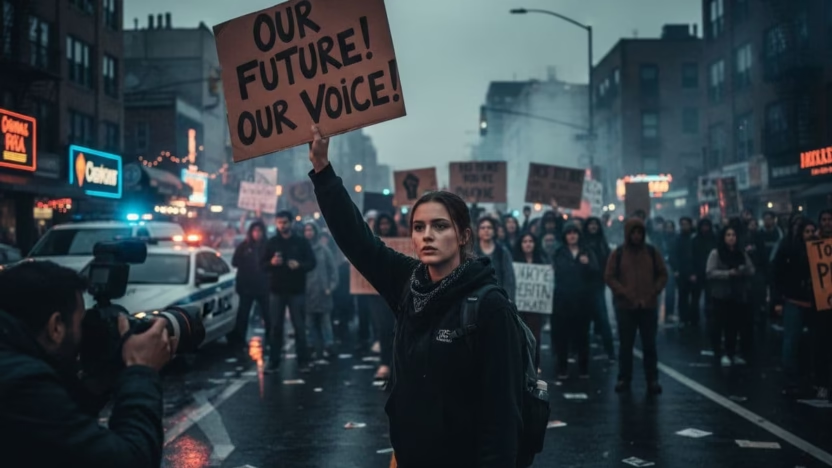
A photo hits your feed, everyone’s sharing it, and the caption is doing a lot of work: “Tonight in London” or “Students rising up in 2025”. It feels urgent, like you should repost it right now.
But protest images get recycled more than almost any other type of photo. One dramatic picture can be re-captioned for a new cause, a new country, or a new year, sometimes by accident, sometimes on purpose.
This guide shows you how to reverse image search protest photo posts properly, then check the small details that expose when the image is from somewhere else (or from years ago).
Key Takeaways
- A reverse image search works best when you search multiple crops of the same picture.
- Don’t stop at “this image exists online”. Look for the earliest credible upload.
- Use clues inside the photo (language, uniforms, street signs, weather, skyline) to test the caption.
- If you can’t confirm the place and year, share with caution, or don’t share at all.
- Keep screenshots of what you find, it helps when posts get deleted.
Table of Contents
- Key Takeaways
- Why protest photos are so often mislabelled
- Do a quick sense-check before you search
- How to reverse image search a viral protest photo (step-by-step)
- How to spot when the photo is from another country or year
- Share responsibly (especially if you’re not 100% sure)
- Conclusion
- Frequently Asked Questions About reverse image searching viral protest photos
Why protest photos are so often mislabelled
Protest photos travel fast because they’re emotional. They show crowds, conflict, courage, fear, and that makes people click “share” without checking.
There are also a few practical reasons mislabelling is common:
- Old photos look “current” if there’s no obvious date marker.
- Cropping removes context, like a landmark, a banner, or a newspaper stand.
- Captions get separated from the original post when images are reposted.
- Multiple protests can look similar, especially at night, in the rain, or in city centres.
A helpful mindset is to treat every viral image like a suitcase with the label ripped off. Your job is to work out where it’s been.
Do a quick sense-check before you search
Before you open any tools, take 30 seconds to look closely. You’re not trying to solve it yet, you’re deciding what to test.
Look for:
Text and language: shop signs, placards, road markings, station names, even a single accented letter.
Uniforms and vehicles: police hats, badges, riot shields, number plate shapes, bus colours.
Environment: palm trees, snow, specific architecture, overhead cables, road surfaces.
Light and weather: long shadows (morning or evening), heavy coats (winter), bright sun (summer), wet ground (recent rain).
Also check what the post claims. Is it a precise caption (“Manchester, 16 Nov 2025”) or vague (“Europe right now”)? Vague captions are easier to fake.
If you want a broader student-friendly approach to checking political content without getting stressed, this student guide to fact-checking political claims is a good add-on skill set.
How to reverse image search a viral protest photo (step-by-step)
Reverse image search is simple, but small choices make a big difference.
1) Save the image in a way that keeps detail
If you can, open the image and save it, rather than screenshotting a low-quality preview. If it’s a video, pause on the clearest frame and screenshot that.
2) Search it in more than one place
Different tools have different “memories”.
- Google Images (via Google Lens)
- Bing Visual Search
- TinEye
- Yandex (often strong for faces and older web copies)
If you’re new to the method, Princeton University has a clear walkthrough of reverse image searching that explains the basic flow without jargon.
3) Try multiple versions of the same image
A single protest image can fail to match because it was cropped, mirrored, or had text slapped on top. Make 2 to 4 search attempts:
- A full image search (as-is)
- A crop focused on the background, not the people
- A crop of a landmark (building, sign, skyline)
- A crop of text on a banner (even partial words help)
If the image has a big caption overlay, crop that out. You want the original pixels.
4) Don’t trust the first match, hunt the earliest credible source
A reverse image search often returns blogs and reposts first. Your target is the earliest reliable appearance, like:
- A recognised news outlet photo page
- A wire service credit (AP, Reuters, AFP, Getty)
- The photographer’s own site or portfolio
- An organisation’s official statement with the same image
Click through results and look for dates, captions, and credits. If you only find meme pages, keep going.
Citizen Evidence (a human rights verification project) has a practical guide on using reverse image search for investigations that explains why “earliest version” matters so much.
5) Cross-check with a second independent source
Once you think you’ve found the origin, confirm it somewhere else. If it’s a real photo from a real event, more than one credible source usually exists.
How to spot when the photo is from another country or year
Reverse image search gets you leads. Visual checks help you prove the caption wrong (or right).
Country clues hiding in plain sight
Road markings and signs: UK zig-zags near crossings, language scripts, road shield shapes, motorway sign colours.
Number plates: colour and format can narrow the country quickly (even if the exact plate is blurred).
Police kit: helmets, high-vis styles, shield shapes, and the wording on uniforms often vary by country.
Flags and protest symbols: look for regional flags, sports logos, or local political party colours. These get misread by outsiders.
If you want to go deeper on place verification, the European Broadcasting Union’s OSINT community has a strong guide to investigative geolocation for verifying time and place, including how to use map tools without overcomplicating it.
Year clues (the “when” is often easier than you think)
Season and clothing: heavy coats and bare trees suggest late autumn or winter, but also check if the location normally has those seasons.
Construction and street furniture: new tram lines, fresh building wraps, or rebranded shop signs can date a scene.
Event-specific banners: some protests have slogans tied to a particular year. Search the exact phrase in quotes.
Image quality and aspect ratio: older viral images often come from earlier camera styles, or they’re repeatedly re-uploaded until they look compressed and muddy.
Watch for caption tricks (this is where people get fooled)
A lot of false posts don’t invent images, they invent meaning. Common moves:
“Same image, new claim”: a real photo from 2019 posted as 2025.
“Nearby country swap”: an image from one capital city claimed as another because it “looks European”.
“One crowd, many stories”: a photo from a sports parade claimed as a protest.
This is also where dodgy arguments appear, like “I saw it on three accounts so it must be true”. That’s a classic reasoning trap. If you want to sharpen your critical thinking for class debates and essays, keep a mental list of common logical fallacies every student should know.
Share responsibly (especially if you’re not 100% sure)
If you confirm the photo is mislabelled, you don’t have to start a comment war. Post the correction calmly with:
- the earliest credible source link
- the correct location and date (if known)
- a short note: “This photo is real, but it’s from X, not Y.”
If you can’t confirm it, consider not reposting. A dramatic image without context is like a quote without the full sentence, it can push people in the wrong direction.
For examples of how misleading protest visuals spread and why context matters, BBC Bitesize has an accessible explainer on misleading images and videos shared during protests.
Conclusion
Viral protest photos are powerful, and that’s why they’re easy to misuse. A quick reverse image search plus a careful look at location and time clues can stop you spreading something false. Next time an image demands an instant reaction, treat it like coursework: check the source, confirm the details, then decide what you think.
Frequently Asked Questions About reverse image searching viral protest photos
Is Google enough for reverse image searching?
Sometimes, yes, but not always. Try at least two tools because different databases surface different results, especially for older images or heavy crops.
What if the image has been edited or mirrored?
Crop to the background and search that. Also try flipping the image back (mirrored images are common). Multiple crops usually beat a single full-image search.
Can I use EXIF data to find the date and place?
Usually not for viral images. Social platforms often strip metadata, and reposts remove it too. Treat EXIF as a bonus, not your main method.
How do I check a protest photo from a video?
Pause on the clearest frame, screenshot it, then reverse image search that frame. If the video is longer, try a second frame where signs or landmarks appear.
What’s the safest way to share if I’m unsure?
Share the uncertainty. Say you haven’t confirmed the country or year, and avoid adding a strong claim in your caption. If the image could put someone at risk, don’t share it.