
Have you ever opened a news app to “check one thing” and suddenly felt angry, scared, or guilty before you even started revising? That is not an accident. Headlines are written to pull your emotions first and your thinking second.
For students, this can drain focus, spike anxiety, and distort how you see the world. Learning to spot emotional manipulation news headlines is like putting on mental noise-cancelling headphones. You still hear the news, but you are not dragged around by it.
This guide walks you through what emotional manipulation looks like, the tricks writers use, and simple checks you can run so you stay informed without feeling controlled.
Key Takeaways
- Emotional headlines often aim to grab your attention, not to give you balanced information.
- Fear, anger, and guilt are the three main emotions used to push you to click.
- A quick pause, naming what you feel, and checking the evidence can break the spell.
- Training your critical thinking makes it easier to judge headlines calmly, even on busy study days.
Table of Contents
- Key Takeaways
- Why News Headlines Target Your Emotions
- Classic Emotional Manipulation Tricks In Headlines
- A Simple 3-Step Check For Students
- How To Train Your Critical Thinking Muscle
- Protecting Your Focus And Wellbeing As You Study
- Conclusion
- Frequently Asked Questions About Emotional Manipulation In News Headlines
Why News Headlines Target Your Emotions
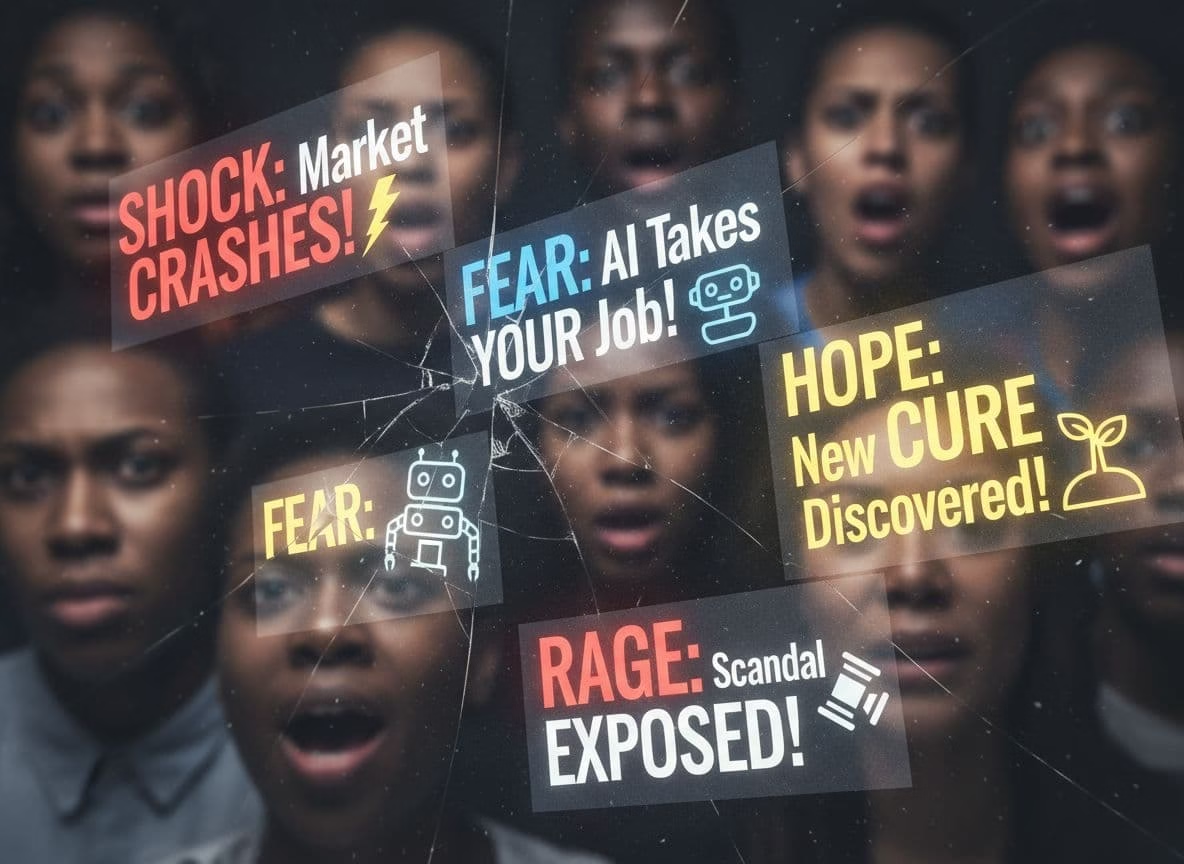
Headlines are like shop windows for information. If they do not grab you in a split second, you scroll past. That is why many outlets lean on emotion. Strong feelings make you stop, click, and share.
Research on how emotional news shapes social judgements shows that people change their view of a person or topic based on the emotional tone of the headline alone, even if they distrust the source. Your brain reacts faster to “How You Are Being Lied To About Exams” than to “Study Reports Mixed Exam Results”.
There is also a clear trend towards stronger language. An analysis of media showed that negative and manipulative news headlines have soared since 2000. In other words, your news feed is designed to press your emotional buttons more than your parents’ ever was.
Classic Emotional Manipulation Tricks In Headlines
Once you can recognise the main tricks, you start to see them everywhere. Here are some of the most common patterns.

Fear And Anxiety Hooks
Fear sells. It also raises your heart rate and wrecks your ability to focus on revision.
Look out for:
- Catastrophic language: “Students Are Doomed If They Ignore This Exam Rule”
- Vague threats: “This Everyday Habit Could Destroy Your Future”
- Overstated risk: turning a small possibility into an almost certain disaster
Fear headlines often hide key details, such as “may”, “could”, or “in rare cases”. They give you a strong feeling without clear numbers or context.
A calmer version might be: “New Exam Rule Could Affect Some Students’ Results, Study Finds”. Same topic, less panic.
Anger And Outrage Bait
Anger is highly shareable. If a headline makes you want to quote-tweet it with “This is disgusting”, it is probably designed that way.
Recently, Oxford’s word of the year was “rage bait”, a term for content created mainly to wind people up. That should tell you how common this tactic has become.
Signs of outrage-baiting:
- Us vs them framing: “Teachers At War With Lazy Gen Z Students”
- Loaded insults: “Clueless Officials Are Destroying Education Again”
- Cherry-picked examples used to make a whole group look terrible
You end up angry at a group you have never met, based on one story that may not be typical at all.
Guilt And Shame Appeals
Some headlines try to control your behaviour by making you feel like a bad person if you ignore them.
Examples include:
- “Good Students Never Do This Before Exams”
- “If You Care About The Planet, You Will Stop Doing This Now”
These headlines can be especially harsh on students who already feel under pressure to be perfect. They blur the line between helpful advice and moral judgement. A more honest headline might be “Study Suggests This Habit Is Linked To Lower Grades”, which gives you information without attacking your character.
A Simple 3-Step Check For Students
You do not need a journalism degree to handle emotional headlines. Try this quick 3-step check while you scroll.
1. Pause And Name The Emotion
Before you click, pause for a second and ask, “What is this headline trying to make me feel?”
Common answers are: fear, anger, disgust, guilt, or excitement.
Simply naming the emotion creates a tiny gap between the feeling and your reaction. You are no longer inside the emotion, you are observing it.
2. Ask “Where Is The Evidence?”
Next, scan the headline for clues about evidence.
- Does it mention a study, data, or source?
- Does it give numbers, or is it all big claims and no details?
- Is it quoting one person’s opinion but presenting it as universal truth?
If the answer is “I do not know”, that is fine, but treat the claim as unproven until you see more.
3. Rephrase The Headline In Neutral Language
Finally, rewrite the headline in your head like you are explaining it to a friend.
“Shocking Truth About How Exams Are Rigged” might become:
“Article Claims Some Students Face Unfair Exams”.
This simple rewrite strips away loaded words. If the story still seems interesting, read it. If not, you have just saved yourself some emotional energy.
How To Train Your Critical Thinking Muscle
Like any skill, spotting emotional tricks gets easier with practice.
One of the best training tools is learning about common argument mistakes, such as straw man arguments or slippery slopes. This Understanding logical fallacies for students guide is a helpful starting point.
A few practical habits:
- Compare outlets: Read how two different sites cover the same event. Notice which words change and how that shifts the emotion.
- Separate facts from framing: Ask “What actually happened?” then “How is the writer framing it?”
- Talk it out: Discuss headlines with friends or classmates. Spotting manipulation together can turn doomscrolling into a mini critical thinking exercise.
The more often you do this, the faster your brain learns to stay calm when a headline tries to push your buttons.
Protecting Your Focus And Wellbeing As You Study
Emotional headlines do not just shape opinions. They can also chip away at your mood and productivity.
Constant exposure to outrage or fear can raise your stress levels, which makes revising harder and sleep worse. New tools like AI make it even easier to create fake or exaggerated content designed to stir up anger, as reports on how AI can twist emotions through fake content have shown.
Some simple boundaries:
- Set a news time window, for example 15 minutes after lunch, instead of checking between every flashcard.
- Keep news apps off your home screen, so you choose when to read rather than tapping on autopilot.
- When a story sticks in your head, talk about it or write a few lines in a journal to process the emotion.
You are not weak for feeling pulled in. These headlines were built to hook you. You are strong when you learn to spot that and step back.
Conclusion
Headlines will always try to win the battle for your attention. As a student, your time, focus, and mental energy are limited, so you need to protect them. Learning to spot emotional manipulation news headlines helps you stay informed without being pushed around by fear or rage.
Next time a headline makes your heart race, pause, name the emotion, and ask where the evidence is. You may still choose to read the story, but you will be doing it on your terms, not the headline’s.
Frequently Asked Questions About Emotional Manipulation In News Headlines
Why are emotional news headlines such a big problem for students?
Students are already under pressure from exams, deadlines, and future plans. Emotional headlines add extra stress and distraction. They can make the world seem more scary or hopeless than it really is, which harms motivation. When you are revising, even a few minutes lost to outrage or panic can break your concentration.
Are all emotional headlines bad?
No. Some topics are naturally emotional, such as injustice, health, or climate issues. A headline can be powerful and still fair. The problem comes when emotion is used to exaggerate, distort, or hide key facts. If a headline makes you feel intense anger or fear but gives you almost no detail, that is a sign of manipulation.
How can I stay informed without getting overwhelmed?
Set clear limits on when and how you consume news. Choose a small number of trustworthy outlets instead of endless scrolling. Use the 3-step check: pause and name the emotion, look for evidence, then rewrite the headline in neutral language. If a story still feels heavy, step away and return later, or talk it through with someone you trust.