
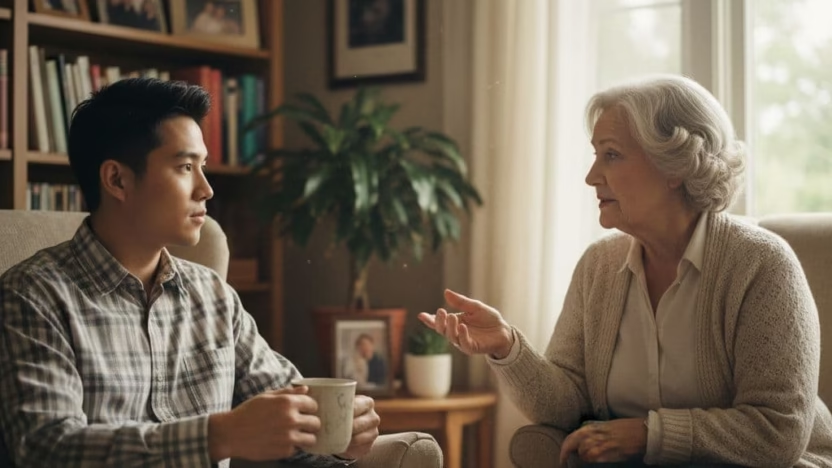
You love your grandparents, but the moment politics comes up, you feel your pulse jump. Before you even finish a sentence, you get hit with, “You’re young, you’ll understand when you’re older,” or “Kids don’t know anything yet.”
It feels patronising, and it can make you want to stop talking at all. But completely dodging politics can also feel fake, especially when big issues affect your future.
This guide shows you how to talk politics with grandparents in a way that protects your peace, respects them as people, and still lets you hold your ground. It is written with students in mind, so you can use it at family dinners, over FaceTime, or during a quick phone call between study sessions.
Key Takeaways
- Prepare your thoughts and your goals before starting a political chat with grandparents.
- Use questions and shared values to keep the tone curious instead of combative.
- Set boundaries and step away when the conversation stops feeling respectful or safe.
Table of Contents
- Key Takeaways
- Why Talking Politics With Grandparents Feels So Hard
- Prepare Before You Open Your Mouth
- How To Start The Conversation Without A Fight
- Staying Calm When You Feel Talked Down To
- Keeping Respect At The Centre
- Conclusion
- Frequently Asked Questions About How To Talk Politics With Grandparents
Why Talking Politics With Grandparents Feels So Hard
You and your grandparents grew up in completely different worlds. Different news sources, different prices, different rights, different risks. Of course you see politics through different lenses.
Add in the power balance. They changed your nappies, they watched you learn to read, so it is easy for them to slip into “you are still a child” mode, even if you are now voting, working, or at uni.
On top of that, some older relatives feel attacked by younger views. If they hear your opinion as “everything you believed is wrong”, they are more likely to dig in. Linguists who study political chats in families point out that tone, body language, and even small phrases like “you always” can turn debate into a row, as discussed in this piece on how to talk about politics with your family.
So if it feels tense, you are not imagining it. You are bumping into history, ego, and emotion, all at once.
Prepare Before You Open Your Mouth
A bit of prep can save a lot of drama. Treat it like revising for a seminar rather than walking into an exam blind.
Get clear on your own views
You do not need a full manifesto. You do need:
- The main point you care about
- One or two reasons you believe it
- A personal link, like how it affects your fees, housing, course choice, or mental health
For example: “I support more funding for mental health services, because waiting lists for students are so long. I had to wait months for help with anxiety.”
That is clear, human, and harder to dismiss than “You are wrong, the government is terrible.”
Pick your moment
Trying to talk politics grandparents style while your grandad is half shouting at the TV is not ideal.
Better times might be:
- A quiet car ride
- A slow walk
- Washing up together
- A call where you both have time
If someone is tired, stressed, or already angry about something else, park it. Your goal is a thoughtful chat, not a blow-up.
How To Start The Conversation Without A Fight
Your opening line sets the whole mood. Go in like a lecturer and you invite resistance. Go in like a curious person and you invite stories.
Use questions, not lectures
Questions give your grandparents space to explain themselves. They also give you more information to work with.
Try:
- “What was it like when you first voted?”
- “What made you support that party in the first place?”
- “What worries you most about how things are going now?”
Once they have shared, you can add, “I see it a bit differently for my generation,” then explain why.
A lot of family conflicts come from feeling unheard. Mental health writers and therapists often suggest active listening skills for heated topics, as in this guide on talking to family members about politics. You can borrow the same approach: listen first, then respond.
Find shared values first
Before you debate policies, look for the values you agree on.
Maybe you both care about:
- Fairness
- Safety
- Freedom of speech
- Hard work being rewarded
You might say, “I know we both care about fairness. For me, that is why I support…” and then link your value to your view.
When you do this, you are not attacking their character. You are saying, “We share a base, we just pick different routes.”
Staying Calm When You Feel Talked Down To
At some point, you might get the classic, “You will understand when you are older,” or “You are too young to get it.”
It stings. It can make you feel small, no matter how many exams you have passed.
Set gentle boundaries
You are allowed to set the tone you will accept, even with grandparents.
You might try:
- “I respect your experience. I would like my experience to be respected too.”
- “I am happy to talk if we both listen. If it is just you talking at me, I would rather pause it.”
- “When you say ‘kids do not know anything’, it makes me feel like my life does not count. Can we avoid that?”
Conflict resolution experts repeat that you get better results when you speak from your feelings instead of accusing. You can see this in advice like the five tips on talking politics with family without falling out, which focus on “I” statements and shared ground.
When to step away
Sometimes the kindest, smartest move is to stop.
Signs you should pause the chat:
- Voices are getting louder
- Insults or name-calling start
- Someone brings up old unrelated arguments
- You feel shaky, close to tears, or numb
You can say:
- “I care about you more than this topic. I am going to take a break now.”
- “We are going in circles. Let us stop and talk about something else.”
Walking away is not “losing.” It is choosing your peace.
Keeping Respect At The Centre
Talking politics is not just about winning a point. It is also about how you treat each other, especially across generations.
Agreeing to disagree without giving in
You can hold your view without trying to convert anyone.
Try wrapping up with phrases like:
- “We see it differently, but I am glad I heard how you see it.”
- “I still disagree, but I better understand why you feel that way.”
- “We probably will not agree on this, and that is ok. Let us talk about something lighter.”
You are not pretending to agree. You are choosing not to make this the only thing that defines your relationship.
If you are a student who likes structure, you might even set yourself a private rule: “Two honest tries, then park it.” After two attempts to explain your view and listen to theirs, you move on.
Over time, gentle, respectful chats can have more effect than one huge argument. The 5 principles for talking politics with friends and family highlight patience and empathy as core habits, and the same applies with grandparents.
Conclusion
You will never control how your grandparents react, but you can control how you show up. When you prepare, listen, ask questions, and set boundaries, you turn “kids do not know anything yet” into a starting point instead of a wall.
The phrase “talk politics grandparents” might sound like a warning sign online, full of horror stories and cut-off relationships. It does not have to be like that. With care and practice, political chats can become one more way you learn about each other, not a reason to stop visiting.
Use these ideas, test what works with your family, and keep your self-respect at the centre of every conversation.
Frequently Asked Questions About How To Talk Politics With Grandparents
How do I respond when my grandparents say “kids don’t know anything yet”?
Stay calm and try something like, “I get that you have seen more than me, but I am living through different issues now. I would like my experience to count as well.” You can then bring in a concrete example from your life, such as student debt, rent, or job worries.
Should I talk about politics with grandparents at all?
If every chat turns toxic, it is fine to avoid the topic. Your mental health matters more than winning debates. Some people choose to focus on shared interests like hobbies, family stories, or studies, and only talk politics when both sides feel calm and open.
What if my grandparents repeat things I know are false?
Arguing over every detail rarely works. Instead, you can say, “I have seen different information about that,” and, if they are open, show them a trusted source. Keep it short. If they are not willing to question it, you are allowed to drop the subject.
How can I practise political conversations before seeing my grandparents?
You can rehearse with friends, housemates, or classmates. Try role-playing a chat where someone interrupts you or brushes you off, and practise short, calm replies. This builds confidence so you are less likely to freeze or snap in the real conversation.


