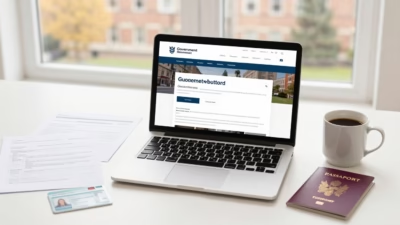
Starting higher education at uni is hard enough without fighting your own brain, body, or health just to keep up. Disabled Students’ Allowance (DSA) is there to cover the extra study costs that come from a disability, Long-term health condition, Mental health conditions, Neurodivergent conditions, or Specific learning difficulty.
If you’re worried it’ll be awkward, or that you’ll have to “prove” you’re struggling, you’re not alone. Think of DSA like getting the right adapter for a charger. Your course is still the same, you just need the right kit and support to access it properly.
This step-by-step application guide walks you through DSA in England, including what evidence you’ll need and what actually happens at the Needs Assessment.
Key Takeaways
- Disabled Students’ Allowance (DSA) helps pay for extra study-related costs in higher education, not your general living costs.
- You can apply through Student Finance England; it’s a non-repayable grant and not means-tested.
- Evidence matters, clear documents can save weeks of delays.
- The Needs Assessment is a practical chat about what would help, not a test.
- Apply early, some universities suggest the full process can take around 14 weeks.
DSA England Basics: Who It’s For And What It Can Pay For
DSA England is available to UK residents if your condition affects how you study on an undergraduate or postgraduate course. The eligibility criteria include physical disabilities, long-term illness, mental health conditions, and specific learning difficulties such as dyslexia or ADHD.
A few key points calm a lot of stress:
- It’s a non-repayable grant. You don’t pay it back unless you’re overpaid.
- It isn’t means-tested. Your parents’ earnings don’t come into it.
- It’s about study impact. You don’t need to be “the worst case”; you just need a real barrier to learning.
What can DSA cover? It depends on your needs, but support often falls into these buckets, including specialist equipment and more:
Specialist equipment: for example, specialist software, recording tools, ergonomic kit, or a computer if you need one because of your disability.
Non-medical helpers: such as note-takers, specialist mentor (often for mental health), study skills support, or a sign language interpreter.
Travel costs: if you can’t use public transport for disability-related reasons.
Other course-related costs: such as printing if your disability makes digital reading hard.
What it won’t cover is just as important. DSA won’t pay for standard course costs, general stationery, or anything that isn’t clearly linked to your disability. It also doesn’t replace support your university must provide under the Equality Act 2010.
For the current DSA1 form and official notes, use the government guidance on DSA application forms and notes for 2025 to 2026{:rel=”nofollow” target=”_blank”} (the process is similar year to year, but always check the latest version).
DSA Application Process Step By Step (Without Missing Anything)
You can apply for the Disabled Students’ Allowance (DSA) at the same time as your main student finance, or add it later. If you can, apply early. Waiting until deadlines are close can mean support arrives halfway through term, which is like being given glasses after you’ve already sat the exam.
Here’s the usual flow:
- Start your Student Finance England application (or sign in if you already have an account).
You’ll normally see a question asking if you want to apply for DSA. If you are unable to apply online, download and submit the DSA1 form instead. - Say yes to DSA and follow the prompts.
You’ll be asked what condition you have and how it affects your study. - Upload or send your evidence when requested.
Student Finance England won’t book a Needs Assessment until your evidence is accepted, so this is where many delays happen. - Wait for confirmation and assessment instructions.
Once they’ve looked at your evidence, you’ll be told how to book a Study Needs Assessment. - Attend the Needs Assessment.
This leads to a report with recommended support. - Receive your Disabled Students’ Allowance (DSA) entitlement and set support up.
You’ll usually get details of what’s approved and how to order equipment or arrange helper support.
If you want a simple outline of the official process from the Student Loans Company side, see the DSA application process explanation{:rel=”nofollow” target=”_blank”}.
Two practical tips that save hassle:
- Don’t buy big items first “just in case”. You often won’t be reimbursed if you purchase before approval.
- Keep copies of everything you upload, including filenames. It makes follow-ups much easier.
Evidence Checklist And What Happens At The Needs Assessment
Evidence Checklist: What You’ll Usually Need
Your evidence has one job: show you have a condition and that it affects study. The best evidence is clear, recent enough to reflect your situation, and written by the right professional.
Common examples include:
Medical evidence: Medical evidence is a letter or report from your GP, consultant, or specialist.
Diagnostic evidence: For specific learning difficulties, a diagnostic assessment report (often from an educational psychologist or suitably qualified assessor). A diagnostic assessment confirms the condition clearly.
Mental health evidence: A letter confirming diagnosis or ongoing treatment for mental health conditions and the likely impact on study (for example, concentration, attendance, anxiety in seminars).
Before you submit, check it includes:
- Your full name and (ideally) date of birth
- The diagnosis or confirmed condition
- How it affects your ability to study
- The professional’s name, role, and contact details
- A signature or official letterhead (where relevant)
If your evidence is vague, Student Finance may come back with questions, and that can add weeks. If you’re unsure what “good enough” looks like, many students find it helpful to read an independent overview like Save the Student’s Disabled Students’ Allowances (DSA) guide{:rel=”nofollow” target=”_blank”}.
What Happens At The Needs Assessment (And What They’ll Ask)
The Needs Assessment is usually a meeting (often online) with a needs assessor from an Assessment centre who understands study barriers. You won’t be judged. It’s more like planning support for a busy term, based on how you work at your best and what gets in the way.
Expect questions about:
- Your course setup (lectures, labs, placements, field trips)
- Reading and writing load, deadlines, group work
- Assistive technology you already use (laptop, tablet, apps)
- What you find hardest (focus, pain, fatigue, anxiety, processing speed)
- What has helped before (extra time, recording, mentoring, quiet spaces, specialist equipment)
Afterwards, the needs assessor from the Assessment centre writes a report recommending support. Student Finance then decides what to fund. If approved, you’ll receive your Entitlement letter with instructions on ordering equipment and arranging sessions. The Entitlement letter outlines everything funded.
Timelines vary, but some universities advise allowing around 14 weeks from start to finish. The University of Southampton’s overview of the DSA process timeline{:rel=”nofollow” target=”_blank”} gives a realistic sense of the steps.
One more detail that surprises people: if a computer is recommended, students are often expected to pay a £200 student contribution towards it. This is a standard £200 student contribution for computers. Contact your uni disability advisor if that cost is a problem.
Wrapping Up
The Disabled Students’ Allowance (DSA) England can turn your higher education experience at uni from “barely coping” into something you can actually manage. Apply early, send strong evidence, and treat the Needs Assessment as a positive planning session for your learning, not a hurdle. Once DSA support is in place, studying can feel less like pushing through mud, and more like walking on solid ground. Your next step is simple: start the application and keep the momentum. If you need help getting started, reach out to a Disability advisor at your university.
Frequently Asked Questions About DSA In England
Can I Get DSA Without A Formal Diagnosis?
Sometimes, but it depends on the condition and the evidence available. Student Finance England usually needs written medical evidence from a qualified professional, so speak to your GP or disability service about the best route.
Can Part-Time Students Apply For DSA?
Yes, many part-time courses qualify as long as the course length and intensity meet the eligibility criteria. The support may be adjusted to match your study load.
Do I Have To Reapply Every Year?
You don’t always complete a full new application, but Student Finance may ask for confirmation your circumstances haven’t changed. If your needs change, you might need a new assessment.
Does DSA Pay For Therapy Or Medication?
No. The Disabled Students’ Allowance (DSA) is for study-related support costs, such as non-medical helpers, not clinical treatment. Your NHS care and uni wellbeing services are separate.
What If My Evidence Gets Rejected?
Ask Student Finance England what’s missing, then get updated documents that provide specific evidence of your diagnosis and study impact. A short, specific letter is often better than a long, unclear one.