
 Paul Scott
Many people wanting to learn programming face a big hurdle at the start. It’s not because programming is inherently difficult. They often miss out on important first steps. This is a big problem for most beginners.
Starting your programming journey can seem scary, but it can also be very rewarding. Learning the basics and building a solid foundation is the first step to success in programming.
By focusing on the key building blocks and following a clear learning pathway, you can overcome the early challenges. This way, you can move forward with confidence.
Key Takeaways
- Foundational knowledge is key for beginners.
- Missing out on important steps can slow you down.
- A structured learning approach helps a lot.
- Understanding the basics is vital for future success.
- Creating a strong foundation is essential.
1. Understanding What Programming Is and Why You Should Learn It
Learning to code is empowering and opens new career doors. It means writing instructions a computer can follow. This skill is very valuable today.
Defining Programming in Simple Terms
Programming is like giving a computer instructions for a task. It’s like writing a recipe for your favourite dish. You list the ingredients and steps, and the computer makes it happen.

Real-World Applications of Programming Skills
Programming skills are used in many ways. They help in making mobile apps, websites, and artificial intelligence. For example, in healthcare, programming helps create new medical devices. In finance, it’s used for secure transactions.
Career Opportunities and Personal Benefits
Learning to program can boost your career. It’s a valuable skill in the job market. It also improves problem-solving, logical thinking, and creativity.
| Benefit | Description |
|---|---|
| Career Advancement | Enhances job prospects and career growth |
| Problem-Solving Skills | Fosters logical thinking and creativity |
| Personal Growth | Develops patience and analytical thinking |
Debunking Common Myths About Coding
Many think coding is only for geniuses or math experts. But, it’s not true. Anyone can learn to code with the right resources. Programming tutorials and beginner programming courses can help.
2. Setting Clear Goals and Realistic Expectations
Before starting to code, it’s key to know what you want to achieve. Knowing your goals helps guide your learning and keeps you motivated.
Identifying Your Personal Motivation
Your motivation might be to switch careers, improve your job chances, or just for fun. Understanding your motivation is important. It shapes how you learn. For example, if you want to change careers, focus on skills that employers want.
Choosing Between Career Change and Hobby Learning
Whether you’re learning for a new career or just for fun changes your approach. Career learning needs a structured plan, focusing on valued skills. Hobby learning lets you be more creative and flexible.

Understanding the Time Investment Required
Programming takes a lot of time. It’s important to remember that becoming good at programming takes time. Make sure to set aside time each week to keep making progress.
Setting Achievable Milestones
It’s important to break your learning into smaller, achievable goals. This could be finishing beginner tutorials, building simple projects, or mastering easy languages like Python. Setting achievable milestones helps you track your progress and stay motivated.
By following these steps, you can make your programming journey more enjoyable and rewarding.
3. Selecting the Right First Programming Language
The first programming language you learn is very important. There are many options, so pick one that fits your goals and is beginner-friendly.
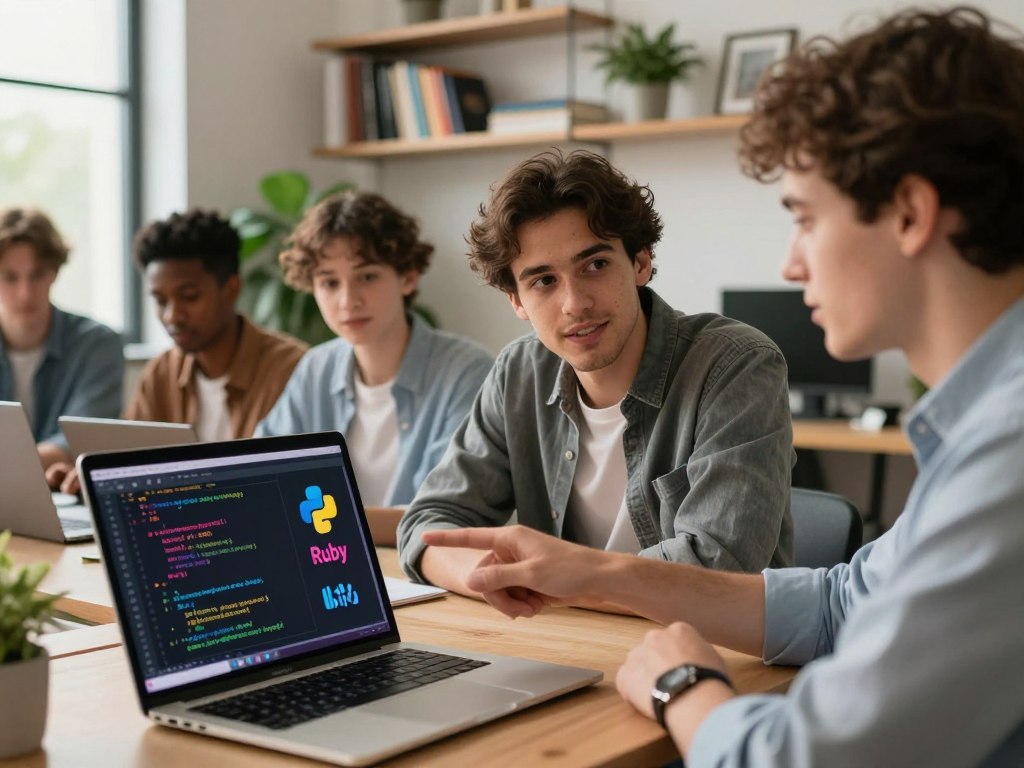
Python: The Most Beginner-Friendly Choice
Python is great for beginners because it’s easy to read and use. It has lots of libraries and resources. This makes it perfect for new programmers. Python is used in web development, data analysis, and artificial intelligence.
JavaScript: Perfect for Web Development Aspirations
If you want to work on websites, JavaScript is a good choice. Most websites use JavaScript for client-side scripting. It’s also used in mobile and desktop app development.
Java: For Those Interested in Enterprise Applications
Java is great for big projects. It can run on any device with a Java Virtual Machine (JVM). Java is also used in Android app development.
Ruby: An Elegant Option for Web Development
Ruby is becoming more popular, mainly among web developers. It’s simple and easy to use for web apps with Ruby on Rails. Ruby promotes good coding habits and is ideal for beginners in web development.
Making Your Decision Based on Your Goals
Think about what you want to do in programming. Do you want to work on websites or explore data science? Your goals will help you choose the best language. Look for beginner-friendly coding courses that match your language choice to start learning programming basics for beginners.
4. Setting Up Your Development Environment
Setting up your development environment is key to starting your programming journey. It involves several important steps. These steps will help you begin with coding for beginners.
Installing Your Chosen Programming Language
First, install the programming language you’ve chosen. For example, if you’ve picked Python, download and install it from the official Python website. Make sure to follow the installation instructions well to avoid problems.
Selecting and Installing a Code Editor
A code editor is where you’ll spend most of your time writing code. Popular choices include Visual Studio Code, Sublime Text, and Atom. When picking a code editor, think about ease of use, available extensions, and system compatibility.
Configuring Your Workspace for Success
After installing your programming language and code editor, set up your workspace. This means setting up your code editor with needed extensions, creating a project folder structure, and getting to know the editor’s interface.
Testing Your Setup with a Simple Programme
To check if everything is working right, write a simple “Hello, World!” program. This will confirm your programming language and code editor are set up correctly. It’s a good way to start with beginner coding lessons and feel more confident in your new environment.
By following these steps, you’ll have a strong base for your programming tutorials. You’ll be ready to explore more in the world of coding.
5. Grasping the Essential Programming Fundamentals
Programming basics are key for any coding project. To learn coding step-by-step, start with the basics. These include variables, operators, and more, all vital for new programmers.
Variables, Constants, and Data Types
Variables store and change data in a program. Knowing about data types like integers and strings is important. Constants, by contrast, stay the same during a program’s run.
Operators and Expressions
Operators perform actions on data. They include arithmetic and logical operators. Expressions combine these to get a result.
Conditional Statements and Loops
Conditional statements, like if-else, let programs make choices. Loops, such as for and while, repeat code blocks.
Functions and Their Purpose
Functions are blocks of code that do one thing. They help keep code organized and prevent repetition.
Understanding Basic Data Structures
Data structures, like arrays, store lots of data. Knowing how to use them is key for programmers.
| Data Structure | Description | Use Case |
|---|---|---|
| Arrays | Fixed-size collection of elements of the same data type. | Storing a list of items. |
| Lists | Dynamic collection of elements that can be of different data types. | Implementing stacks and queues. |
| Stacks | LIFO (Last In, First Out) data structure. | Parsing and evaluating postfix expressions. |
In conclusion, learning these programming fundamentals is vital for new coders. Understanding variables, operators, and more lays a strong foundation for coding.
6. Finding Quality Learning Resources to Learn Programming for Beginner
Starting to learn programming can feel overwhelming. But, the right resources make it easier. It’s all about finding materials that fit your learning style and goals.
Top Free Online Platforms and Courses
Many online platforms offer free courses for beginners. Sites like Codecademy, Coursera, and edX have courses on different programming languages. Codecademy lets you practice coding as you learn.
These sites are free and flexible. They help you fit learning into your busy schedule.
Recommended Paid Courses and Bootcamps
Paid courses and bootcamps offer a more structured learning path. Udemy, Pluralsight, and General Assembly have detailed courses with feedback. General Assembly’s coding bootcamps are known for their deep learning experience.
Choosing a paid course can give you a more thorough education. It also provides the structure you need to stay motivated.
Essential Books for Beginner Programmers
Books are a great way to learn programming. “Code Complete” by Steve McConnell and “Clean Code” by Robert C. Martin are top picks. They teach best practices and solidify your programming knowledge.
Interactive Learning vs. Video Tutorials
People have different learning styles. Some prefer interactive coding, while others like video tutorials. LeetCode and HackerRank offer hands-on coding. YouTube channels like Traversy Media and freeCodeCamp provide engaging video tutorials.
Official Documentation and How to Use It
Official documentation is a key resource for programmers. It may seem tough at first, but learning to use it is essential. It offers detailed info on syntax, functions, and best practices.
By using a mix of these resources, beginners can build a learning experience that fits their needs and style.
7. Building a Structured Daily Learning Routine
To get good at programming, you need a daily learning plan. Being consistent is key for learning programming for beginners. Set aside a time each day for coding to make steady progress and understand programming basics for beginners better.
Creating a Consistent Practice Schedule
Start by picking a time each day for coding. It could be in the morning or evening, based on your schedule. It’s important to keep to this routine every day, even if it’s just a short time.
The Pomodoro Technique for Coding Sessions
The Pomodoro Technique is great for beginner coding lessons. It involves working in 25-minute blocks, then taking a 5-minute break. This method keeps you focused and stops you from getting tired.
Balancing Theory with Hands-On Practice
It’s important to mix theory with practical coding. Knowing the theory is good, but doing projects is even better. This hands-on experience makes your understanding of coding stronger.
Tracking Your Progress Effectively
It’s important to track how you’re doing to stay motivated. Use a journal or digital tool to log your daily wins and challenges. Looking back at your progress helps you see what you need to work on and adjust your learning plan.
8. Applying Your Skills Through Practical Projects
As you move forward in programming, it’s key to use your skills in real projects. This hands-on work is vital for solidifying your knowledge and improving your problem-solving abilities.
Starting with Beginner-Level Project Ideas
Start with projects that are easy but also a bit of a challenge. Ideas include making a simple calculator, a to-do list app, or a personal website.
Building a Simple Calculator or To-Do List
Creating a simple calculator or to-do list app is a good first step. These projects teach you about handling user input, doing calculations, and storing data. For example, a calculator project can show you about conditional statements and functions.
Creating a Personal Website or Portfolio
Making a personal website or portfolio is another excellent project. It introduces you to web development with HTML, CSS, and JavaScript. You can display your projects and skills to employers.
Progressing to Intermediate Projects
When you’re ready, move on to more challenging tasks. Try building a chat app, a simple game, or a weather app. These projects need more advanced programming skills and help you grow.
Documenting Your Code Properly
It’s important to document your code, no matter the project. Good documentation helps you understand your code later and makes it easier for others to work with you. Use comments to explain tricky parts of your code.
| Project Type | Skills Learned | Complexity Level |
|---|---|---|
| Simple Calculator | Handling user input, conditional statements | Beginner |
| To-Do List App | Data storage, user interaction | Beginner |
| Personal Website | HTML, CSS, JavaScript | Beginner/Intermediate |
| Chat Application | Networking, multi-threading | Intermediate |
9. Navigating Common Challenges and Setbacks
Starting to learn to code can be tough. You’ll face many challenges that might make you want to give up. But don’t worry, it’s normal.
Debugging Errors and Understanding Error Messages
Debugging is a key skill for programmers. It means finding and fixing mistakes in your code. Understanding error messages is key; they help you see what’s wrong. Beginners should learn about common errors and how to read these messages.
Breaking Free from Tutorial Hell
Tutorial hell happens when you rely too much on tutorials and don’t do real projects. To get out of it, start working on projects that push you. This hands-on approach is great for learning.
Handling Imposter Syndrome
Imposter syndrome makes you doubt your skills and feel like a fake. To fight it, focus on your achievements, celebrate small wins, and remember that everyone starts from the beginning.
| Challenge | Solution |
|---|---|
| Debugging Errors | Understand error messages, use debugging tools |
| Tutorial Hell | Start practical projects, apply learned concepts |
| Imposter Syndrome | Focus on progress, celebrate small wins |
Staying Motivated During Difficult Periods
It’s important to stay motivated. Set goals you can reach, join learning groups, and treat yourself for your achievements.
Knowing When to Take Breaks
Knowing when to take a break is vital. Taking a step back can help you see things clearly and avoid burnout.
By understanding these challenges and finding ways to overcome them, beginners can make their way through the world of programming.
10. Connecting with Communities and Finding Support
Starting your programming journey? It’s key to be around people who get it. Learning to code is easier with a supportive community. They offer advice, resources, and keep you motivated.
Joining Online Programming Forums and Groups
Start with online forums like Stack Overflow, Reddit’s r/learnprogramming, and GitHub. These sites are great for asking questions, sharing your work, and learning from others.
Participating in Coding Challenges and Hackathons
Getting involved in coding challenges and hackathons is also beneficial. Sites like HackerRank and Codewars have challenges that boost your coding skills.
| Community Platform | Description | Benefits |
|---|---|---|
| Stack Overflow | Q&A platform for programmers | Access to a vast knowledge base, peer support |
| GitHub | Version control and collaboration platform | Opportunities for open-source contributions, collaboration |
| HackerRank | Coding challenge and interview preparation platform | Improves coding skills, prepares for technical interviews |
Mastering Programming Basics: Your Journey Starts Here
Learning programming for beginners is all about understanding the basics. By learning the fundamentals and practicing regularly, you can succeed in coding.
Starting your journey in programming means setting clear goals and choosing the right language. It also helps to connect with other programmers. These steps keep beginners motivated and track their progress.
Programming basics include variables, data types, loops, and functions. Mastering these concepts helps build a strong foundation. It allows you to move on to more complex topics and start your own projects.
The secret to learning programming is to keep practicing, be patient, and never give up. By following the steps in this article, beginners can start a rewarding journey to become skilled programmers.
FAQ
What is the best programming language for a beginner to learn?
Python is great for beginners. It’s easy to learn and very versatile. It’s a top pick for those new to coding.
How long does it take to learn programming basics?
Learning programming basics takes time, and it varies for everyone. With regular practice, you can learn the basics in weeks or months.
What are the most common challenges faced by beginner programmers?
Beginners often find debugging hard, struggle with complex ideas, and lose motivation. Online groups and mentors can help a lot.
Do I need a powerful computer to learn programming?
No, you don’t need a top-notch computer to start. Most languages work well on basic computers. Many coding tools are light and easy to use.
Are online courses and tutorials effective for learning programming?
Yes, online learning is very effective. It’s best when you practice and work on real projects. Sites like Codecademy and Coursera have lots of courses.
How do I stay motivated while learning to code?
To stay motivated, set goals, join coding groups, and work on projects you like. The Pomodoro Technique can also help you stay focused.
Can I learn programming as a hobby, or is it only for those looking to change careers?
Learning to code can be a fun hobby. Many people enjoy coding for personal projects or to challenge themselves.
What are some beginner-friendly programming projects to start with?
Start with simple projects like a calculator, a to-do list app, or a personal website. These projects help you use your new skills and build confidence.
How do I debug my code when it doesn’t work as expected?
Debugging means understanding error messages and using tools to check your code. Break down big problems into smaller parts. Online help and communities are also great resources.
Is it necessary to learn multiple programming languages?
Learning multiple languages isn’t necessary at first. But, knowing more than one can broaden your understanding and career options.