
 Paul Scott
Did you know that students who start revising early remember 40% more than those who cram? This shows why effective planning is key to doing well. Many students feel swamped by too much to learn, but there’s a simple way to tackle it.
The first step to avoid stress is to start exam preparation as soon as you get your syllabus. Breaking down big topics into smaller parts makes them easier to handle. This way, you can study for mock exams with confidence, not fear.
Having a realistic study plan helps you understand the material better and feel less stressed. By focusing on steady effort over intense studying, your mock exam preparation becomes a routine you can keep up. Let’s look at how you can master your study schedule and get your best grades yet.
Key Takeaways
- Begin your revision as soon as the syllabus is provided to ensure a steady pace.
- Divide large subjects into smaller, manageable sections to improve focus.
- Organise a realistic timetable that fits your personal learning style.
- Prioritise consistent daily effort to minimise the need for last-minute cramming.
- Maintain a balanced routine to keep your stress levels low and your motivation high.
Understanding the Purpose of Mock Assessments
Mock exams are key to getting ready for real exams. They let you see how prepared you are and where you need to improve.

Mock exams are like a check-up for your learning. They show you what you’re good at and what you need to work on. This helps you study smarter, focusing on the areas that matter most.
Why Mocks Are More Than Just Practice
Mock exams are more than just practice. They help you learn to manage your time well. You have to finish the exam on time, just like the real thing.
They also make you familiar with the exam format. This reduces your stress and anxiety on the big day.
By seeing mock exams as a learning tool, you can understand your weaknesses better. This lets you plan how to improve.
Identifying Your Knowledge Gaps Early
Mock exams are great for spotting where you need to improve. They help you see where you need to focus your studying. This way, you can make a study plan that really works.
Knowing where you need to improve early on helps you use your study time wisely. You’ll be ready for the real exam.
Creating a Realistic Revision Timetable
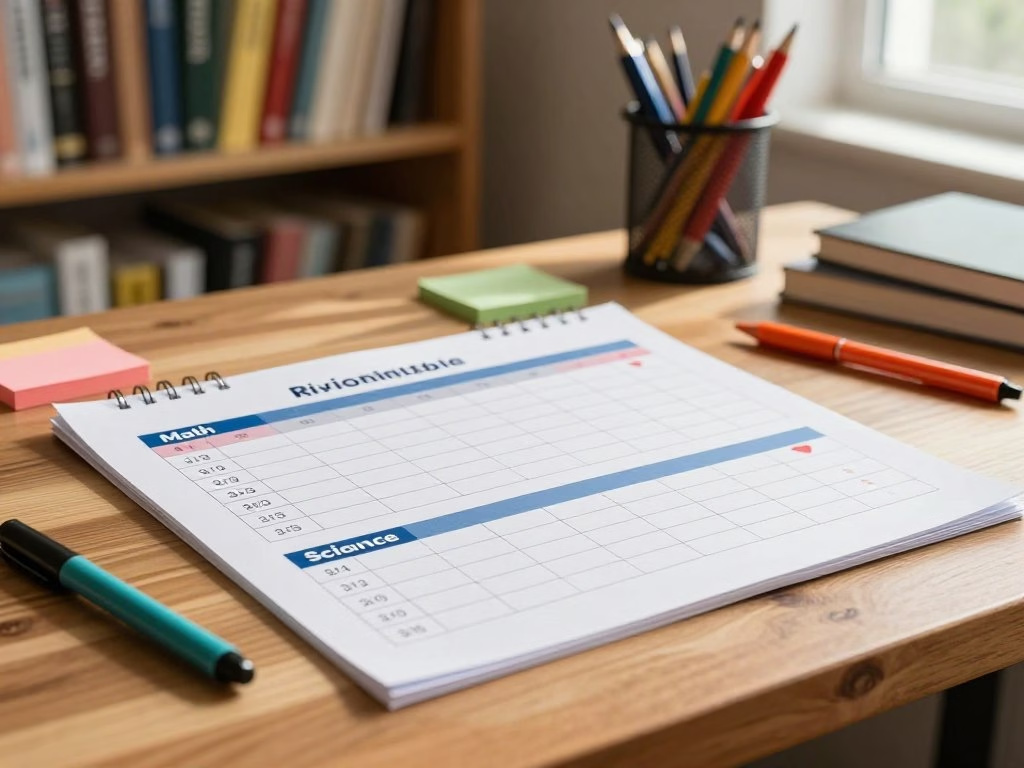
A good revision timetable is key to acing mock exams. It keeps you organised and focused. This way, you can cover all the material without feeling stressed.
To make a great revision timetable, think about a few things. Consider how hard your subjects are and how you feel. Balancing study time with breaks helps you stay on track.
Allocating Time Based on Subject Difficulty
Time allocation should match subject difficulty. Tackle harder subjects first. Give them more study time.
For example, if maths is tough for you, spend more time on it. A revision timetable template can help plan your study sessions well.
Balancing Study Sessions with Personal Wellbeing
Studying for mock exams is important, but so is your wellbeing. Get enough sleep, eat well, and exercise. These habits boost your focus and productivity.
The Importance of Scheduled Breaks
Breaks are essential to avoid burnout. They help you stay productive. Regular breaks let you recharge and focus better.
Try the Pomodoro Technique. Study for 25 minutes, then take a 5-minute break. It keeps you focused and avoids distractions.
Mastering Active Recall Techniques
Learning isn’t just about reading notes over and over. Active recall is key. It means you actively try to remember information instead of just reading it.
Using active recall helps you remember more and understand complex ideas better. It makes your memory stronger and lets you use what you’ve learned in different ways.
Moving Beyond Passive Reading
Many students get stuck in passive reading. This is when you read without really getting into the material. To get past this, you need to start using methods that keep you actively involved.
One good way to start is by summarising what you’ve read in your own words. This makes the information stick in your mind better. Also, talking about what you’ve learned with others or teaching it to someone else helps you understand it even more.

Utilising Flashcards and Self-Testing
Flashcards are great for active recall. They have questions or key terms on one side and the answers on the other. This lets you test your knowledge easily. Using these flashcards regularly helps you see where you need to practice more.
Self-testing is also key. It means doing quizzes or practice exams to check your knowledge. This shows you where you’re weak and boosts your confidence in recalling information.
Designing Effective Retrieval Practice
Retrieval practice is at the core of active recall. First, pick out the most important concepts or topics. Then, make a plan to test your knowledge on them regularly.
Make your practice sessions interesting by using different types of questions. Also, vary the topics to improve your ability to tell different ideas apart and use them correctly.
By adding these active recall methods to your study routine, you’ll learn more efficiently. This will help you do well in your mock exams.
Optimising Your Study Environment
To get the most out of your study time, it’s key to have a good study space. A tidy and quiet area helps you focus better and remember more.
Minimising Distractions for Deep Focus
Getting rid of distractions is vital for a great study spot. Turn off your phone’s notifications while you study. Silencing your phone and keeping it away helps you resist the urge to check messages or social media.
Finding a quiet and comfy place to study is also important. Some people get distracted by background noise, while others find it helpful. Try studying in different places, like a library or a quiet room at home, to see what works best for you.
Organising Your Physical and Digital Resources
Keeping your study materials organised is another key part of a good study space. This includes both physical things like books and notes, and digital stuff like e-books and online documents.
A tidy study area makes it easy to find what you need, saving you time and stress. Use storage solutions like shelves, drawers, or file organisers to keep things neat.
| Resource Type | Organisation Tips | Benefits |
|---|---|---|
| Physical Resources | Use shelves, drawers, or file organisers | Easier access to materials, reduced clutter |
| Digital Resources | Utilise cloud storage, create digital folders | Enhanced accessibility, reduced digital clutter |
For digital stuff, cloud storage makes your files easy to reach from any device. Make sure your folders and labels are clear and descriptive so you can find what you need quickly.

By following these tips, you can make a study space that helps you reach your academic goals and improves your learning experience.
Breaking Down Complex Syllabuses
When you face a complex syllabus, it’s key to break it down into smaller parts. This makes studying easier. You need to find the most important areas and plan how to tackle them.
Prioritising High-Weight Topics
Start by focusing on high-weight topics. These are the ones that count for more marks and are harder. By concentrating on these first, you can get the most marks.
To prioritise effectively:
- Look at the syllabus and spot the topics with more marks.
- Give these topics more study time.
- Use past papers to see how these topics are tested.
Using Mind Maps to Connect Concepts
Mind maps are great for showing complex information. They help you link different ideas and see how modules are connected.
Visualising Relationships Between Modules
Mind maps let you see how different parts of the syllabus link together. This makes understanding and remembering easier.
To create an effective mind map:
- Begin with a central idea or topic.
- Add related subtopics and concepts.
- Use colours and images to make it more engaging and memorable.
Comparing different study methods can help you see what works best. Here’s a quick look:
| Study Technique | Effectiveness for Complex Syllabuses | Ease of Use |
|---|---|---|
| Mind Maps | High | Moderate |
| Flashcards | Moderate | Easy |
| Self-Testing | High | Moderate |
How To Study For Mock Exams Using Past Papers
Using past papers is a great way to get ready for mock exams. It makes you familiar with the exam format. It also shows you where you need to work harder.
Simulating Real Exam Conditions
Practising with past papers under timed conditions is very helpful. It helps you manage your time better and feel less anxious. To do this right, find a quiet place and stick to the time limits.
Also, use the same things you’ll have in the real exam. For example, if calculators are not allowed, practice without one. This makes you better prepared.
| Benefits of Simulating Exam Conditions | Description |
|---|---|
| Improved Time Management | Helps you allocate time effectively across different sections. |
| Reduced Anxiety | Familiarises you with the exam pressure, reducing stress on the actual exam day. |
| Increased Confidence | Boosts your confidence by making you more comfortable with the exam format. |
Analysing Mark Schemes to Understand Expectations
After doing a past paper, look at the mark scheme. It shows what examiners want. You’ll learn what answers are correct and common mistakes.
Learning from Common Examiner Pitfalls
Mark schemes point out mistakes often made. Knowing these helps you avoid them. Look closely at the keywords and phrasing in the mark scheme. They tell you what examiners are looking for.
For instance, examiners want specific terms, clear explanations, and exact calculations. Focusing on these can make your answers better and get you more marks.
Developing Effective Note-Taking Strategies
Creating a good note-taking strategy can really improve your learning. It’s not just about writing down what you hear. It’s about capturing the main ideas in a way that makes them easy to remember and review.
Summarising Information for Quick Review
Summarising what you learn is key to note-taking. Instead of copying everything down, focus on the key points and topics. This means picking out the most important bits and rewriting them in your own words.
- Identify main ideas and key concepts
- Use headings and subheadings to organise your notes
- Highlight important terms and definitions
Studying by rewriting your notes helps a lot. It makes you understand better and remember longer.
The Cornell Method for Structured Learning
The Cornell method is a well-known way to take notes that supports structured learning. It divides your paper into three parts: cues, notes, and summary. The cues column is for keywords and questions, the notes column for the main content, and the summary for the key points.
This method helps you:
- Keep your notes tidy and easy to follow
- Quickly review by focusing on key cues and summaries
- Get more involved with the study material by asking questions and making keywords
Collaborative Learning and Peer Support
Collaborative learning is a great way to get ready for mock exams. Working with others can help you see things from new angles. It also keeps you motivated while studying.
Teaching others about what you’ve learned is very helpful. When you explain something to someone, you make sure you understand it well. This way, you can:
- Clear up your thoughts and organize your notes
- Find out where you need to practice more
- Improve your speaking skills, which are key for exams
Teaching Concepts to Others
Teaching others is good for them and for you. By explaining things to your friends, you:
- Make sure you really get the material
- Learn to explain complex ideas simply
- Spot any mistakes or areas you don’t know well
Forming Productive Study Groups
Being part of a study group can really help. Here are some tips for making study groups work:
- Have clear goals for what you want to achieve in each session
- Make sure everyone is involved and active
- Use different study materials and methods to keep things interesting
Using collaborative learning and peer support can make studying for mock exams better. It helps you understand and remember things better. Plus, it gives you a group to support and motivate you.
Managing Exam Anxiety and Stress
Feeling the pressure to do well in mock exams can be tough. But, there are ways to handle exam anxiety and stress. It’s key to know that some stress is okay, but too much can stop you from doing your best. By using certain methods in your study plan, you can keep your stress down and feel better overall.
Implementing Mindfulness and Breathing Exercises
Mindfulness and deep breathing can really help with exam anxiety. These methods calm your mind and help you stay in the present. To start with mindfulness:
- Begin with short deep breathing sessions, focusing on how the breath feels.
- As you get used to it, make the sessions longer.
- Make mindfulness a part of your daily life, like before studying or during breaks.
Maintaining a Healthy Sleep and Nutrition Routine
Having a healthy routine is key to managing stress and anxiety. This means focusing on sleep and what you eat:
Make sure you get enough sleep each night. Not sleeping well can make anxiety worse and hurt your thinking. Try to get 7-9 hours of sleep.
Eat a balanced diet full of nutrients. Avoid foods high in sugar and caffeine, as they can make you feel anxious. Instead, eat lots of fruits, veggies, and whole grains to keep your mood steady.
Some good studying tips include drinking lots of water and taking breaks to avoid getting too tired. Also, adding physical activity to your day can help lower stress.
Utilising Digital Tools and Educational Apps
To stay ahead in your studies, using digital tools and educational apps is key. They help you work smarter and revise more efficiently.
These tools offer many features to support your learning. You can find apps for note-taking, interactive quizzes, and games. They all help you study better.
Selecting Software That Enhances Productivity
Choosing the right digital tools is important. Think about what you want to achieve in your studies. For example, if you struggle with organising notes, a good note-taking app can be a game-changer.
Some top tools for boosting productivity include:
- Task management apps like Trello or Asana
- Note-taking apps such as Evernote or OneNote
- Focus-enhancing tools like Freedom or StayFocused
| Tool | Purpose | Benefits |
|---|---|---|
| Trello | Task Management | Helps organise tasks and deadlines |
| Evernote | Note-taking | Allows tagging, searching, and organisation of notes |
| Freedom | Focus Enhancement | Blocks distracting websites and apps |
Avoiding Digital Distractions During Revision
Digital tools are great, but they can distract you too. To stay focused, it’s vital to cut down on digital distractions.
Use website blockers or app limits to keep off non-essential sites. Also, turn off notifications or use apps that help you concentrate.
By being smart about using digital tools and apps, you can make your study space productive and distraction-free.
Reviewing Progress and Adjusting Your Strategy
To get the best results, it’s key to check your performance trends and tweak your plan. Regular check-ins help you stay on course and tweak your study plan as needed.
Set up short review times to go over what you’ve studied before. Mix up the topics in your review sessions to keep your mind sharp. This method strengthens your learning and spots areas needing more work.
Tracking Performance Trends Over Time
Keeping an eye on your performance trends lets you see how you’re doing and where to get better. By looking at your mock results, you can spot patterns and make smart study plan choices.
Use a spreadsheet or a habit-tracking app to log your scores and watch your progress. Seeing your improvement can keep you motivated.
Refining Your Approach Based on Mock Results
It’s vital to fine-tune your strategy based on mock results to hit your grade targets. By examining your performance, you can pinpoint where to concentrate and tweak your study plan.
Use your mock results to tweak your exam revision strategies. If a topic is tough, look for extra help or resources to aid your learning.
By regularly reviewing progress and adjusting your strategy, you can keep on track and reach your goals. This adaptable study method keeps you motivated and focused on your aims.
Conclusion
Creating a good study plan is key to doing well in mock exams. It’s important to make a realistic study schedule. Also, using active recall and digital tools can help a lot.
Sticking to a study plan helps students feel more confident and less stressed. It also helps them reach their academic goals. Good study habits help spot and fix knowledge gaps early.
Getting ready well for mock exams is essential for success in real exams. The right mindset and study methods make the most of study time. This way, students can reach their goals.
FAQ
What are the most effective tips for mock exams to avoid cramming?
To avoid cramming, start your mock exam prep early. Break your syllabus into small sections and use revision strategies like spaced repetition. This keeps the information fresh in your mind over several weeks.
How can I improve my mock test techniques?
Improve your mock test techniques by focusing on time management and reading questions carefully. Regularly use practice exams under timed conditions to get used to the exam pace.
Why is a mock assessment study guide helpful?
A study guide provides a clear roadmap for mock assessment prep. It helps you prioritise topics and ensures you cover the entire syllabus, focusing on high-weight areas.
What are some active exam preparation methods?
Move away from passive reading and embrace active recall and retrieval practice. Using practice tests and flashcards from brands like Oxford Revise can significantly boost your memory.
How should I use practice tests during my revision?
Use practice tests to identify your weak spots. After completing a test, review the mark schemes from boards like AQA. This helps you understand where you lost marks and how to improve next time.
What are some quick studying tips for busy students?
Use “dead time” for quick revision—review flashcards on the bus or listen to educational podcasts. Consistently spending 20 minutes a day is often more effective than one long session on the weekend.
How can I develop better mock exam tips for essay-based subjects?
For essay subjects, focus on learning key themes and practice planning your essays quickly. Use mind maps to connect different arguments and ensure your exam revision strategies include writing timed introductions and conclusions.
Is it necessary to study for mock exams as hard as the real ones?
While mock exam grades don’t stay on your permanent record, the study habits you build now will help you in the final exams. Treat them as a genuine trial run to get the most benefit.