 Paul Scott
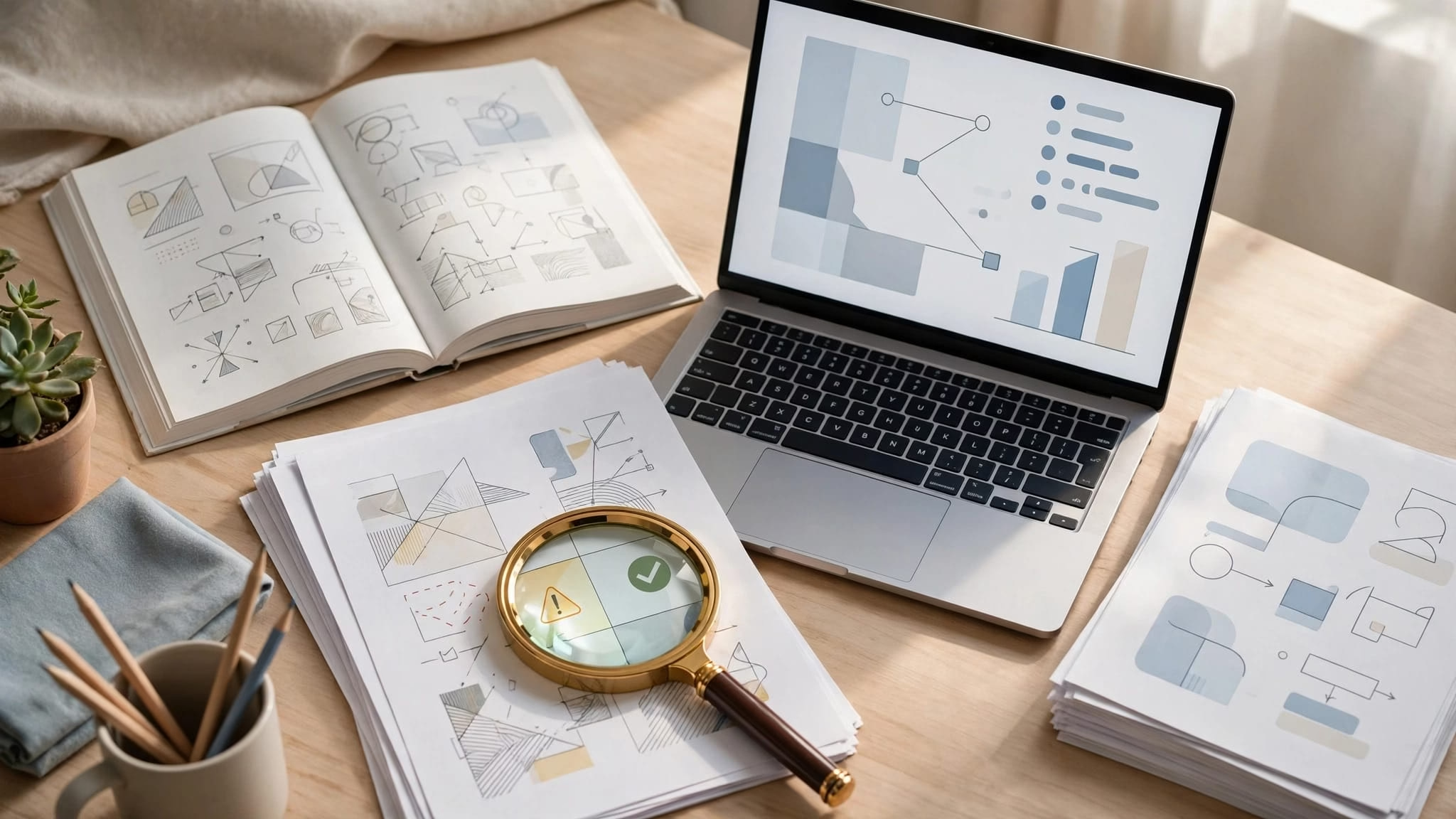
An AI notes generator, a form of artificial intelligence, can turn a 90-minute lecture or dense source file into structured notes in minutes. However, AI study notes can remove a vital exception, miscopy a formula, or state an invented reference with complete confidence.
Treat every generated summary as a first draft, not a source you can trust without checking. A short accuracy audit gives your exam prep a more reliable basis and may support higher grades, but the original material remains the primary source.
Key Takeaways
- Compare AI-generated study notes with lecture slides, textbooks, required reading, and other original materials before revising from them.
- Check numbers, dates, definitions, quotations, formulas, units, names, and exceptions first. These details cause the most damaging mistakes.
- Source-grounded tools can point you back to uploaded material, but they don’t prove that the material itself is correct or complete.
- Mark unclear claims rather than guessing. A highlighted gap gives you a useful question for your lecturer, seminar group, or reading list.
- Turn only verified notes into flashcards and quizzes, then use active recall and spaced repetition to find what you still can’t explain.
A polished set of notes can still be incomplete. The missing condition in a scientific process or legal rule often matters more than a neat definition.
Why Generated Notes Go Wrong
Artificial intelligence predicts plausible language. An AI notes generator doesn’t read your course materials with a lecturer’s judgement, and it can’t know which detail your module treats as examinable.
This doesn’t make generated notes useless. It means you need a reliable checking routine before they become your revision resource.
Summaries Can Remove Important Context
A tool may compress a three-page explanation into five bullets. In doing so, it can remove assumptions, exceptions, counterarguments, evidence limitations, or conditions where a rule doesn’t apply.
For example, a psychology summary might define correlation accurately but omit that correlation cannot establish causation. A law summary may name a case but skip the facts that limit its application. In both subjects, the shortened version can lead to a weak exam answer.
Confident Wording Can Hide Uncertain Claims
Generated text may present invented authors, papers, statistics, quotations, web links, and case names with confidence. Confident wording doesn’t establish truth, and generated output isn’t a primary source.
Instead, ask a simpler question: “Can I find this claim in the original lecture, textbook, official documentation, or a scholarly source?” Check every uncertain claim against one of these before retaining it in your notes. If you can’t verify it, remove it until you can check it properly.
Build a Source Pack Before You Check
Fact-checking is much faster when your trusted materials are ready before you open the generated output. Gather lecture slides, textbooks, module handbooks, study guides, practical instructions, official documentation, and tutor corrections. Together, these form your course knowledge base.
Start with materials your teaching team has set. Then add high-quality sources such as peer-reviewed articles, official datasets, professional bodies, and library books where needed.
Keep the Original Beside the Summary
Open the generated notes and original material side by side, gathering source material from lecture recordings, slides, and handouts. For PDF documents, use search to locate each key term. For lecture recordings, use the transcript or slide timestamps to find the relevant explanation.
Work section by section. Start with one heading, then compare every sentence that makes a factual claim. Trying to scan an entire set of notes at once makes omissions harder to spot.
Listen again when the transcript seems unclear. Technical vocabulary, names, acronyms, and equations can all affect transcription accuracy.
Label the Strength of Each Source
Your lecture slides may tell you what to learn, while a textbook explains it in more depth. Research papers can support a research claim, but check the original publication. YouTube videos can provide supplementary context, but shouldn’t replace the reading list, textbook, official documentation, or scholarly sources.
When AI suggests a reference, check the author, title, publication date, publisher or journal, DOI or stable URL where available, and whether the cited passage supports the claim. Read the original yourself. An AI-generated citation is a lead, never evidence, so don’t add it to an essay reference list until you’ve verified it.
How To Check AI Study Notes Claim by Claim
The fastest approach is to check each claim, starting with details most likely to affect marks. You don’t need to rewrite every sentence. You need to catch errors that change meaning and label each claim as verified, corrected, unsupported, or incomplete.
Use a different colour or a comment tool for corrections. Your final notes should make the checked version easy to find. A disciplined process can’t guarantee higher grades, but it can make your revision more reliable.
Check Numbers, Formulas, and Definitions First
In STEM subjects, one wrong minus sign, decimal place, unit, or variable can make an otherwise clear set of notes unusable. Compare every formula with your formula sheet, lecture example, or prescribed textbook, including its assumptions and conditions.
Check these details carefully:
- The definition uses the terms your lecturer expects, covers the key concepts, and doesn’t oversimplify or merge two related concepts.
- Each equation has the correct symbols, variables, units, assumptions, and conditions for use.
- Statistics include the correct figure, population, date, and source.
- Processes appear in the right order, especially in biology, chemistry, computing, and economics.
For worked examples, calculate one answer yourself. If the explanation reaches the right result using an invalid step, correct the method as well as the final number.
Check Dates, Names, and Exceptions
Law, history, psychology, and other social-science notes need the same care. Confirm dates, legislation, case names, theorists, research samples, historical events, and direct quotations against the original source.
Pay close attention to words such as “always”, “never”, “proves”, and “causes”. They often signal an overstatement. Academic material commonly includes qualifications such as “in this context”, “for this population”, or “subject to these conditions”. If evidence is unclear, write “unverified” or “needs source check” rather than guessing.
If a source names an author but you cannot locate the work through your university library catalogue or reading list, treat it as unverified.
Before you finish, use this verification checklist:
- The claim is located in the original source.
- Terminology and figures match.
- Conditions and exceptions are present.
- The citation is real and relevant.
- Any uncertainty is labelled.
Find What the Summary Left Out
Checking whether a sentence is correct is only half the task. You also need to notice when a useful point has disappeared.
Start with the learning outcomes. They show what your module expects you to understand, apply, compare, or evaluate. Map each outcome to a section of the summary, then compare it with your textbook, lecture materials, and module handbook. Study guides can help you spot coverage gaps, but they aren’t an authority on your module.
Compare Headings With Learning Outcomes
Read each outcome and locate the matching section in the summary. If an outcome asks you to evaluate evidence, but your summary contains only definitions, important key concepts may be missing.
Record the gap and locate the relevant source. Then add a short verified prompt or explanation. For example, write “limitations of Bandura’s Bobo doll study” or “when is the ideal gas equation unsuitable?” Mark any unresolved point for your lecturer rather than guessing.
A seven-day study plan from your class notes can help you schedule these gaps before they become last-minute revision problems. Use spaced repetition to return to unresolved points during later reviews. Complete coverage can support better exam performance and may contribute to higher grades, but it can’t guarantee them.
Look for Relationships Between Ideas
AI summaries often list concepts separately. Yet exams may ask you to compare theories, apply a model to a scenario, assess a method, or explain why one event led to another.
Add linking sentences in your own words. Connect a cause to its effect, a study to its conclusion, or a formula to the situation where it applies. If you cannot make that link without looking back at the source, you have found a topic to revisit.
Use Source-Grounded Tools Sensibly
Different AI tools handle source material differently. Google describes NotebookLM as an AI-first notebook grounded in documents you provide, as outlined in Google’s description of NotebookLM.
That makes it easier to ask where a point came from and return to the relevant passage. Treat it as a course knowledge base only when the uploaded material is complete and current. Grounding doesn’t prove accuracy, and a flawed slide, outdated article, or incomplete upload can still produce flawed output.
Choose Tools That Let You Trace Claims
Choose a note-taking tool that exposes source links, quoted passages, document search, and provenance, not just fluent text. A University of Chicago guide on NotebookLM for research and studying also highlights its source-grounded approach.
RemNote can help organise learning, while an AI learning assistant is a convenience layer, not a lecturer or primary source. An AI notes generator or quiz generator can support first-pass organisation and create a summary, but neither verifies claims. Read each source, especially for high-stakes claims, and verify YouTube videos against official or scholarly sources.
Keep Private Material Out of Public Tools
Do not upload identifiable participant data, placement records, unpublished dissertation findings, tutor feedback, university login details, or employer documents into public AI services.
Check the provider’s privacy policy and retention settings first. Then confirm institutional approval and whether confidential data may be uploaded. If material is confidential, use an approved university system or keep it out of the tool altogether.
Turn Verified Notes Into Active Revision
Correct notes only matter if you use them to retrieve knowledge. Re-reading tidy study material can feel productive, but it doesn’t show whether you can answer under exam conditions.
After checking your AI study notes, close them and test yourself. Turn the verified material into focused study guides before generating more practice.
Make Flashcards From Corrected Claims
Write one question per card. “What are the assumptions of the ideal gas equation?” works better than “Ideal gas equation”. Keep answers short, accurate, and easy to mark.
Use your corrected notes to make cards for definitions, formula conditions, comparison points, key studies, and recurring errors. A system of flashcards for active recall and spaced repetition helps you return to difficult cards more often. Schedule difficult cards for later spaced repetition instead of rereading them immediately.
Test Application, Not Only Memory
A verified AI notes generator or quiz generator may create practice questions after you check the source material. Generated questions can still contain errors, so review them before use.
Answer each question without looking. Compare your response with lecture materials, marking schemes, textbooks, or official documentation rather than accepting generated explanations automatically.
The active recall study method works best when you must explain, calculate, compare, or apply an idea. A question you can’t answer reveals a real gap. Highlighted notes don’t. For exam prep and higher grades, retrieval and application are more useful than simply highlighting notes.
Frequently Asked Questions About Checking AI-Generated Study Notes
Can AI Automatically Create Accurate Notes From Lecture Recordings?
It can create a useful draft, especially when a lecture has a clear transcript and slides. Audio quality, technical language, speaker pace, and diagrams can still cause omissions or transcription errors. Compare the output with the recording, slides, and required reading before relying on it.
Are AI-Generated Citations Safe to Use in Assignments?
No. AI can invent references or combine details from different publications. Open every cited item, read it, and cite the original book, article, report, or dataset in your department’s required style. AI-generated notes aren’t a primary source, even when the tool cites uploaded documents.
Can I Use AI Study Notes for Assessed Work?
Private revision use may be allowed, but each assessment has its own rules. Check the assessment brief, module handbook, and tutor instructions before using generated material. If permitted use requires a declaration or prompt record, follow that format exactly.
What Should I Do When AI Notes Contradict My Lecturer?
Use the lecturer’s stated module guidance as your first reference for that course. If the conflict remains unclear, bring the exact passage to a tutorial, seminar, office hour, or discussion board. Textbooks, official documentation, and scholarly sources can help resolve wider factual disputes. Don’t guess which version an examiner will reward.
Make Your Notes Something You Can Defend
AI can save time when drafting questions and initial revision material. Yet your understanding grows when you compare each claim with course material and correct it in your own words.
The strongest verified notes aren’t the quickest ones to generate. They’re ready for revision only when you can trace each claim to a reliable source, explain it in your own words, apply it, and identify any remaining uncertainty. Accurate, complete preparation may support higher grades, but it can’t replace your own judgement.