
 Paul Scott

Prepare for a UK dissertation viva by rereading your thesis critically, explaining your original contribution and practising answers aloud. Your aim is to demonstrate ownership of your research and be ready to defend it and explain its limitations.
A PhD viva tests your contribution to knowledge, so preparation needs more than memorising chapter summaries. Start by understanding the viva, then work backwards to build a manageable rehearsal schedule.
Key Takeaways
- Explain your original contribution in one or two sentences, naming the gap, your finding and its significance.
- Prepare around 30 to 40 likely questions and complete at least one full mock viva.
- Minor corrections are common; the historical 96% pass rate describes candidates who reached their viva, not everyone who started a PhD.
- Attendance, permitted materials, online arrangements and correction deadlines differ between universities.
What Happens in a UK Dissertation Viva
Who Examines Your Thesis
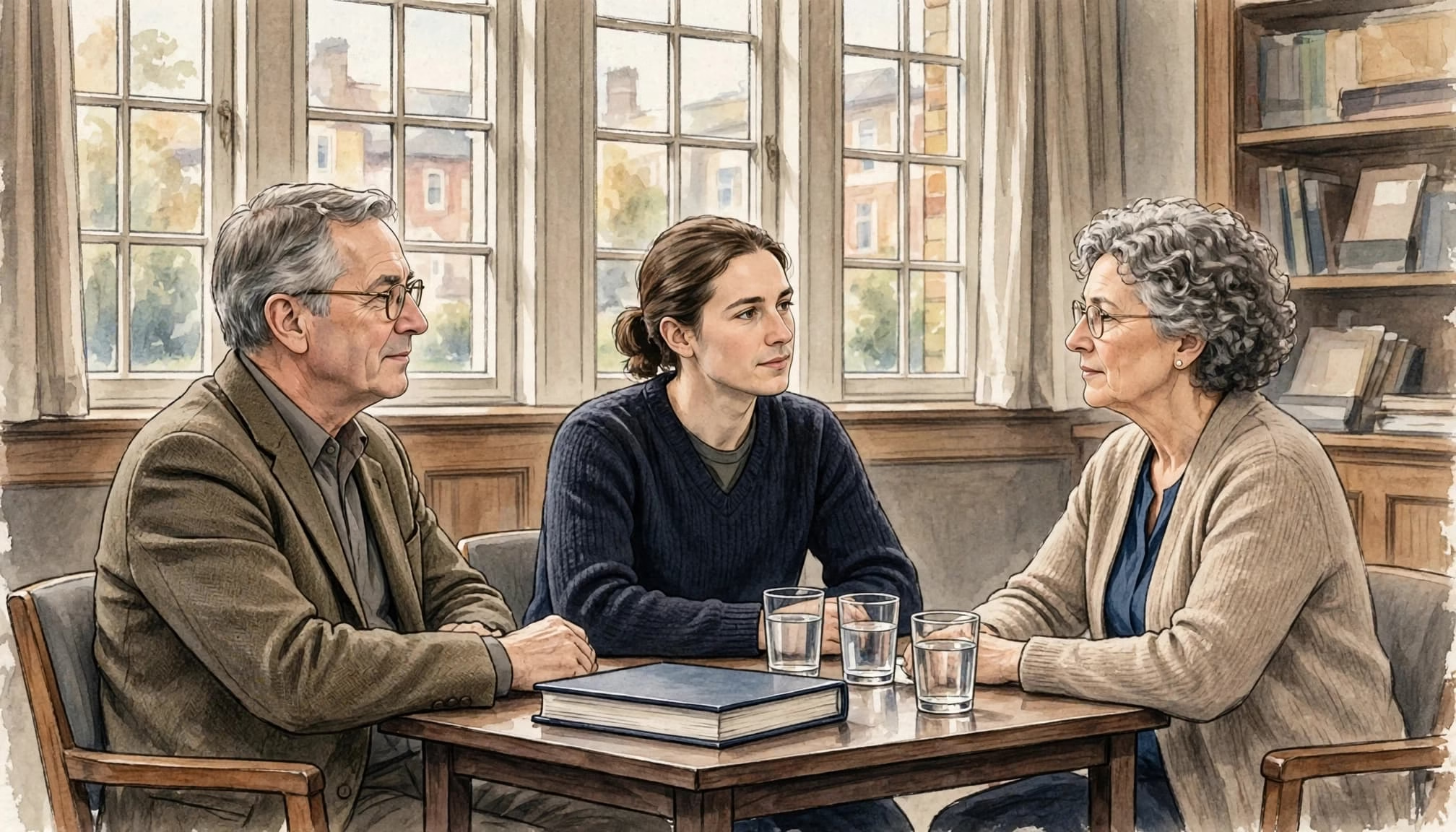
A UK PhD viva normally has one internal examiner from the candidate’s university and one external examiner from another university. Both read the thesis and write independent reports beforehand.
They usually meet privately shortly before the viva, often for around half an hour, to discuss their assessments and questions.
Some universities also appoint an independent chair. At Edinburgh’s School of Health in Social Science, the non-examining chair oversees fairness, watches for distress and offers breaks. The chair manages procedure rather than assessing the research.
How Long the Discussion Lasts
Viva length varies, but two to three hours is common. Cambridge’s oral examination guidance gives 90 minutes to three hours. Edinburgh and St Andrews describe two to four hours, whilst Edinburgh notes that some last six hours or longer.
Duration alone tells you little about the outcome. Detailed questions can reflect genuine interest or a need for clarification.
Unlike some US doctoral defences, a UK viva voce is usually a private oral examination rather than a public presentation. Prepare slides only when a presentation forms part of your arrangements.
University Rules That Shape Your Preparation
Attendance and Permitted Materials
Cambridge doesn’t allow supervisors to attend. Under Sussex’s research degree examination arrangements, a supervisor may attend as a silent observer when the candidate requests it and the examiners agree. Nottingham permits supervisor attendance only in special cases.
Cambridge permits an unannotated printed thesis, blank paper and a pen or pencil; water and a requested presentation are also allowed. York and Sussex permit annotated thesis copies.
These differences affect rehearsal. Practise with the materials your examination permits, and obtain advance agreement for additional resources rather than assuming you can bring them.
Online Vivas and Reasonable Adjustments
Cambridge defaults to an in-person viva. York allows online requests through the department, whilst Sussex requires prior approval.
For an approved online examination, rehearse with the same platform, microphone and connection. Agree how to report a disconnection before the session.
If disability or an ongoing health condition affects oral assessment, contact the disability service early. Request arrangements that address the barrier, such as planned rest breaks or an accessible room. Get the agreed plan in writing and practise using it. Funding for study support doesn’t replace university assessment adjustments.
Build a Six-Week Viva Preparation Timeline
Weeks Six to Three: Read Like an Examiner
Begin with your submission and work backwards, reserving regular preparation blocks around other commitments. Protect time for rehearsal rather than spending every session rereading.
Read the whole thesis, including appendices. For each chapter, record its central claim, supporting evidence and connection to your research question.
Next, list limitations, contested claims and possible corrections. Separate typographical errors from weaknesses that affect interpretation.
Revisit your literature review and the key debates your argument depends on, including relevant work published since submission. Read your examiners’ related research to understand their interests, without trying to predict every question.
Our dissertation methodology examples can help you connect research design decisions to the questions they answer.

Weeks Two to One: Explain the Contribution Aloud
State your original contribution in one or two sentences. Identify the gap, explain what your research found and say why that finding matters.
Then prepare a two-minute overview covering your question, approach, principal findings and contribution. Our guidance on writing a clear dissertation abstract offers a useful structure, although spoken answers need less compression.
Practise explaining your weakest methodological decision and strongest alternative interpretation. Use chapter and page references to support answers.
During the final days, shorten preparation sessions. Organise permitted materials and travel or technology arrangements, then protect sleep.
Prepare Viva Questions Across Five Categories
Build a bank of roughly 30 to 40 questions. Use brief answer outlines rather than scripts, because examiners will ask follow-ups.
Opening, Literature and Methodology
Opening questions often establish the project’s purpose: “Why did you choose this question?” and “What is your original contribution?”
For the literature, practise explaining which debate your thesis changes and which published study most strongly challenges your argument. Identify what you adopted, rejected or extended.
Methodology questions probe judgement. Be ready to defend your most important decision and explain why your chosen approach was preferable to the strongest alternative. Explain how sampling, access and ethics shaped your choices, rather than simply naming techniques.
Findings and Future Work
Prepare to distinguish your results from your interpretation. Likely questions include: “Which finding provides your strongest evidence?” and “What alternative explanation remains possible?”
For future work, rehearse: “If you repeated the research, what would you change?” and “Which next study would test your conclusions?”
Connect each answer to a real limitation. Explain whether it narrows your claim, introduces uncertainty or requires different evidence.
Run a Full Mock Viva
Ask your supervisor or another researcher to conduct a sustained examination covering the whole thesis. Arrange at least one full mock, rather than several brief conversations about favourite chapters.
Use the expected duration and permitted materials. Record it with everyone’s permission, then review your three weakest answers.
For methodology practice, ask your mock examiner to press beyond your first answer: Why that design? What alternative did you reject? What does your choice prevent you from claiming?
Answer with your decision, supporting evidence and its limitation. Then explain what remains defensible.
Afterwards, distinguish a knowledge gap from a communication problem. Missing evidence needs reading; an overlong answer needs editing and another spoken attempt. Rehearse the revised answers with follow-up questions rather than merely rereading your notes.
A limitation doesn’t automatically invalidate a finding. Explain precisely which claim it restricts and which evidence still supports your conclusion.
Understand Viva Outcomes and Correction Deadlines
Discover PhDs’ viva outcomes analysis reports results for 26,076 candidates at 14 UK universities between 2006 and 2017. About 96% passed.
Among successful candidates, approximately 79% needed minor corrections, 16% needed major revisions and 5% passed without corrections. Nearly 4% of all candidates received an MPhil instead, whilst about 0.1% failed.
These historical figures aren’t a prediction for an individual thesis. They also exclude students who never reached a viva.
Correction periods depend on the institution and recommendation.
| Outcome | What It Means | Examples of Time Allowed |
|---|---|---|
| Pass without corrections | No thesis amendments required | No correction period |
| Minor corrections | Limited amendments before approval | Sheffield and Essex: three months; Nottingham: three or six months |
| Major corrections | More substantial revision | Sheffield and Essex: six months |
| Revise and resubmit | Revised thesis requires further examination | Up to 12 months |
| MPhil instead of PhD | Work meets MPhil but not doctoral standards | Depends on the formal recommendation |
| Fail | No research degree recommended | Appeal deadlines depend on regulations |
The written outcome determines your next steps. A provisional discussion doesn’t replace the formal recommendation and correction instructions.
For corrections, create a response table recording each examiner request, your amendment and its page reference. If requests conflict or remain unclear, raise the ambiguity before rewriting substantial sections. Explain any proposed alternative rather than silently omitting a requested change.
Respond Constructively When the Viva Feels Difficult
Pause before answering a challenging question. If nerves make you lose your train of thought, take a sip of water or ask the examiner to repeat the question. Ask them to clarify its scope, then address the part you can support.
If you find an error, acknowledge it and explain its consequences. Avoid defending wording that overstates your evidence. Equally, disagreement doesn’t require automatic surrender: support your interpretation with the thesis.
If distress prevents you from continuing, request a break. Report sudden illness or a serious incident promptly, then document dates, effects and available evidence through the mitigating circumstances process.
After a disappointing outcome, separate immediate wellbeing from academic decisions. Speak to your supervisor and student advice service. Appeals generally concern permitted grounds, such as procedural irregularity, rather than disagreement with academic judgement.
Frequently Asked Questions About UK Dissertation Vivas
Is a Dissertation the Same as a Thesis?
In UK usage, “dissertation” commonly describes undergraduate or taught master’s research, whilst “thesis” usually describes doctoral work. Terminology varies. A taught-course viva doesn’t automatically follow PhD procedures or assess a doctoral contribution.
Will I Receive My Result That Day?
Practices differ. Edinburgh says candidates usually hear the recommendation on the day, whilst Cambridge asks examiners not to indicate the outcome. Formal university approval remains separate from any provisional recommendation.
What Happens After Corrections?
Submit the amended thesis and any required response document. The designated examiner or examiners assess the changes. Award approval and final thesis deposit follow the university’s process; revise-and-resubmit outcomes involve further examination and may require another viva.
Prepare to Explain Your Research Clearly
Strong viva preparation combines critical rereading with spoken practice. Know what your research contributes, where its claims stop and why your decisions were reasonable.
Give your weakest answers the most rehearsal time, and treat corrections as defined academic work rather than a verdict on your worth. You don’t need a flawless thesis, but you do need a clear, evidence-based account of the research you completed.