
 Paul Scott
Most UK veterinary medicine courses expect AAA at A-level, usually including Biology and Chemistry, alongside relevant animal experience. UK veterinary school requirements vary enough that choosing suitable courses matters as much as earning strong grades.
Match subject rules, placement requirements and selection methods before building your shortlist. Start with the differences that could determine where your application succeeds.
Key Takeaways
- Most standard offers are AAA, although Cambridge asks for A*AA and some schools offer lower-grade routes.
- No UK veterinary school requires the UCAT. Interviews, experience and supplementary application forms also influence selection.
- You can choose up to four veterinary courses through UCAS. Experience requirements differ substantially, so hours, settings and completion dates matter.
Comparing UK Veterinary School Requirements
These standard school-leaver offers for veterinary medicine provide a comparison snapshot based on figures available in October 2026. Confirm current requirements for your entry year on each university’s official admissions pages. Contextual offers and alternative qualifications follow separate rules.
| Veterinary School | Standard A-level Offer | IB Overall | Work Experience |
|---|---|---|---|
| Royal Veterinary College | AAA, including Biology and Chemistry | 36 | 70 hours in practice and 70 with live animals outside practice |
| Cambridge | A*AA, including Chemistry and another science or Mathematics | 41 or 42 | At least two weeks recommended |
| Edinburgh | AAA, including Biology and Chemistry | 38 | Relevant veterinary and animal experience expected |
| Glasgow | AAA, including Biology and Chemistry | 38 | At least one week in veterinary practice |
| Liverpool | AAA, including Biology and Chemistry | 36 | 15 days, including one week in practice |
| Nottingham | AAB, including Biology and Chemistry at A | 34 | Five weeks, including three weeks of animal handling |
| Aberystwyth and RVC | AAA, including Biology and Chemistry | 36 | 70 practice hours and 70 animal-environment hours |
IB totals alone don’t establish eligibility. Liverpool requires 6,6,6 at Higher Level, including Biology and Chemistry. Edinburgh also requires 6,6,6, whilst Cambridge normally expects 7,7,6. Check each school’s Higher Level subject rules, too.
Bristol, Surrey, Harper and Keele, SRUC and the University of Lancashire complete the UK’s 12-school landscape.
An AAB prediction doesn’t automatically rule out veterinary medicine. However, an AAA course remains unsuitable unless you meet its published contextual or alternative-entry criteria. Strong experience doesn’t automatically compensate for missing academic thresholds.
Subjects, GCSEs And Scottish Qualifications
Choose Subjects That Keep Options Open
Biology and Chemistry together give you the broadest choice. Most schools require both, although Cambridge accepts Chemistry alongside Biology, Physics or Mathematics.
A third A-level doesn’t always need to be another science. Schools differ over acceptable subjects and combinations. General Studies and Critical Thinking commonly don’t count towards offers.
Cambridge college-level subject expectations can also differ. Its Veterinary Medicine course requirements distinguish the university minimum from additional college expectations.
GCSE Requirements Still Matter
Nottingham requires five GCSEs at grade 7, including Biology and Chemistry or the accepted combined-science equivalent. Glasgow specifies at least grade 5 in GCSE English.
Elsewhere, schools set their own English, Maths and science thresholds. Meeting the required offer grades doesn’t make up for a missing subject or grade requirement.
Scottish applicants apply using the relevant Higher and Advanced Higher combinations, not A-level offers. Required subjects, grades and the stage at which you take them all matter.
Work Experience: Meet The Rules And Learn From It
Count The Right Hours And Settings
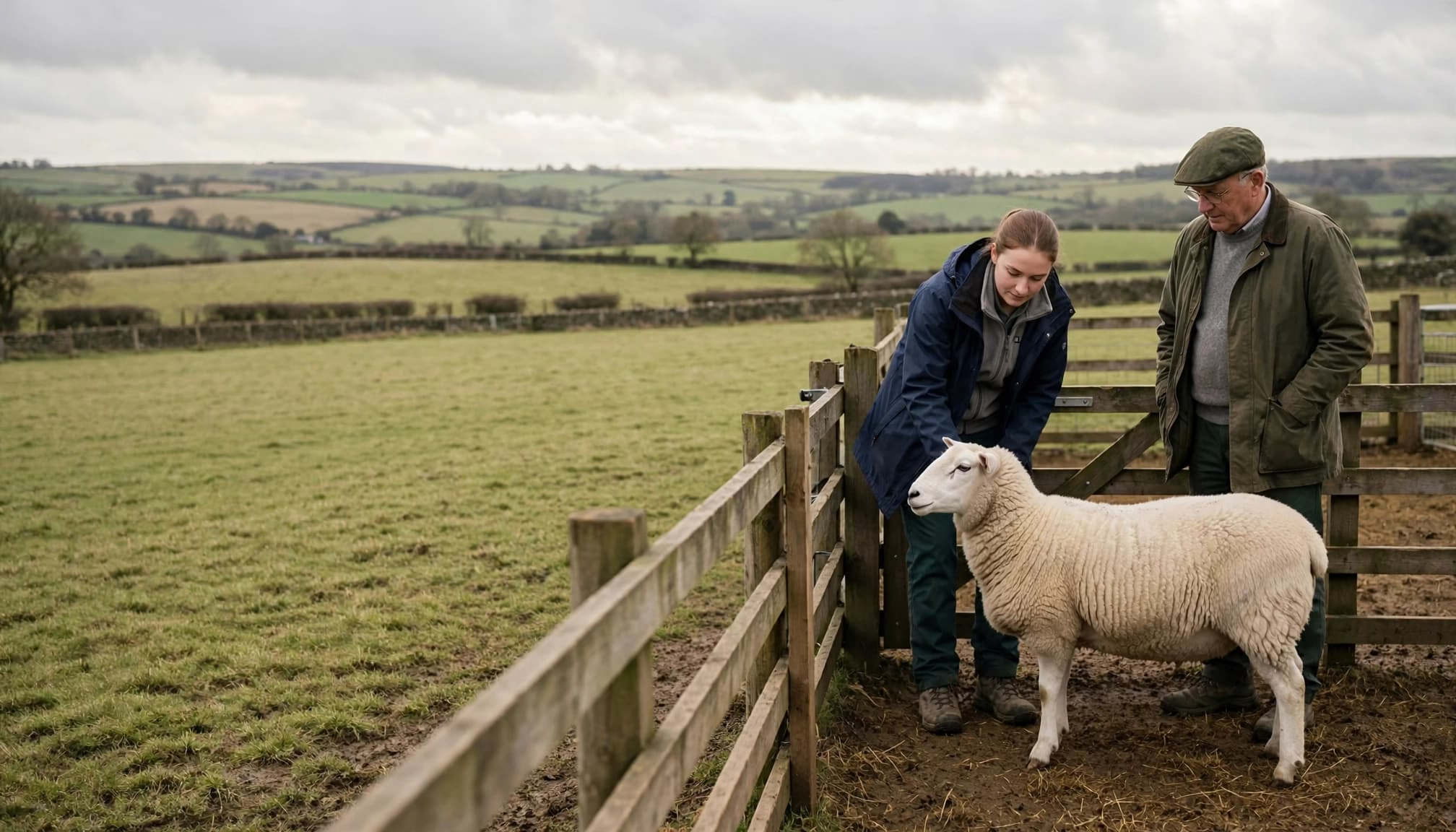
The Royal Veterinary College’s requirements, detailed in its RVC’s veterinary medicine requirements, include 70 hours in veterinary practice and 70 hours with live animals in non-clinical settings. Both must be completed within the 18 months before application.
Aberystwyth’s published requirements include the same total hours, with at least 35 non-clinical hours involving farm animals or horses. Pet ownership doesn’t count.
Liverpool requires 15 days of animal-related experience, including one week in veterinary practice. Nottingham asks for five weeks, including three weeks of animal handling, whilst Glasgow requires at least one week in a clinical setting.
A placement can meet one school’s minimum but fail another’s because its setting or completion date doesn’t qualify.
Record What The Experience Taught You
Keep dates, hours, supervisor contact details and brief reflections. Record what you learnt about welfare, communication and the realities of veterinary work, rather than collecting impressive-sounding procedures.
Observing a consultation can show how a vet explains treatment options and costs. Farm experience can build your understanding of husbandry and disease prevention.
Respect confidentiality and stick to tasks your supervisor permits. You don’t need to perform clinical procedures to demonstrate insight.
Our guide to careers for veterinary science graduates explains how experience beyond companion-animal settings can broaden your understanding.
UCAS Choices, Admissions Tests And Interview Preparation
Build Four Eligible Choices
UCAS allows up to four veterinary medicine or veterinary science choices. You can use your fifth choice for another subject.
D100 is common for standard veterinary degrees, whilst Aberystwyth uses D105. Graduate and gateway courses can have different codes.
For 2027 entry, the deadline is 15 October 2026 at 18:00 UK time. Veterinary applications use this early deadline, not the main January deadline.
A balanced shortlist contains courses whose academic and experience rules you meet. Four ambitious choices with the same unmet requirement don’t spread your risk. Compare teaching styles and placement arrangements before committing.
Prepare For The Right Selection Process
No UK veterinary school requires the UCAT. Liverpool doesn’t require the BMAT or UKCAT, the UCAT’s former name. Cambridge uses the ESAT rather than the older NSAA.
Schools assess different combinations of grades, contextual information, experience questionnaires and interviews. Many use multiple mini interviews, or MMIs, though the interview format varies.
For applications from 2026 entry onwards, UCAS uses three structured personal-statement questions. Your answers should connect your preparation and experience with your reasons for studying veterinary medicine.
Practise explaining welfare decisions and reflecting on unfamiliar situations. Memorised speeches are less useful than clear reasoning and a willingness to recognise your limits.
Graduate, Gateway And International Entry Routes
Graduate And Gateway Courses
Graduate entry usually requires at least a 2:1 in a relevant bachelor’s degree, although accepted subjects differ. RVC offers an accelerated graduate veterinary course.
Liverpool’s graduate criteria include a minimum GPA of 3.4 for applicants assessed through that grading system. A previous degree doesn’t automatically remove subject requirements or guarantee a shortened course. Check each university’s admissions page for current requirements.
Gateway and foundation programmes can offer lower-grade entry to eligible applicants. Gateway eligibility may be restricted to widening-participation groups and depend on educational or personal circumstances.
Criteria vary between gateway courses, so check whether a particular gateway route accepts your qualification.
Liverpool accepts specified foundation programmes, not every course carrying that label. A general science foundation year isn’t a universal route into veterinary medicine. Check Liverpool’s admissions page for approved qualifications.
International Qualifications And English
Universities assess qualifications such as the German Abitur, French Baccalaureate and Singapore A-levels against their own subject and grade rules. Check each university’s admissions page for current qualification equivalencies.
There isn’t one UK-wide conversion table. The required Biology and Chemistry content matters alongside the overall result.
IELTS requirements often begin at 7.0 overall, but component thresholds can be equally demanding. Liverpool requires at least 7.0 in every component.
International applicants should also include visa and immigration-health charges in their UK veterinary study budget. Tuition, immigration eligibility and professional recognition are separate issues.
Tuition Fees, Accreditation And Course Fit
Home tuition depends on domicile, course and academic year. For 2025/26, the English fee cap was £9,535 annually. For 2026/27, the Royal Veterinary College’s graduate course lists £9,790 for home students.
Published international fees have ranged from approximately £33,000 to more than £70,000 annually. RVC’s five-year BVetMed currently lists £52,880. These figures show why a school-by-school entry and fee comparison needs the correct course and entry year.
Budget for accommodation, equipment and placement travel too. Graduate applicants also face different student-finance rules from first-degree students.
The Royal College of Veterinary Surgeons (RCVS) assesses UK veterinary qualifications through an accreditation process that covers educational standards and preparation for professional practice.
Accreditation and rankings answer different questions. Cambridge has conditional accreditation in the available RCVS listing. Newer programmes at Aberystwyth, SRUC and Lancashire follow staged accreditation processes, so the 12 schools don’t all have the same status. Check the latest accreditation status with the RCVS, and verify fees and academic-year details on official university pages.
Our guide to choosing a veterinary school considers facilities, faculty and practical opportunities alongside reputation. Compare teaching hospitals, clinical exposure and living costs before allowing a ranking position to decide your shortlist.
Most standard courses last five years; Cambridge’s lasts six. An extra year changes both your financial commitment and your training timetable.
Frequently Asked Questions About UK Veterinary School Applications
How Hard Is It to Get Into Veterinary School?
Entry is competitive because applicants must satisfy several selection stages. High grades establish academic eligibility, but they don’t guarantee an interview or offer.
Work-experience reflections, questionnaires and interview performance can distinguish applicants with similar results. However, collecting extra placements won’t reliably overcome a missing compulsory subject.
A realistic application starts with eligibility. Then it demonstrates that you understand veterinary work, can communicate thoughtfully and have prepared for the demands of the course.
Is 27 Too Late to Become a Vet?
No. Being 27 doesn’t prevent you from applying, and graduate routes accommodate applicants who have already completed university study.
The practical considerations are entry qualifications, funding and time. Standard veterinary degrees usually take five years, whilst some graduate courses take four.
Career changers still need relevant experience and evidence of academic readiness. Previous employment can support an application through communication or teamwork examples, but it doesn’t replace the course’s academic and placement requirements.
Choose Courses That Match Your Preparation
A strong application to study veterinary medicine combines academic eligibility with informed experience. Start with subject and grade requirements, then match your placements to each school’s rules.
Use your four choices for courses that fit your qualifications, circumstances and budget. Compare your shortlisted vet schools by these factors, rather than chasing rankings or collecting experience without understanding what each school needs.