
 Paul Scott
Every year, hundreds of thousands of students take their GCSE or IGCSE Mathematics exams. It’s clear that having good revision strategies is key. A solid exam preparation plan is essential for a high grade.
First, get to know the syllabus well. Then, make a study plan that fits you. Practising with past papers and focusing on important areas boosts confidence and skill.
Good revision techniques and exam preparation strategies are critical. By focusing, students can better understand and remember important math concepts.
Key Takeaways
- Understand the syllabus and exam format thoroughly.
- Create a personalised study plan to manage time effectively.
- Practice with past papers to familiarise yourself with the exam style.
- Focus on key areas of the syllabus that require improvement.
- Develop effective revision techniques to retain information.
1. Understanding the GCSE Maths Syllabus and Exam Format
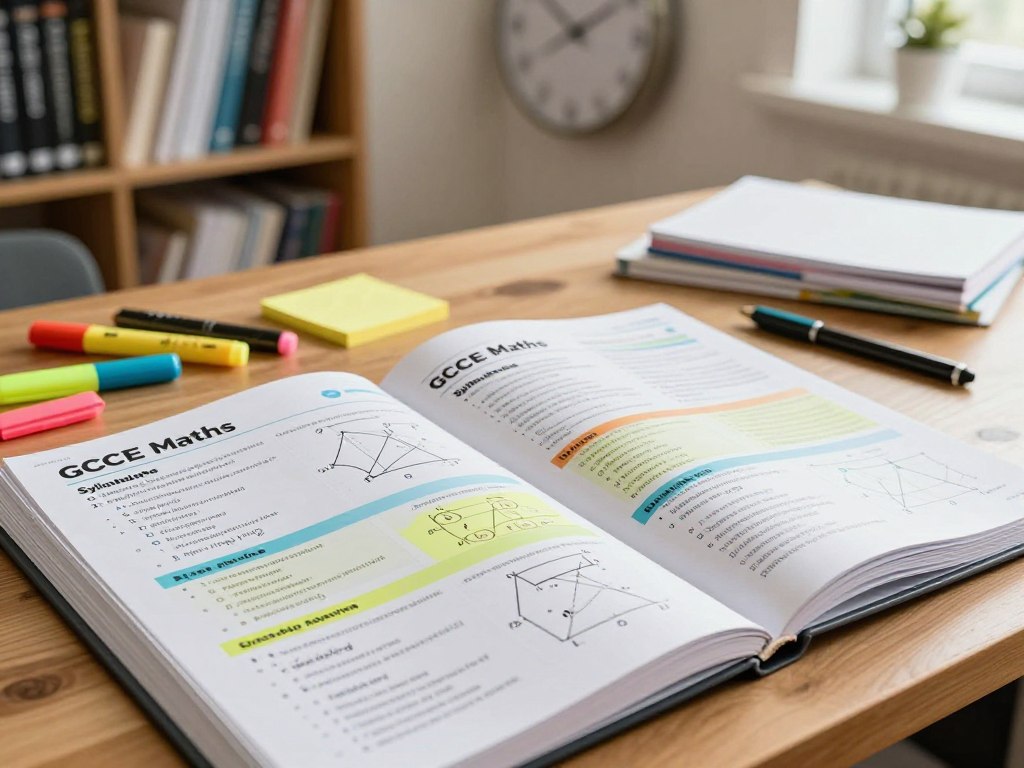
Knowing the GCSE Maths syllabus and exam structure is key to doing well. The curriculum covers algebra, geometry, statistics, and trigonometry. It’s important to understand these topics and how they’re tested.
Breaking Down the Key Topic Areas
The GCSE Maths syllabus has several main areas. Algebra deals with equations and functions. Geometry looks at shapes and their properties. Knowing how much each topic is worth helps you focus your studying.
- Number: Includes fractions, decimals, percentages, and ratios.
- Algebra: Covers equations, formulae, and functions.
- Geometry: Involves the study of properties and relations of points, lines, angles, and shapes.
- Statistics and Probability: Encompasses data handling, probability, and statistical analysis.
Familiarising Yourself with Paper Structure and Question Types
GCSE Maths exams have multiple papers, each covering different parts of the syllabus. Knowing the paper structure and question types is important. Questions can be multiple-choice, problem-solving, or open-ended, testing various skills and knowledge.
| Paper | Content | Duration |
|---|---|---|
| Paper 1 | Number and Algebra | 1 hour 30 minutes |
| Paper 2 | Geometry, Measures, and Statistics | 1 hour 30 minutes |
Knowing the Differences Between Foundation and Higher Tier
GCSE Maths is available in two tiers: Foundation and Higher. The Foundation tier is for grades 1-5. The Higher tier is for grades 4-9. It’s important to know the content and difficulty differences between these tiers for effective revision.
By understanding the GCSE Maths syllabus and exam format, you can plan your studying better. This can improve your chances of doing well in your exam.
2. Creating a Realistic Maths Study Schedule
To do well in GCSE maths, making a good study plan is key. A well-organised study schedule helps students manage their time well. This ensures they cover all important topics before the exam.
Setting Achievable Goals and Milestones
Setting goals and milestones is vital for a good maths study plan. Breaking down study material into smaller parts helps students focus better. For example, a student might aim to master algebra in a week, setting aside specific times each day.
Tips for Setting Achievable Goals:
- Focus on the toughest topics first.
- Divide big topics into smaller parts.
- Make a timeline with milestones to track progress.
Allocating Time Based on Topic Difficulty and Weighting
It’s important to spend more time on harder and more weighted topics. By looking at past papers and the syllabus, students can see which topics are most important. This helps them plan their study time better.
| Topic | Difficulty Level | Exam Weighting | Allocated Time |
|---|---|---|---|
| Algebra | High | 30% | 6 hours/week |
| Geometry | Medium | 20% | 4 hours/week |
| Statistics | Low | 15% | 3 hours/week |
Building in Regular Breaks and Review Sessions
Regular breaks and review sessions are key to a good study routine. Breaks help students stay focused, while review sessions help them remember what they’ve learned. This keeps their study routine consistent and prevents burnout.
Effective Break and Review Strategies:
- Take a 10-15 minute break every hour.
- Have weekly review sessions for tough topics.
- Use active recall methods like quizzing or flashcards during reviews.
By using these strategies, students can make a study plan that works well. This leads to better results in the GCSE maths exam.
3. GCSE Math Study Tips for Maximum Retention
To get the most out of GCSE maths, use proven study methods. Remembering maths concepts well is key to doing well in exams. It helps students recall important ideas and formulas when they need to.
Implementing Active Recall and Spaced Repetition
Active recall means actively trying to remember information instead of just reading it. You can use flashcards or practice quizzes for this. Spaced repetition means reviewing material at longer and longer intervals to keep it in your memory.
For example, make flashcards with key maths formulas on one side and the explanation on the other. Regularly testing yourself helps you remember better.
| Technique | Description | Benefits |
|---|---|---|
| Active Recall | Recalling information from memory | Improves retention, enhances understanding |
| Spaced Repetition | Reviewing material at intervals | Helps solidify information in long-term memory |
Creating Condensed Revision Notes and Formula Sheets
Writing down key points and formulas in a concise way helps a lot. It makes it easier to review and remember important maths information.
For instance, a formula sheet with all the key maths formulas is very useful. It helps during practice questions or as a last check before the exam.

Using Visual Aids, Diagrams, and Mind Maps
Visual tools like diagrams and mind maps make complex maths easier to understand and remember. They help students see how different pieces of information are connected.
For example, a mind map can show how maths topics are linked. A visual map of the maths syllabus helps students see the big picture and how topics relate to each other.
- Mind maps for visualising topic connections
- Diagrams for illustrating complex concepts
- Charts for comparing different formulas or techniques
Teaching Concepts to Others to Solidify Understanding
Teaching maths to others helps you understand it better. Explaining maths to friends or family members makes you remember it better and shows where you need more practice.
This method not only helps you remember but also boosts your confidence in explaining maths.
By using these GCSE maths study tips, students can improve their retention, confidence, and exam results.
4. Mastering Practice Exercises and Past Papers
Practice exercises and past papers are key for GCSE Maths revision. They help students get used to the exam style and find areas to improve. By using these, students can learn how to tackle various question types.
Finding Quality Practice Materials and Resources
Students need top-notch practice materials to revise well. This includes official past papers and revision guides from trusted sources. Online tools and apps also offer great practice exercises and interactive learning aids.
Working Through Past Papers Under Timed Conditions
Practicing under timed conditions is a great way to get ready for the GCSE Maths exam. It helps students improve their exam stamina and time management. It also shows where they need to focus their study.
- Start with a diagnostic paper to identify strengths and weaknesses.
- Gradually increase the difficulty level as you progress.
- Review your performance after each paper to adjust your revision plan.
- Use a timer to simulate the actual exam experience.
Analysing Mark Schemes to Understand What Examiners Want
Knowing the mark schemes is vital for high grades in GCSE Maths. By studying how marks are given, students learn what examiners look for. This includes the key concepts and methodologies that score well.
Students should focus on the command words in questions. These words tell you how to answer. For example, “prove” or “show” questions need a different approach than simple calculations.
5. Identifying and Strengthening Your Weak Areas
To do well in GCSE maths, you must find out where you’re struggling. Knowing your weak spots helps you study smarter. This way, you can improve your maths skills a lot.
Conducting an Honest Self-Assessment
Start by looking at your past maths tests and homework. Make a list of topics you find hard. Be honest about what you’re good at and what you’re not.
Use a self-assessment checklist to help. It should have columns for topics, your current understanding, and where you need more practice. This tool makes it easy to see your weak spots.

Prioritising Topics Based on Exam Weighting and Personal Gaps
After finding your weak areas, decide which ones to focus on first. Choose topics that are important in the exam and where you’re really struggling.
Make a list of topics to work on, based on their exam weight and your knowledge. Use your exam syllabus to guide you. This way, you’ll focus on the most important areas to boost your score.
Knowing When and Where to Seek Help
If you’re stuck on a maths concept, don’t be afraid to ask for help. Talk to your teacher for extra explanations or support. They can also suggest resources or offer one-on-one help.
Online resources like video tutorials and forums can also be helpful. Working with classmates is great too. You can share tips and learn from each other.
By tackling your weak areas, you can really improve your maths grades. Regular self-checks and asking for help when needed are key to success.
6. Time Management Strategies for GCSE Maths Revision
Students who manage their time well do better in GCSE maths. Good time management lets them cover all the material, practice enough, and feel ready for the exam. Here, we’ll look at ways to improve time management during GCSE maths revision.
Using the Pomodoro Technique for Focused Study Sessions
The Pomodoro Technique is great for staying focused and productive. It means studying in 25-minute blocks, with a 5-minute break in between. After four blocks, take a 15-30 minute break. This keeps you from getting tired and helps you stay consistent.
To use the Pomodoro Technique well:
- Find a quiet place to study.
- Set a timer for 25 minutes and study without breaks.
- Take a 5-minute break to relax or enjoy something.
- Keep repeating, with a longer break after four cycles.
Balancing Maths Revision with Other Subjects
It’s important to balance maths revision with other subjects for good grades. To make a balanced study plan:
| Subject | Revision Time per Week | Study Frequency |
|---|---|---|
| Maths | 5 hours | 4 times |
| Science | 4 hours | 3 times |
| English | 3 hours | 4 times |
By setting aside specific times for each subject, you can make sure you cover everything.
Overcoming Procrastination and Maintaining Motivation
Procrastination is a big problem during revision. To beat it, try:
- Breaking big tasks into smaller ones.
- Setting clear, reachable goals for each study session.
- Using positive self-talk and rewarding yourself for tasks done.
By using these tips, students can improve their time management, stay motivated, and reach their GCSE maths goals.
7. Developing Effective Exam Techniques
Mastering exam techniques is key for GCSE maths students to do well. By learning effective exam techniques, students can reach their full score. This helps them get the grades they want.
Reading Questions Carefully and Planning Your Approach
Reading questions well and planning your answer is very important. Students should read each question carefully. They need to understand what’s being asked and plan their answer.
This helps avoid mistakes and ensures the answer is relevant. A simple trick is to underline key words and phrases. It helps identify what the question really wants.
Managing Your Time Effectively During the Exam
Managing time well is key in the GCSE maths exam. Students should plan their time to answer all questions well.
They can start by scanning the paper to find questions they’re confident about. Then, they should keep an eye on the clock. This helps them stay on track and not run out of time.
Showing Clear Working Out to Maximise Partial Marks
Clear working out is vital in GCSE maths. It shows how well you understand the concepts. Even if your final answer is wrong, you can get partial marks.
To get more partial marks, make sure your working out is clear and easy to follow. Use proper notation and label your work. Try to avoid unnecessary steps.
Checking Your Answers and Avoiding Common Mistakes
Checking your answers and avoiding mistakes is important. Students should review their work carefully. This helps find errors and ensures answers are reasonable.
To avoid mistakes, be aware of common pitfalls. Also, check your calculations carefully. Use methods like estimation to check your answers.
8. Optimising Your Study Environment and Habits
To do well in GCSE maths, you need to improve your study habits and environment. A good study space and healthy habits help you focus better. This leads to better grades.
Creating a Distraction-Free Study Space
A tidy and quiet study area helps you concentrate. Make sure it’s well-lit and has all you need, like books and a comfy chair. Studying at a desk keeps study and rest separate.
Tips for a Productive Study Space:
- Keep your study area organised and clutter-free.
- Use good lighting to reduce eye strain.
- Minimise distractions by turning off notifications on your phone or placing it on silent mode.
- Invest in a comfortable and ergonomic chair.
Using Technology and Apps to Support Your Learning
Technology can make learning easier. There are many apps and online tools for GCSE maths, like interactive guides and quizzes. Use digital tools to help, but don’t rely too much on screens.
Recommended Tools and Apps:
- Revision apps like MyMaths and BBC Bitesize.
- Online platforms with practice papers and mark schemes.
- Flashcard apps such as Anki for memorising formulas.
Maintaining Healthy Sleep, Nutrition, and Exercise Routines
Healthy habits are key during GCSE prep. Get enough sleep, eat well, and exercise regularly. These habits keep you focused and full of energy.
Healthy Habits Checklist:
- Aim for 7-8 hours of sleep each night.
- Eat a balanced diet rich in fruits, vegetables, and whole grains.
- Engage in at least 30 minutes of moderate exercise daily.
- Take regular breaks during study sessions to refresh your mind.
9. Final Week Preparation Strategies
The last week before the GCSE maths exam is key. It’s a time to sharpen your knowledge and boost your confidence. By using the right strategies, you can get the grade you want.
Focusing on High-Yield Topics and Common Question Types
In the final week, focus on high-yield topics often tested in the GCSE maths exam. Look at past papers and mark schemes to see which topics are tested most. This way, you can score higher.
Also, get familiar with common question types, like problem-solving and reasoning. Practising these will improve your skills and confidence. Use online resources or study guides for practice questions.
Reviewing Formula Sheets and Key Concepts Daily
Reviewing formula sheets and key concepts daily is essential. Make a schedule to review these every day. Use flashcards or a formula sheet to help you remember.
Testing yourself daily on these concepts is also good. Use practice questions or quizzes to check your understanding. This helps you focus on areas you need to improve.
Managing Pre-Exam Anxiety and Building Confidence
It’s important to manage pre-exam anxiety to do well in the GCSE maths exam. Create a pre-exam routine, like meditation or exercise, to relax. Make sure you rest well and eat healthily before the exam.
To boost confidence, think about your strengths and revision progress. Remember the strategies and practice questions you’ve done. Visualise yourself doing well in the exam. A positive mindset helps you overcome anxiety and do your best.
10. Conclusion
As you get ready for your GCSE maths exam, staying focused and motivated is key. Knowing the syllabus, making a study plan, and practicing with past papers are important steps. These actions can lead to gcse maths success.
Good study habits help you remember information, feel more confident, and tackle tough questions. It’s important to make a study plan that fits you. This means setting goals, planning your time, and reviewing what you’ve learned often.
Stick to your study plan and ask for help when you need it. With hard work and the right strategies, you’ll feel ready for your exam. By following these tips, you can reach your goals and enjoy gcse maths success.
FAQ
What are the most effective study strategies for GCSE maths?
Effective study strategies for GCSE maths include understanding the syllabus and exam format. Create a realistic study schedule and use active recall and spaced repetition. Practising with past papers is also key.
How can I identify my weak areas in GCSE maths?
To find your weak areas, review your past performances and identify topics you struggle with. Prioritise these based on exam weighting and personal gaps.
What is the best way to manage my time during GCSE maths revision?
Use the Pomodoro Technique for focused study sessions. Balance maths revision with other subjects. Set achievable goals and stay motivated to overcome procrastination.
How can I improve my retention of GCSE maths concepts?
Improve retention by using active recall and creating condensed revision notes. Visual aids and diagrams help too. Teaching concepts to others also boosts retention.
What are some effective exam techniques for GCSE maths?
Effective exam techniques include reading questions carefully and managing time well. Show clear working out and check answers to avoid mistakes.
How can I optimise my study environment for GCSE maths?
Optimise your study environment by creating a distraction-free space. Use technology and apps to support learning. Keep healthy sleep, nutrition, and exercise routines.
What should I focus on in the final week before the GCSE maths exam?
In the final week, focus on high-yield topics. Review formula sheets and key concepts daily. Manage pre-exam anxiety by building confidence through consistent revision.
How can I balance GCSE maths revision with other subjects?
Balance maths revision with other subjects by allocating time based on topic difficulty and weighting. Maintain a consistent study routine.
What are some tips for improving my GCSE maths grades?
Improve your grades by understanding the exam format and practising with past papers. Identify and strengthen weak areas. Develop effective exam techniques.
How can I stay motivated during GCSE maths revision?
Stay motivated by setting achievable goals and using the Pomodoro Technique. Reward yourself for progress. Maintain a healthy study-life balance.