

Did you know many students find physics hard because of its complex formulas and abstract concepts? It’s not just about memorising formulas; understanding the underlying principles is key.
Good study methods can really help students get physics. By using the right strategies, students can enjoy the subject more and get better at solving problems.
When students understand physics concepts, not just memorise formulas, they can use their knowledge in many ways. This makes learning more interesting and rewarding.
Key Takeaways
- Understanding physics concepts is more important than memorising formulas.
- Effective study methods can improve problem-solving skills.
- Adopting the right strategies can lead to a deeper appreciation of physics.
- Applying knowledge in different contexts makes learning more engaging.
- Developing a strong foundation in physics concepts is essential for success.
Table of Contents
- Why Understanding Physics Concepts Matters More Than Memorising Formulas
- Identify the Fundamental Principles Behind Every Formula
- Use Visual Learning Techniques to Grasp Abstract Concepts
- Master Problem-Solving Through Systematic Analysis
- Apply Active Learning Strategies for Deeper Comprehension
- Connect Physics Concepts to Real-World Applications
- Effective Physics Study Tips for Daily Practice
- Avoid Common Physics Study Mistakes That Hinder Understanding
- Develop a Problem-Solving Framework You Can Apply Consistently
- Utilise the Right Resources and Study Tools
- Prepare for Physics Exams by Testing Understanding, Not Memory
- Conclusion
Why Understanding Physics Concepts Matters More Than Memorising Formulas
Mastering physics isn’t just about memorising formulas. It’s about understanding the concepts behind them. Many students find physics hard not because they’re bad at it, but because they don’t know how to study it well. Getting to grips with physics concepts is key to building a solid foundation.

The Limitations of Rote Memorisation in Physics
Rote memorisation might work for a while, but it has big drawbacks in physics. Physics is all about solving complex problems and applying principles in different ways. Just memorising formulas doesn’t cut it. Students who only memorise struggle to apply what they’ve learned to new problems or grasp the underlying physics.
How Conceptual Understanding Improves Problem-Solving Skills
When students understand the concepts behind physics formulas, they can look at problems from different perspectives. This helps them apply what they know in new and creative ways. It makes physics easier to manage and more coherent.
Long-Term Benefits for Advanced Physics Topics
Understanding physics concepts pays off in the long run, even when tackling harder topics. Students who get the basics can adapt to new and tough material more easily. They can link new ideas to what they already know. This is essential for doing well in advanced physics.
Identify the Fundamental Principles Behind Every Formula
To really get physics, you need to understand the basics of each formula. It’s not just about memorising them. It’s about knowing the ideas and rules they stand for.
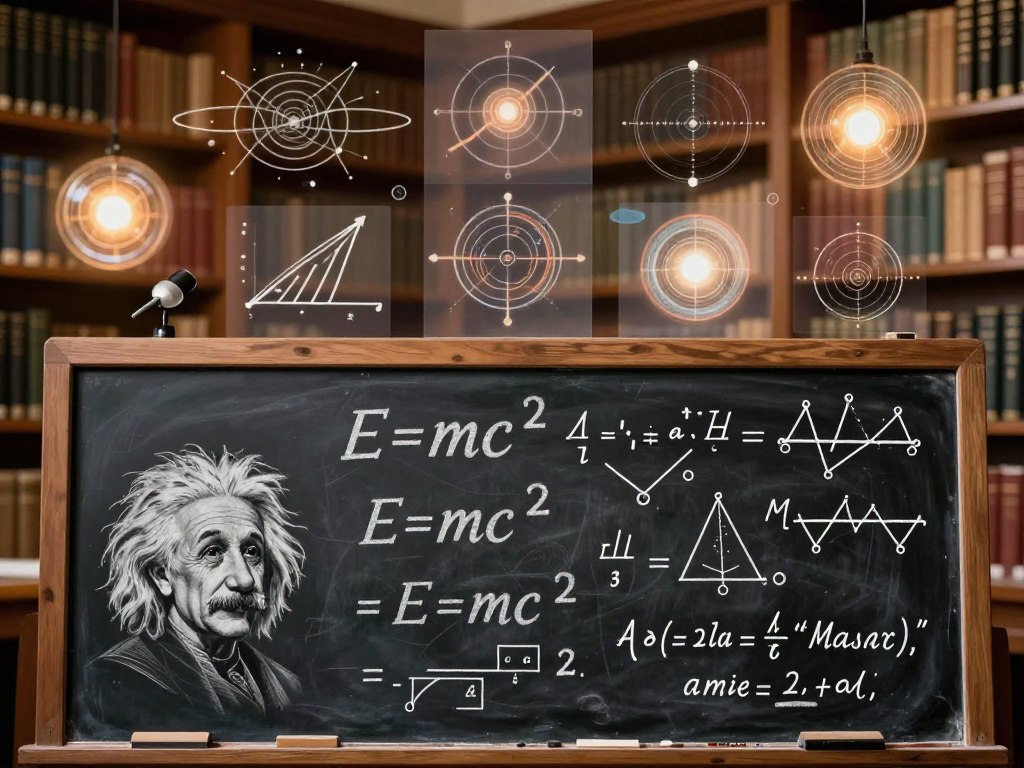
Break Down Complex Equations into Basic Components
Complex equations can seem scary, but they’re easier when broken down. For example, knowing that force is in Newtons (kg·m/s²) helps us see how mass and speed work together. By taking apart these equations, we learn more about the physics they show.
Every formula is based on something real. Like how energy stays the same in different forms. By looking at formulas in parts, we get to see the physics behind them.
Ask “Why Does This Work?” Before Applying Any Formula
Always ask why a formula works before using it. This helps us understand the physics better. For example, knowing that kinetic energy is about an object’s motion gives us insight.
By asking these questions, we think more deeply about physics. This way, we can use formulas better in different situations.
Connect New Concepts to Previously Learned Material
Linking new ideas to old ones is a great way to learn. It makes new stuff stick better and helps us understand it. For instance, linking electromagnetic induction to magnetic fields helps us grasp it better.
By making these connections, we get a clearer picture of physics. This makes learning new things and solving problems easier.
Use Visual Learning Techniques to Grasp Abstract Concepts
Visual learning techniques can really help you understand abstract physics concepts. Physics is all about visuals, and drawing out problems makes them clearer. Using visual learning methods in your study routine can improve how well you remember and apply complex physics.

Draw Diagrams and Free-Body Diagrams for Every Problem
Drawing diagrams is key in physics. It helps you see the problem clearly, making it easier to spot important concepts. Free-body diagrams are great for mechanics problems. They show all forces acting on an object, making it simpler to understand.
- First, read the problem carefully and find the main points.
- Then, draw a simple diagram of the situation.
- For mechanics, draw a free-body diagram to show all forces on the object.
- Make sure to label the forces and understand their direction and strength.
Create Mind Maps to Link Related Physics Concepts
Mind maps are excellent for connecting physics concepts. They make it easy to see how different ideas are linked. When making a mind map:
- Begin with a central idea or concept.
- Expand to related subtopics or principles.
- Use colours and symbols to show different types of information.
- Link related concepts to see the bigger picture.
Utilise Animation and Simulation Tools for Dynamic Processes
Animation and simulation tools make dynamic physics processes easier to understand. They let you see how systems change over time. This is really helpful for topics like wave motion, electromagnetism, and thermodynamics.
Some great resources include online simulation platforms and interactive physics software. These tools let you explore different scenarios, test ideas, and deepen your understanding of physics principles.
By using these visual learning techniques, you can better understand abstract physics concepts. This method not only helps with solving problems but also improves your ability to remember and apply physics principles in different situations.
Master Problem-Solving Through Systematic Analysis
Effective problem-solving in physics needs a structured method, not just memorising formulas. This approach helps students understand better and solve complex problems.
Read and Visualise the Problem Before Calculating
The first step is to read the problem carefully and imagine it. It’s important to grasp the context and spot the main elements. Drawing a diagram can really help, like a free-body diagram in mechanics to show forces.
Identify Known and Unknown Variables Systematically
After visualising the problem, list the known and unknown variables. This means noting down all given info and what you need to find. A table can help keep this organised.
| Known Variables | Unknown Variables |
|---|---|
| Mass (m) = 5 kg | Acceleration (a) |
| Force (F) = 10 N | Final Velocity (v) |
Select Appropriate Principles Instead of Memorised Formulas
It’s better to use the physics principles than just memorised formulas. For example, Newton’s second law (F = ma) is key for problems with force, mass, and acceleration.
Understanding the principles lets students tackle different problems and figure out the right equations.
Verify Your Answer Makes Physical Sense
After solving, check if the answer is physically correct. Look at the units, make sure the value is reasonable, and think about what the result means. For example, if you’re finding an object’s speed, the answer should fit the problem’s context.
This systematic way of solving problems helps students grasp physics better and do well in exams.
Apply Active Learning Strategies for Deeper Comprehension
Understanding physics well is more than just memorising. It needs you to actively work with the material. Using active learning strategies in your study routine helps you grasp physics concepts better. It also makes you better at using them in different situations.
Teach Concepts to Someone Else to Test Your Understanding
Teaching physics concepts to someone else is a great way to get them down. This idea comes from Richard Feynman. He said explain a concept as if you’re teaching it to someone new. This way, you see what you know well and what you don’t.
It makes you understand better and helps you explain complex ideas clearly. This is a powerful way to learn.
Create Your Own Practice Problems and Solutions
Making your own practice problems is another smart move. It lets you dive deeper into the material and improve your problem-solving skills. You can focus on areas where you need to get better, making your study time more productive.
Engage in Peer Study Groups for Different Perspectives
Being part of a study group with peers is also beneficial. It lets you see physics from different angles. Talking about topics with others can clear up any confusion and give you new insights.
Study groups are a place where you can ask questions, share what you know, and learn from each other. This way, you get a fuller understanding of physics.
Using these active learning methods can really boost your grasp of physics. Whether you teach others, make your own problems, or join study groups, the key is to stay engaged and keep pushing yourself to understand more.
Connect Physics Concepts to Real-World Applications
Learning physics is better when you link it to everyday life. This way, students get to see how physics works in real situations. It makes learning fun and helps them remember what they’ve learned.
Identify Physics Principles in Everyday Situations
One top physics study tip is to notice physics at work in your daily life. For example, friction is what makes walking, driving, or holding things possible. Seeing these principles in action makes them easier to understand.
Try keeping a journal of times you see physics in action. It’s a great way to learn and stay interested in the subject.
Explore Engineering and Technology Applications
Physics is key to many engineering and tech breakthroughs. Learning how physics is used in fields like mechanical engineering or renewable energy is insightful. You can read about new discoveries, visit tech sites, or join projects that use physics.
For instance, knowing about electromagnetism is vital for electrical engineering. And understanding thermodynamics is key for better energy use in systems.
Watch Demonstrations and Conduct Simple Experiments
Watching demos and doing simple experiments are great strategies for mastering physics. They make complex ideas easier to grasp. Many educational websites and YouTube channels have videos on physics experiments.
Doing experiments at home or in school is also fun and educational. It lets students see things happen and can spark their curiosity.
By linking physics to real-life, students get a deeper understanding. This method not only helps them learn but also makes studying more enjoyable and meaningful.
Effective Physics Study Tips for Daily Practice
Studying physics well is more than just solving problems. It’s about having a daily routine. Concept maps are great for seeing how everything connects.
Establish a Consistent Study Schedule with Clear Goals
Having a study schedule is key for making progress in physics. Set clear, achievable goals for each study session. Make sure you have specific times for physics each day.
Prioritise Quality Understanding Over Quantity of Problems
It’s better to solve a few problems well than many without understanding. Focus on understanding the principles of each problem. Use different types of problems to really get it.
Review New Concepts Immediately After Each Class
Reviewing new ideas right after class helps you remember them. Go over your notes, clarify any doubts, and quickly look at relevant textbook sections.
Use Spaced Repetition for Long-Term Retention
Spaced repetition is great for keeping information in your memory for a long time. Review material at longer and longer intervals. It’s very helpful for physics formulas and concepts.
| Study Technique | Description | Benefit |
|---|---|---|
| Consistent Scheduling | Regular study times | Improved retention |
| Quality Over Quantity | Focus on understanding | Deeper comprehension |
| Immediate Review | Review after class | Enhanced recall |
| Spaced Repetition | Review at intervals | Long-term retention |
Avoid Common Physics Study Mistakes That Hinder Understanding
To do well in physics, it’s key to spot and dodge study blunders early. Many students only see these mistakes after getting a bad grade or missing a key exam. Knowing these common errors helps students create better study plans and grasp physics concepts better.
Don’t Skip Theory Sections to Jump Straight to Problems
Skipping theory to dive into problems is a big mistake. Knowing the theory is vital for using formulas right. Theory is the base for solving problems. Without it, even simple problems can be tough.
Avoid Passive Reading Without Active Problem-Solving
Just reading without solving problems is another mistake. It leads to a shallow understanding. Active problem-solving makes learning stick better. It’s important to solve problems as you study.
Don’t Rely Solely on Worked Examples and Solutions
Only using worked examples and solutions is not enough. They show how to solve problems, but don’t replace practice. Students need to solve problems on their own. This boosts confidence and problem-solving skills.
To show how these mistakes affect learning, here’s a table:
| Common Mistake | Impact on Learning | Corrective Action |
|---|---|---|
| Skipping theory sections | Lack of foundational knowledge | Thoroughly read and understand theory before solving problems |
| Passive reading | Superficial understanding | Engage in active problem-solving |
| Relying solely on worked examples | Limited problem-solving skills | Practice solving problems independently |
By knowing these mistakes and fixing them, students can better understand physics and study more effectively.
Develop a Problem-Solving Framework You Can Apply Consistently
Mastering physics means using a consistent problem-solving method. A structured approach helps students understand physics better. It also makes solving complex problems easier.
Step 1: Visualise and Sketch the Physical Situation
The first step is to visualise the physical situation. Read the problem carefully and draw a diagram. This helps you understand the situation and what’s important.
Step 2: Identify Relevant Physics Principles and Laws
After visualising, identify the physics principles and laws that apply. This might involve recognising forces, energy, or Newton’s laws. Choosing the right principles is key to solving the problem.
Step 3: Set Up Equations Based on Conceptual Understanding
Next, set up equations based on your understanding. Translate the situation into math using the principles you’ve identified. Make sure your equations come from a solid grasp of physics.
Step 4: Solve Mathematically and Interpret Results Physically
Then, solve the equations mathematically and interpret the results physically. Check if the solution makes sense and fits the expected outcomes. This step is vital for validating your solution and deepening your physics knowledge.
By following this framework, students can grasp physics concepts better. This structured method helps not just with mastering physics exams but also with understanding physics deeply.
Using effective study methods like this framework helps students prepare for exams. It goes beyond just memorising. Students gain a deeper understanding of physics, leading to better exam results and a solid foundation for further studies.
Utilise the Right Resources and Study Tools
The right study tools and resources can really help you understand physics better. At Future Achievers Hub, we support you to make progress. You’ll start to see real changes.
It’s key to have a variety of top-notch resources. This includes textbooks, online platforms, simulations, and video tutorials.
Recommended Textbooks and Online Learning Platforms
Textbooks are a must for physics students. Look for ones with clear explanations, examples, and lots of practice problems. Choose textbooks that focus on understanding and cover the syllabus well.
Online learning platforms are also great. They offer interactive lessons, video tutorials, and exercises. Platforms with adaptive technology adjust the difficulty based on your performance.
Interactive Physics Simulations and Virtual Labs
Interactive simulations and virtual labs are excellent tools for complex physics concepts. They let you see and interact with simulations. This makes hard-to-understand concepts clearer.
These tools are great for learning about dynamic processes. They let you do experiments that are hard or impossible in class.
Video Tutorials and Open Courseware Lecture Series
Video tutorials give detailed explanations of specific topics. You can find them on educational websites and platforms. Open courseware from top universities also offers deep dives into physics topics.
By using these resources, you can understand physics better. It’s important to be proactive. Use a mix of resources that fit your learning style.
Prepare for Physics Exams by Testing Understanding, Not Memory
Getting ready for physics exams is more than just memorising formulas. It’s about really understanding the concepts. Students need to apply their knowledge to solve different problems. This shows they truly get the subject.
Practice with Varied Problem Types and Difficulty Levels
One top physics revision strategy is to practice with many problem types and levels. This makes students familiar with various question styles. It also helps them apply concepts in new ways.
By doing this, students get a deeper understanding of physics. They also get better at solving tough problems.
Create Concept Summaries Instead of Formula Sheets
Instead of formula sheets, make concept summaries. These outline key principles and how they relate. This active learning method strengthens understanding. It also makes it easier to remember important info during exams.
Simulate Exam Conditions During Practice Sessions
Practicing under timed conditions is key to mastering physics exams. It sharpens time management and reduces stress. It also boosts accuracy.
This method also shows where to focus studying. It helps students prepare better for the exam.
Review Mistakes to Identify and Fill Conceptual Gaps
Looking at mistakes is vital for learning. It helps spot gaps in understanding. By addressing these, students can improve their exam readiness.
By following these physics exam preparation tips, students can grasp physics concepts better. It’s not just about memorising. It’s about truly understanding the subject.
Conclusion
Physics might seem full of complex formulas and laws. But, it’s actually quite straightforward. By using the right study methods, students can really get into the subject. They’ll learn to solve tough problems with ease.
We’ve looked at many ways to master physics. This includes spotting key principles, using pictures to help learn, and actively engaging with the material. These methods make physics easier to grasp and help solve problems well.
Good study tips for physics include setting a regular study routine. It’s also important to focus on understanding concepts deeply, not just solving lots of problems. Reviewing new ideas right after class helps a lot too. With the right approach and tools, students can really understand physics.
By using these study tips and strategies, students can gain a deep understanding of physics. They’ll be able to handle complex problems with confidence and skill.


