
 Paul Scott

Fair university group projects need clear task ownership, realistic deadlines and a shared record of each person’s work. Agreeing these early makes individual contributions visible before missing work becomes a deadline problem.
You also need room for different strengths, schedules and ways of working. Start with a simple agreement, then keep it useful through regular reviews.
Key Takeaways
- Give every task a named owner, a clear output and an agreed deadline.
- Record research, drafting, feedback and decisions, rather than counting attendance or document edits alone.
- Address missed commitments early, restate expectations and involve your lecturer when the group cannot resolve the problem.
Why University Group Projects Need Clear Accountability
Formal group learning involves graded group assignments where small groups pursue a common goal, complete some work outside class and produce a shared piece of work.
That collaboration should make a demanding task manageable. If one student could complete the assignment alone within the available time, coordinating a group can feel like unnecessary work. Weak task design can prompt student resistance and resentment.
Lecturers also assign group work because an instructor can set authentic assignments that develop skills students can use beyond university. AAC&U’s 2023 employer report identifies teamwork amongst the capabilities employers want from graduates. Students practise communication, problem-solving skills, negotiating responsibilities and responding to criticism.
There is a practical teaching benefit too: marking one shared report or presentation can reduce assessment workload.
However, a shared submission doesn’t reveal who contributed what. Accountability needs to cover both the finished product and the work behind it.
1. Organise the First Week

Reflect Before Assigning Work
Before your first meeting, consider what went wrong in previous projects and what you learnt about working with others. Perhaps you accepted too much work, stayed silent during disagreements or underestimated the time needed for referencing.
Bring that reflection into the discussion without blaming former teammates. Explain your strengths, the skills you want to develop and the time you can realistically commit.
Then read the assignment together. Agree on the required output and assessment criteria before dividing the work. Otherwise, everyone may work towards a different interpretation.
Agree on Availability and Ground Rules
Group members have different schedules and responsibilities, so put lectures, paid work, commuting and caring commitments into a shared calendar. A 9 pm meeting may suit one student but exclude another with evening obligations.
Agree how absent members can contribute asynchronously. Set response times, meeting arrangements and where decisions will be recorded to support workable group dynamics.
End each meeting with named actions, rather than a vague agreement to continue working. Our advice on study group roles and expectations offers further ways to establish these habits.
2. Assign Roles With Clear Deliverables
Match Responsibilities to Strengths
A simple division of labor gives everyone five sources to find or the same number of words to write. That can ignore differences in task difficulty and expertise.
Instead, define team roles around useful outputs. A Group Researcher might maintain an annotated source collection. A PowerPoint Coordinator might assemble the agreed argument into consistent slides.
Record what each role includes and where its responsibility ends. The slide coordinator shouldn’t automatically inherit unfinished research or rewrite every speaker’s section.
Before accepting the allocation, discuss the likely workload. Fair responsibility doesn’t always mean identical tasks, but everyone should have substantive academic work.
Keep Academic Learning Shared
Strength-based roles can become restrictive if the confident writer always writes and the confident speaker always presents. Build in opportunities to practise other skills.
Rotate meeting roles such as facilitator, note-taker and timekeeper to build teamwork skills. Pair drafting with review so another student reads each section and challenges its reasoning.
Everyone should understand the central argument, even when they haven’t written every paragraph. Our teamwork-building study activities include peer teaching approaches that support this.
Finally, record any reassignment. When responsibilities change informally, the contribution record quickly stops matching the actual workload.
3. Establish One Shared Workspace
For collaborative assignments, set up an accessible shared space during week one or two for files and decisions. Google Drive, Microsoft Teams or Notion can hold project materials, depending on what your group already uses.
Keep communication, working files and task ownership easy to find. If discussion happens in several chats, copy final decisions into one agreed record.
Google Docs supports collaborative drafting, whilst Trello provides task tracking. However, adding tools creates extra places to monitor. Introduce another platform only when it solves a clear problem.
Use descriptive filenames and keep the current draft separate from abandoned versions. Everyone also needs access to source details, meeting notes and feedback.
Agree how online meetings will work, including turn-taking and camera expectations. Shared documents and asynchronous written contributions let students take part in online collaboration when they can’t attend live.
4. Record Individual Contributions as You Go
Capture Outputs and Decisions
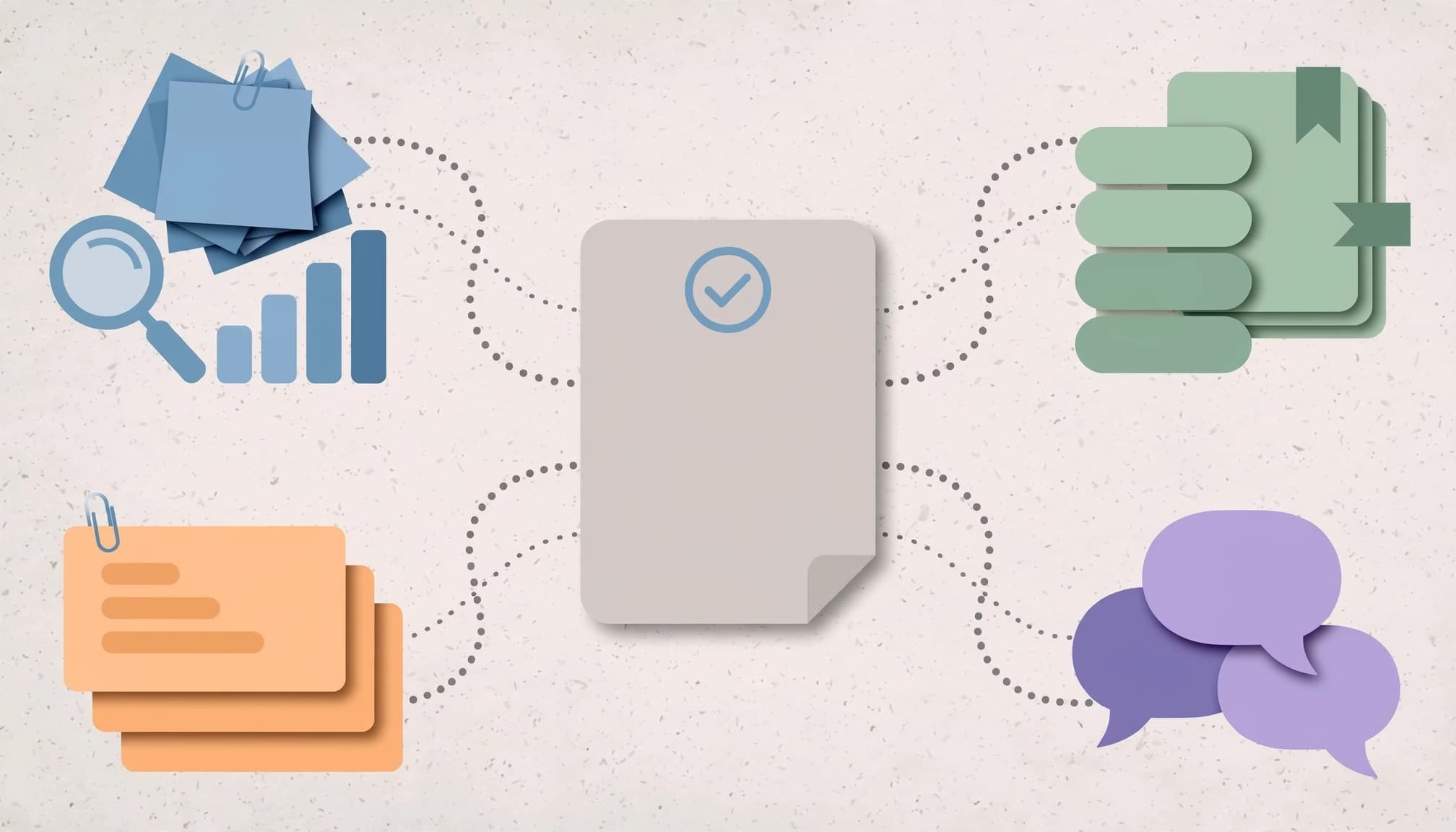
Keep a shared contribution log alongside the assignment. For each task, record its owner, agreed output, deadline, completion status and location of the work.
Add a short account of what changed after review. This captures work that can disappear inside the final document, including checking references, correcting calculations or resolving contradictory findings.
Meeting notes should record decisions and follow-up actions. They don’t need to reproduce every conversation.
Update the record when work happens, rather than reconstructing it before submission. The University of Minnesota connects team projects with responsibility and accountability, including following through on commitments.
Review Quality as Well as Quantity
A useful contribution record makes each student’s individual contribution visible across research, drafting, review and decisions. Hours spent, messages sent and words added provide only part of that picture.
Version history shows document activity. It cannot, by itself, show the value of someone’s research, judgement or feedback.
During regular check-ins, review completed outputs and redistribute work where necessary. Ask each member to identify their own progress and any support they need.
Keep the record factual and proportionate. Record a missing draft, rather than describing someone as lazy. Don’t store private explanations about health or family circumstances.
5. Address Missed Commitments Early
One missed meeting doesn’t establish a pattern of non-contribution. Repeated silence or unfinished work can disrupt group work and shift the workload to others.
Use an agreed sequence:
- If you encounter student resistance, contact the student privately, identify the missed commitment and ask what barriers are affecting progress.
- Restate the agreed expectation and agree a realistic next action, with a clear deadline.
- Set a boundary around what the rest of the group can cover, then record any revised allocation.
- If the problem continues, contact your lecturer or module tutor with the task record and relevant messages.
Keep communication focused on work and impact. Explain which missing output is delaying the group, rather than making assumptions about motivation.
If the submission is at risk, involve teaching staff promptly. You don’t need to keep negotiating until the deadline arrives.
Avoid threats to remove someone’s name or change their mark. Assessment decisions belong to the university, and your record should support a fair decision rather than punish a teammate.
How Lecturers Can Support Fair Contributions
Design Work That Requires Collaboration
A worthwhile assignment needs enough complexity or scale to justify several people working together. Explain its value to address student resistance and secure student buy-in.
The Transparency in Learning and Teaching framework identifies purpose, task and success criteria as foundations of a transparent assignment, all linked to the intended learning outcomes. The University of Minnesota’s guidance on introducing group projects highlights explaining that purpose.
Lecturers can assign students to groups based on the assignment’s purpose and students’ ability to work together, while accounting for scheduling constraints. Lecturer-assigned groups can also reduce friendship-driven groupthink, internal divisions and social exclusion.
Clear instructions should establish how students will share decisions and raise difficulties.
Assess the Product and Individual Work
Grading can focus on the final product, or assess both the shared product and each student’s contribution, often through two grades.
Individual assessment needs more than peer opinions. Drafts, written meeting reports and contribution records provide evidence of completed work. Where the assignment requires it, instructor access to the collaboration space can support monitoring.
Peer feedback adds context to documented evidence, but popularity and confidence shouldn’t determine contribution marks.
Some courses use separation sanctions that allow a group to remove a member. These have drawbacks: the remaining group loses opportunities to resolve collaboration problems, and the removed student loses teamwork practice too. Supported intervention deserves attention before separation.
Frequently Asked Questions About University Group Projects
What Do University Group Projects Teach You?
They develop communication, shared problem-solving and accountability. You also practise defending decisions and responding to different perspectives.
Positive experiences can improve how students feel about a module. The University of Minnesota cites Cavanagh et al. (2016) on group-work experiences enhancing course enjoyment. However, that benefit depends on how the collaboration works.
Does Everyone Need to Do Exactly the Same Amount?
Everyone needs a fair, meaningful responsibility, but matching word counts doesn’t establish equal effort. Research, analysis and revision can demand different amounts of work.
Discuss the expected workload when assigning tasks, then revisit it as the project develops. Include coordination and reviewing work in that discussion so these responsibilities don’t become invisible extras.
What If Someone Misses Meetings but Completes Their Work?
Assess the impact rather than attendance alone. A student may contribute reliably through drafts, comments and written updates.
However, they still need to participate in decisions and meet agreed communication expectations. Asynchronous work should be an agreed arrangement that keeps everyone involved, rather than an unexplained absence.
Make Fair Contributions Visible
University group projects work more fairly when everyone knows what they own and how their work connects. A shared contribution record makes those responsibilities easier to discuss.
Agree the system early, then update it as the workload changes. That gives your group a stronger basis for resolving problems and showing the work behind the final submission.