
 Paul Scott

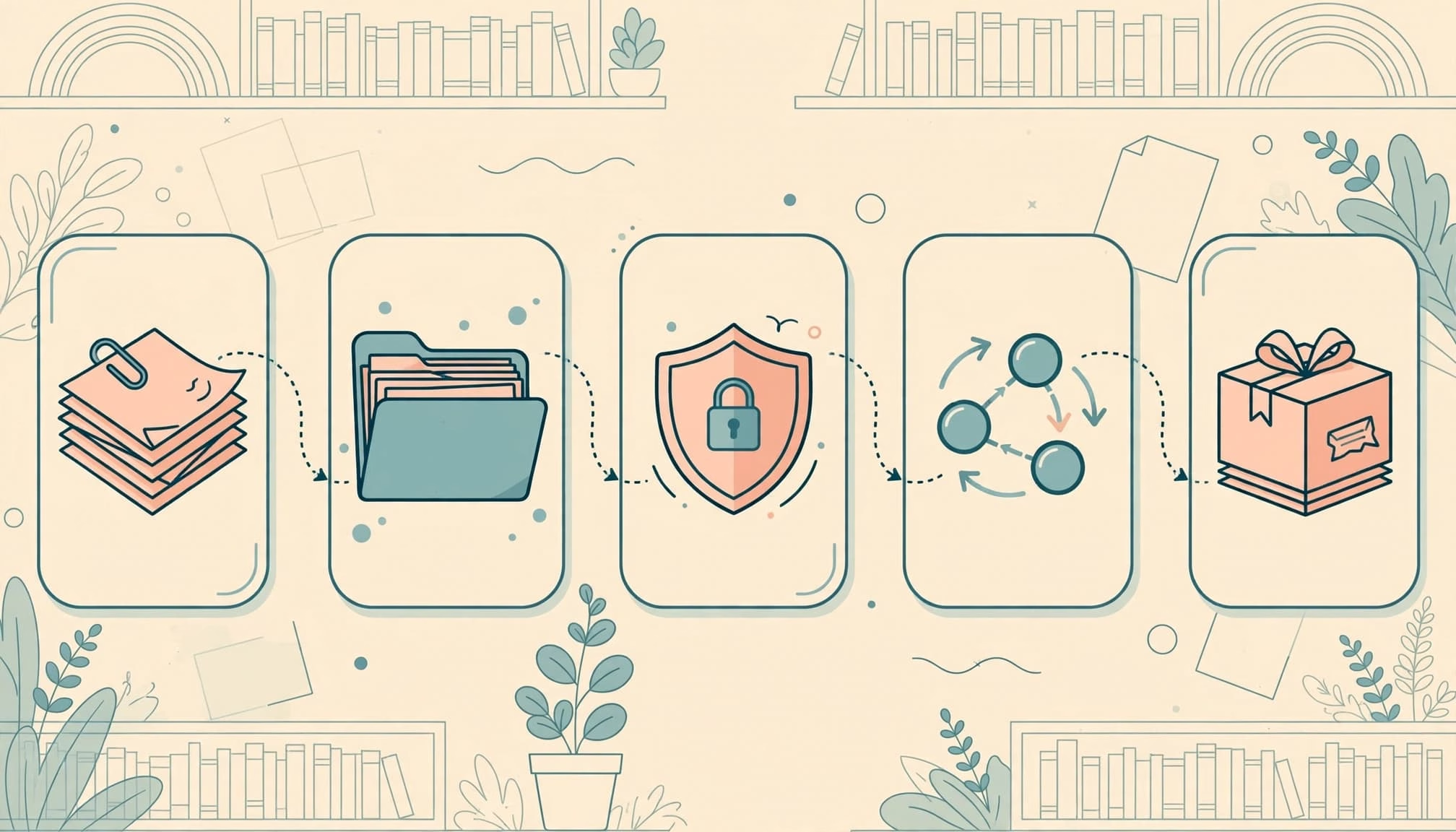
A dissertation data management plan explains how you’ll collect, organise, protect, share and preserve your research data. Write it before collecting data so that storage, consent and access decisions support your research design.
Even without funding, you need clear arrangements for recordings, survey exports, laboratory files or existing datasets. Start with your university’s requirements, then turn them into specific actions using the template below.
Key Takeaways
- Cover the whole data lifecycle, including collection, backups, access, sharing, retention and deletion.
- Keep identifying information separate where practical. Replacing names with codes doesn’t automatically make data anonymous.
- Agree responsibilities with your supervisor, including who will manage retained files after your student account closes.
Establish Your Requirements Before Collection
Most research funders expect a data management plan with a funding application. For an unfunded dissertation, what you submit depends on your university’s research, ethics and assessment rules, plus any legal and ethical requirements.
Horizon 2020 projects covered by open-data requirements and Horizon Europe projects generally require a full DMP within six months of starting. Horizon Europe applications also describe data management briefly, before that fuller deliverable. The Horizon Europe DMP guidance explains the programme’s requirements.
Draft your plan alongside your proposal and ethics application. Arrange supervisor review before recruitment or data collection, but remember that supervisor support doesn’t replace required ethics approval or organisational permission.
Record the plan’s author, version, date and reviewer. Name whoever will maintain it during the dissertation and whoever will take responsibility afterwards.
Copy-and-Adapt Dissertation Data Management Plan Template
Use these fields as your working document, replacing broad intentions with actual arrangements.
| Plan Section | What to Record |
|---|---|
| Project and responsibilities | Dissertation title, research question, student, supervisor, data custodian and review dates. |
| Research data description | Sources, collection methods, file types, estimated volume and sensitive information. |
| Metadata and documentation | File-naming rules, versions, variable definitions, units, coding guidance and README contents. |
| Storage and backup | Approved service, backup arrangements, recovery process and paper-record location. |
| Ethics and security | Permissions, consent, withdrawal, identifiers, who may use the files and approved services. |
| Sharing and reuse | Shareable files, restrictions, repository, licence, release date and any embargo. |
| Retention and disposal | Retention period and justification, responsible custodian, preservation location and secure deletion method. |
| Resources and costs | Storage, transcription, anonymisation, software, repository charges and staff or student time. |
MIT groups its DMP questions into four areas: project, experiment and data description; metadata and documentation, organisation and file location; permissions, sharing and reuse; and archiving. The template above expands those areas into student-level decisions.
If your dissertation contributes to a funded research project, use the relevant funder template. The DMP Tool quick-start guide explains how to select one.
Describe Your Data and Documentation
Your plan should let someone understand what research data exists, how files relate and what each value means. Include supporting material, not only the final analysis file.
Survey and Interview Records
For surveys, describe the questionnaire, raw export, cleaned dataset and codebook. Record response codes, missing-value conventions and whether the platform captures email addresses, IP addresses or other identifiers.
For interviews, include recordings, transcripts, contact details, consent forms and any participant-code key. State who transcribes recordings and which service, if any, has permission to receive them.
A README should explain the folder structure, file relationships, naming convention and key metadata. Keep dated versions so that cleaning or coding changes remain traceable.
Laboratory Measurements and Existing Datasets
For laboratory research, record instrument settings, calibration information, units, raw measurements and processing scripts. Preserve original outputs alongside any standard-format exports.
For secondary research, name the dataset’s producer, release, licence and access conditions. Explain missing records, extraction decisions and changes you make. Public availability doesn’t automatically permit redistribution.
Connect these records to your dissertation data analysis plan, which explains preparation and analysis methods. Where proprietary file formats are necessary, document the software and version needed to open them.
Protect Participants and Control Access
Decide early whether personal data can become an anonymous open dataset or requires restricted handling. That decision affects recruitment information, consent wording and repository choice.
Consent and Identifying Information
Under UK GDPR, replacing names with codes usually produces pseudonymised data. A separate key, distinctive job title or combination of details may still identify someone.
Consent to participate and the lawful basis for processing personal data are separate matters. Special-category data also requires an additional condition. Record the arrangements established through your university’s data-protection and ethics processes.
Our guide to dissertation ethics approval explains the distinction between supervision, ethics review and organisational permission.
Removing a name doesn’t make a transcript anonymous if its remaining details identify the speaker.
Storage, Backups and Approved Tools
Name the university-approved platform, authorised users and account permissions. Describe backup frequency, responsibility and recovery arrangements. Synchronisation alone may reproduce accidental deletions, so establish what recovery your service provides.
Keep consent forms and identifying keys separate from research files where practical. Record where paper originals are locked away.
Don’t upload identifiable research material, confidential employer documents or unpublished findings to public AI tools. Use institution-approved systems only where project permissions allow them.
Decide What Survives Submission
Submission doesn’t end your responsibilities. Your dissertation data management plan needs a workable handover, preservation and disposal arrangement.
Retention and Responsibility
Possible retention periods include three to five years, ten years or permanent preservation. These aren’t interchangeable options: the applicable university, funder, contractual and legal requirements determine the period.
State when the retention clock starts and identify the custodian. Separate arrangements may apply to consent forms, recordings, anonymised datasets and laboratory records.
Also explain what happens when your student account closes. Retained research material needs an authorised institutional home, rather than an unattended personal account or forgotten USB stick.
Repositories, Licensing and Access
Look for a discipline-specific repository first. The UK Data Service is relevant to many social-science datasets; a generalist repository such as Zenodo may suit material without a subject-specific destination.
Specify which files you’ll deposit, when they’ll become available and whether an application is required or access is subject to an embargo. Apply a licence only when intellectual property rights, ownership, permissions and consent allow it.
For data sharing, add a short dataset summary and DOI to the plan. Also identify where the complete research material, including restricted files, will remain for long-term preservation.
Review the Plan at Dissertation Milestones
A DMP is a living document. The Swedish National Data Service recommends updating it during planning and funding applications, active data work, and finalisation and publication.
For a dissertation, attach those reviews to visible milestones:
- Before collection, agree where files will be kept, permissions, responsibilities and documentation with your supervisor.
- After the pilot or first dataset, revise volume estimates, file structures and anonymisation procedures.
- Before submission and account closure, complete deposit, handover, retention and deletion arrangements.
Build these tasks into your dissertation timeline rather than leaving archiving until after hand-in.
Keep a dated change log. Changes affecting approved consent, recruitment or data handling may need an ethics amendment before further work.
Choose a Planning Tool and Review Checklist
DMPonline provides templates based on UK and European funder requirements. It tailors questions to your chosen funder, offers a generic template where necessary, and exports plans as Word, Excel or PDF files. TU Graz’s DMP guidance introduces the service and its institutional and funder support.
Data Stewardship Wizard is a free web-based tool for collaborative, living, machine-actionable DMPs. Machine-actionable plans structure information so software can process it. Its Science Europe document template provides another established framework.
For US-funded research, DMPTool supports funder-specific planning. The DART project’s NSF assessment rubric and RDAP’s NIH checklist provide review prompts, although UK students should prioritise their own requirements.
IBM describes five components: purpose, data definitions, collection and permissions, FAQs, and research-data limitations. For dissertations, the lifecycle template above gives more direct coverage of ethics, retention and handover.
A tool can organise your answers, but it can’t decide whether your consent wording permits sharing.
Frequently Asked Questions About Dissertation Data Management Plans
Do I Need a DMP Without External Funding?
You may still need one for university ethics or dissertation requirements. Even where no separate document is required, recording where research materials are kept, how they’re handled and when they’re disposed of prevents avoidable problems. A small project needs proportionate detail, but it still needs workable arrangements.
How Is a DMP Different From an Analysis Plan?
A data management plan explains how you’ll handle and protect research material throughout its lifecycle. An analysis plan explains how you’ll answer research questions using that material. Keep them consistent, particularly around cleaning, exclusions, coding and software.
Can I Reuse Dissertation Data Later?
Reuse depends on consent, permissions, the lawful basis, ethics arrangements and any licence or data-use agreement. Sensitive data, or other identifiable material, may require additional participant consent or approval. Permission to use data for one dissertation doesn’t automatically permit another project or public release.
Finish With a Plan Someone Can Carry Out
A useful dissertation data management plan names the files, systems, people and deadlines involved. Its strongest feature is clear responsibility, especially when you leave the university.
Draft it before collection and keep it aligned with your ethics documents. Update it when decisions change, then complete the handover before the student account closes.