 Torey
Torey
Chemistry often feels like a pile of separate facts, until an exam question asks you to connect three topics at once. That’s usually where marks disappear, not because you “don’t know chemistry”, but because you can’t see the route from A to B.
That’s why chemistry reaction maps work so well. They turn reactions into a visual set of paths, like a train map for functional groups. Then, past questions act like real “journeys” that test whether your map is accurate and easy to use under time pressure.
If you already have class notes, this method helps you organise them, practise smarter, and stop repeating the same mistakes.
Key Takeaways
- A reaction map shows “what changes into what”, plus the reagents and conditions you must know.
- Past questions reveal which arrows you keep missing, or which conditions you mix up.
- Marking is part of revision, because it tells you what examiners reward.
- Your map should stay small, clear, and built around your syllabus, not your textbook.
- A short weekly routine beats long, messy weekend sessions.
Build A Reaction Map That Matches Your Syllabus
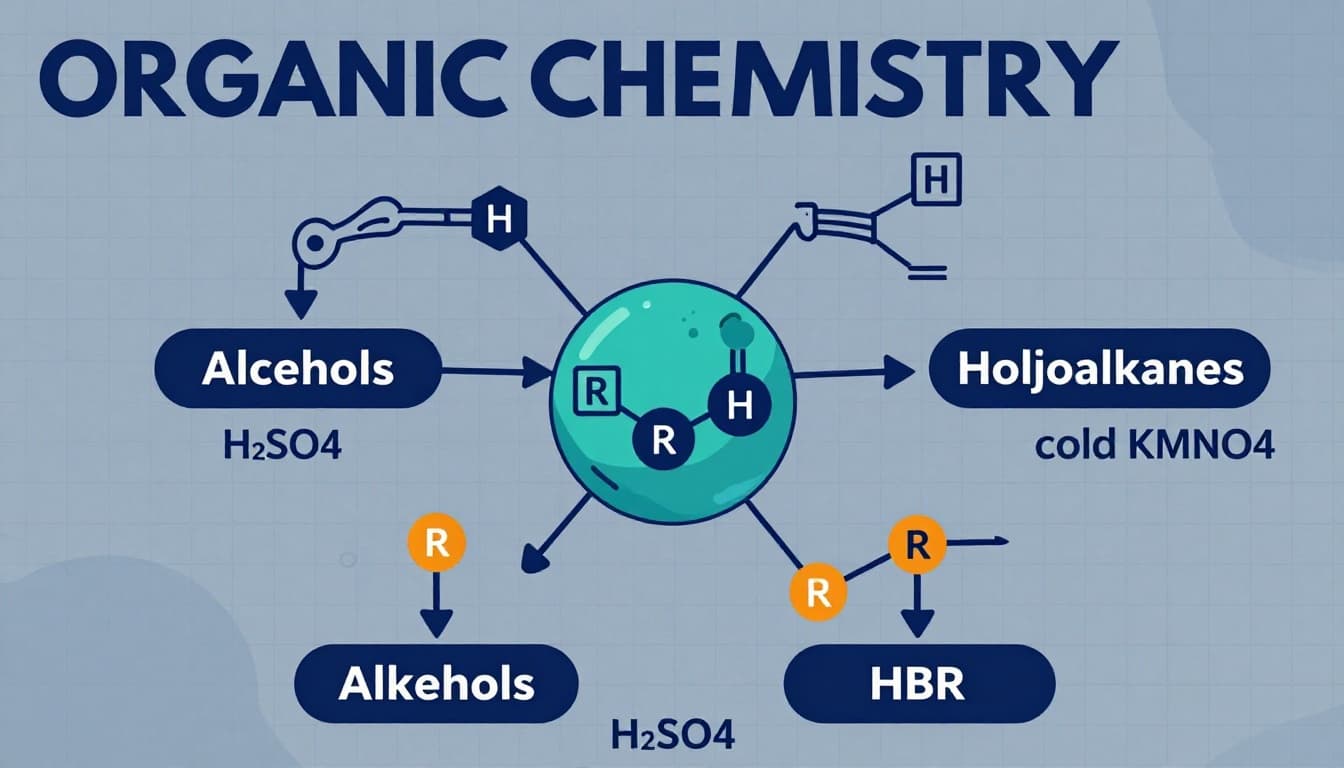
A reaction map is a one-page picture of your reactions, organised by starting material and product. Instead of memorising reactions as a list, you learn them as connected moves. That matters in exams, because questions rarely announce the topic. They give you a molecule and expect you to choose the right transformation.
Start by listing the “families” your course expects you to move between (for organic, that’s often alkanes, alkenes, alcohols, haloalkanes, carbonyls, carboxylic acids, esters, and amines). Put each family in a bubble, then draw arrows for the reactions you’ve been taught.
Next, add the details that actually earn marks:
- the reagent (for example, HBr, KMnO₄, PCC),
- the conditions (heat, reflux, aqueous, acidified),
- and the key outcome (oxidation level change, substitution vs elimination, major product).
Keep it readable. If you need a magnifying glass, it’s too big. A good map is something you can glance at and use in 10 seconds.
Colour helps, as long as it stays consistent. For example, you might use one colour for oxidation, another for reduction, and a third for addition reactions. That way your brain learns patterns, not isolated facts.
Also, build from your foundations. If bonding, electronegativity, and oxidation states feel shaky, a map won’t fix that on its own. This guide on chemistry study techniques for exam success can help you tighten the basics so the map makes sense.
Finally, accept that your first version won’t be perfect. That’s fine, because past questions will tell you what to add.
Use Past Questions To Stress-Test Your Map
Reaction maps are theory, past papers are reality. The best use of past questions is not “do loads and hope”. It’s to find the exact step where your thinking breaks.
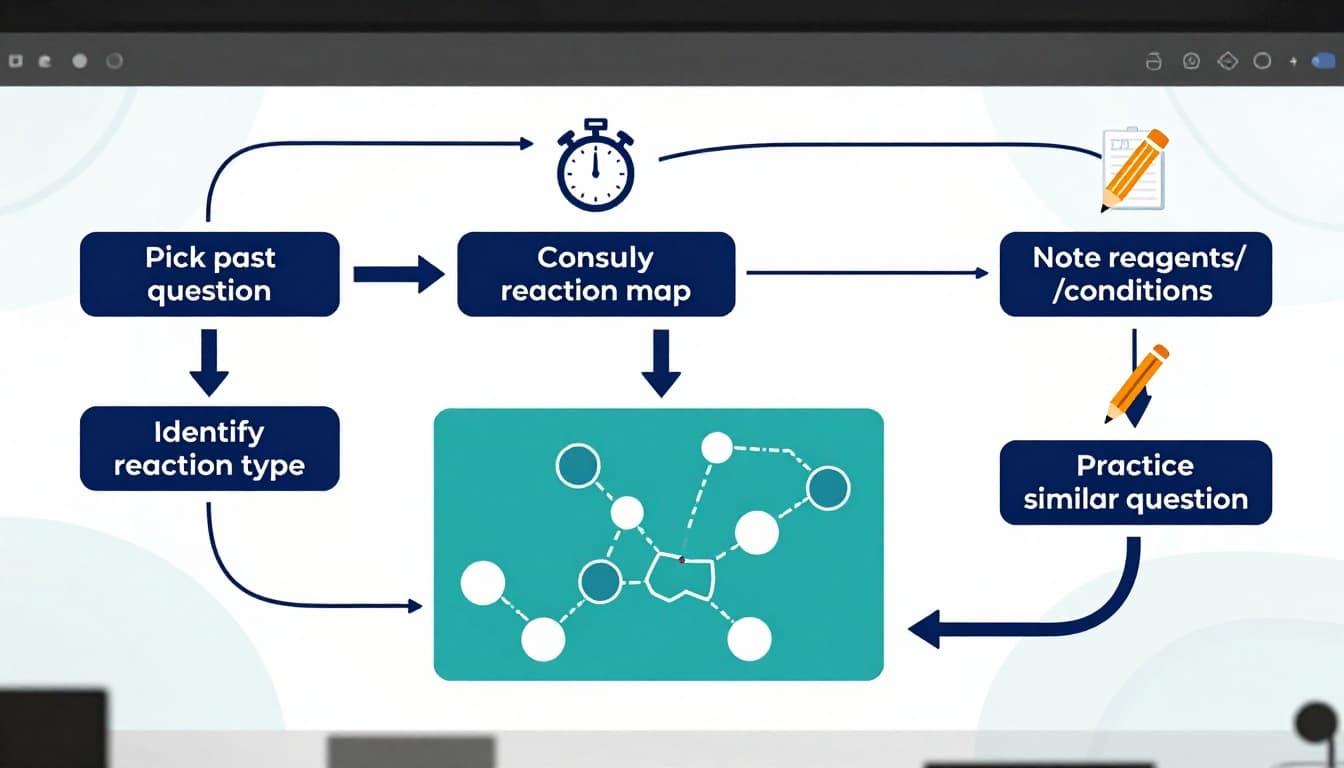
Here’s a practical loop:
Attempt a question timed, with no notes. Then mark it closely. After that, tag every mistake to a spot on your reaction map. If the question involved turning an alkene into an alcohol, your tag sits on that arrow. If you used the wrong conditions, write the correct ones beside the arrow. If you didn’t even recognise the reaction type, circle the node and add a short hint (like “hydration adds H and OH across C=C”).
If you can’t place a past question onto your map, your map is missing a step, or your understanding is missing a link.
This quick table helps you diagnose errors without overthinking them.
| What Went Wrong In The Answer | What To Change Next Time |
|---|---|
| You chose the wrong reaction type | Add a one-line “clue” beside the node (for example, “Br₂ decolourises with C=C”) |
| You knew the reaction but forgot conditions | Put conditions on the arrow, not in a separate page of notes |
| You got the product wrong | Add a mini “check” note (for example, oxidation level, carbon count, functional group change) |
| You lost marks on wording | Copy the mark scheme phrasing once into your notes, then re-write it in your own words |
To keep practice varied, pull questions from more than one source, as long as they match your spec. If you need a starting point, use this ultimate list of revision websites with past papers and pick one or two sites you’ll actually return to.
The goal is simple: every past question should either confirm your map, or improve it.
Turn It Into A Simple Weekly Routine
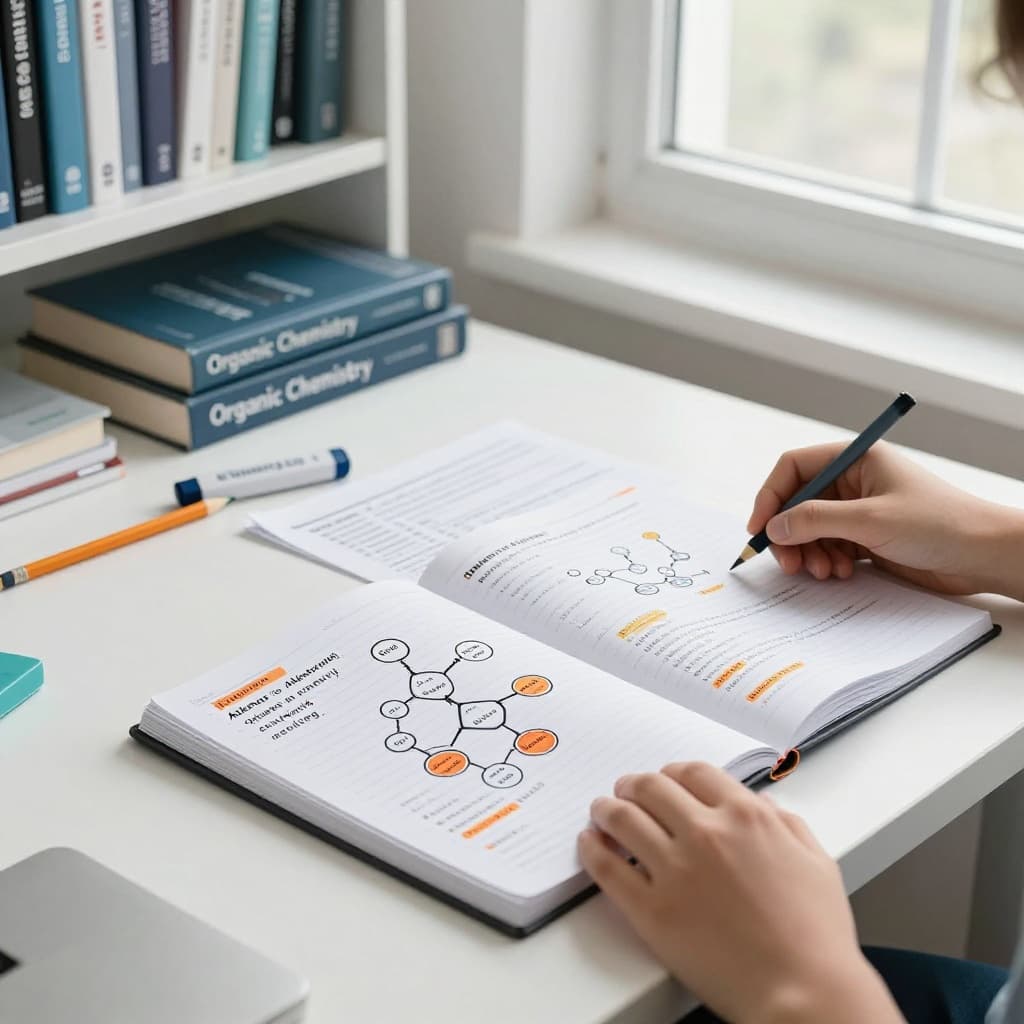
You don’t need marathon sessions. You need repeatable sessions that force recall, then correct it fast.
Try a 45-minute structure, three or four times a week:
- Map Recall (8 mins): Cover your map and redraw one section from memory.
- Targeted Refresh (7 mins): Check what you missed, then add one tiny note only.
- Past Question Sprint (15 mins): Do one exam-style question, timed.
- Mark And Tag (10 mins): Mark it, then tag mistakes to the map arrows.
- One Re-do (5 mins): Re-write the weakest step, using correct conditions and wording.
This keeps the map “alive”. It also stops revision turning into passive reading.
In the final two weeks before exams, shift the balance. Spend more time on timed questions, but keep the map beside you during review. At that stage, the map is less about learning new content and more about preventing silly errors.
If you struggle with consistency, pair this routine with general exam habits that support focus (sleep, short sessions, and realistic goals). These effective study techniques for exams fit neatly alongside reaction-map practice.
Wrap-Up
Reaction maps help you see chemistry as connected choices, not random facts. Past questions then prove whether those choices hold up under time pressure. Put them together and revision starts to feel more like training, less like hoping.
Build one clean map, practise little and often, and keep tagging mistakes until they stop happening. That’s when chemistry reaction maps start paying back in marks.
Frequently Asked Questions About Studying Chemistry Using Reaction Maps And Past Questions
Are Reaction Maps Only For Organic Chemistry?
They’re most popular in organic because functional groups link neatly. Still, you can map other topics too, like redox sequences, qualitative tests, or equilibrium “if this changes, then that shifts” chains.
How Big Should My Reaction Map Be?
Aim for one page per topic. If it runs onto three pages, you’ll stop using it under pressure.
Should I Use Mark Schemes Straight Away?
Not at first. Attempt timed, then mark. If you check the scheme mid-question, you’re practising recognition, not recall.
How Many Past Papers Do I Need To Do?
Enough to see patterns in your mistakes. For many students, that’s a few full papers plus lots of topic questions, as long as you mark them properly.
What If I Keep Forgetting Reagents And Conditions?
Put conditions on the arrow and test them directly. Also, always link a reagent to a purpose (oxidise, reduce, add, substitute), because purpose sticks better than a list.